


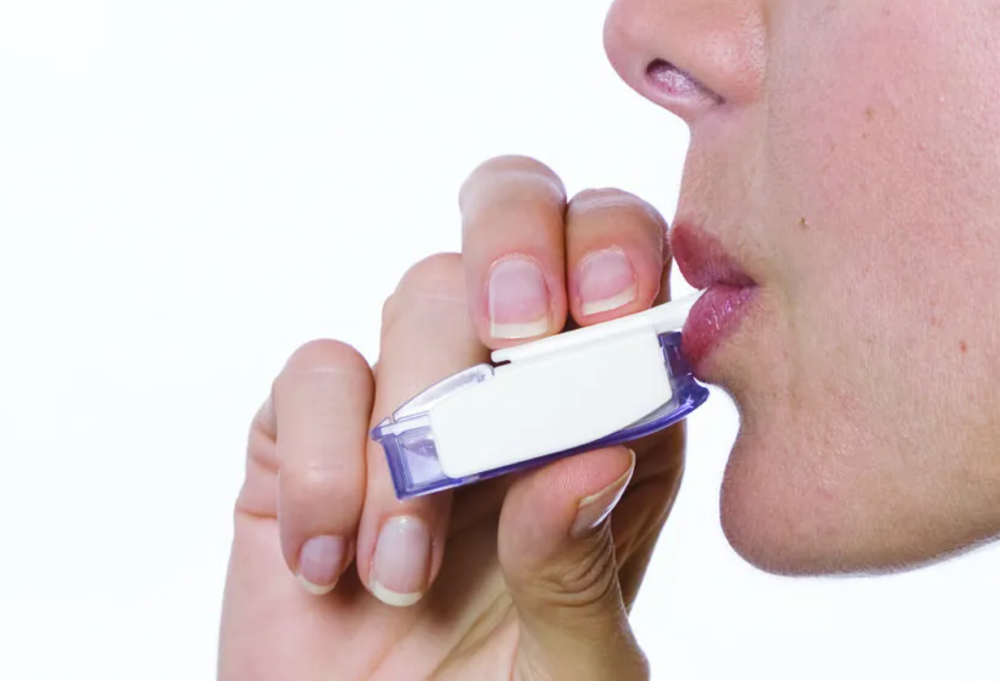
With Afrezza now approved for use in children, Mankind believes it finally has the push it needs to make an impact in the market after more than a decade of struggling with its inhaled insulin powder.
On Friday, the FDA approved an expansion of Afrezza to treat adolescents and children 6 years and older with type 1 or type 2 diabetes. According to a May 29 press release, the drug must be used in conjunction with basal insulin for patients with type 1 disease.
The approval comes 12 years after U.S. regulators approved Afrezza as a quick-acting pre-meal option for adults with diabetes.
Since its arrival on the market, Afrezza has generated approximately $370 million in total sales, with sales peaking at $75 million last year.
“When I came here 10 years ago, I thought Afrezza would have pivoted sooner,” MannKind CEO Michael Castagna said in an interview with Fierce. “Unfortunately, I joined a company that was on the verge of bankruptcy, didn’t have the financial resources, and the data package wasn’t as robust as I had hoped.”
A disastrous commercial partnership with diabetes giant Sanofi didn’t help either, with French pharmaceutical giant Sanofi salvaging the partnership a year after its launch.
Ten years later, MannKind believes it has the data it needs to turn things around. In the Phase 3 INHALE-1 study of 230 patients aged 4 to 17 years, Afrezza provided equivalent glycemic control over 26 weeks and was as safe to use as rapid-acting injectable insulin. Afrezza also caused less weight gain and received higher scores in patient and parent preference surveys.
“There have always been (negative) perceptions about the safety of inhaled insulin,” Castagna said, adding that lung data from two trials dispelled those doubts.
According to the CEO, MannKind’s current job is to educate endocrinologists, and 95% of endocrinologists have never prescribed inhaled insulin.
“They have no idea how it works, how to prescribe it, and adult society never supported it,” Castagna said.
Mankind believes that by focusing on the subset of physicians who primarily prescribe insulin to adolescents and children, he can further build enthusiasm for Afrezza and call out its key benefit of immediate efficacy.
“If you inject a small bolus into a small part of your body, it takes 45 minutes for the insulin to break down,” Castagna says. “The main difference here is that you take Afrezza with a meal. With the injectable version, you need to time your dose 15 minutes before a meal.”
One of the drawbacks that prevents uptake involves the requirement for patients to undergo lung testing with a spirometer, an unusual medical device that determines whether they have asthma or COPD. In either condition, patients cannot use Afrezza.
Afrezza is not the first inhaled insulin product to hit the market. Pfizer won approval for Exubera in 2006, but pulled the product from the market in 2007 due to the product’s cumbersome dosing device (derisively referred to as an “insulin bong” due to its large tubular design). Afrezza, by contrast, is about the size of a whistle.
“Why are we successful? I think first of all, it’s because we have a limited audience. We have 1,000 prescribers and 60 centers in the county, which accounts for the majority of our patients,” Castagna told Fierce. “Secondly, social media is going to play a very important role.”
The CEO continued, “Ten years ago, all I had to do to pivot my career was to go to YouTube and type in ‘Afrezza’. I’ve never seen so many people posting positive videos saying, ‘I want this drug, it’s changed my life.'”
