


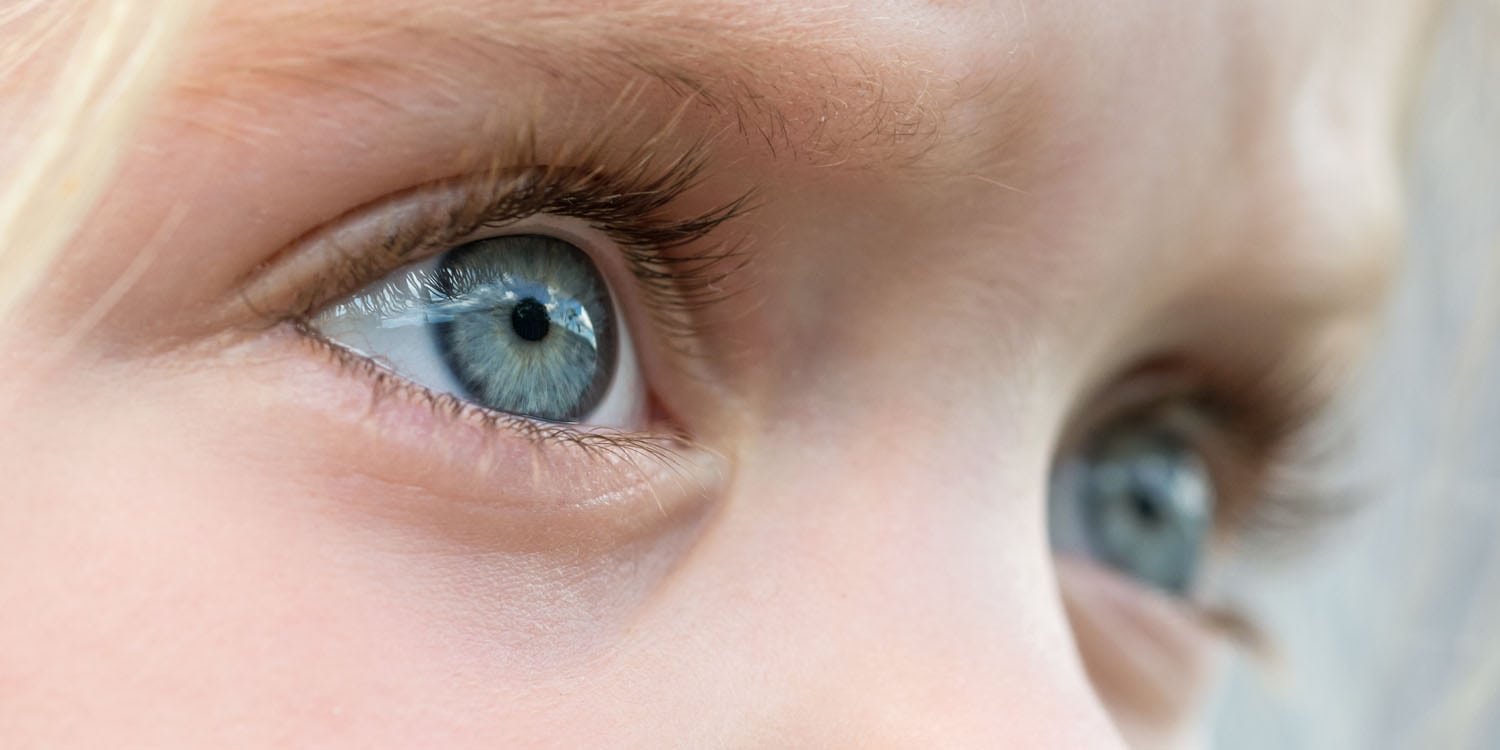
Young children with autism tend to look at faces less than other children and focus on details in the background, but taking objects out of the environment changes the way they observe others. Removing toys from social settings increases the amount of time all children spend looking at people, which could inform better design of clinical and educational spaces. The findings were published in the Journal of Autism and Developmental Disorders.
Autism is a neurodevelopmental condition that affects communication, behavior, and social skills. One common feature of this condition in early childhood is a decreased tendency to look into the faces and eyes of others. Psychologists use the term visual attention to describe how a person unconsciously decides where to direct their gaze in a particular environment. When children routinely focus on toys and background details rather than human faces, they miss subtle social gestures and facial expressions.
Over time, patterns of looking away can limit children’s access to social learning experiences. The human brain finds social interactions highly rewarding, so most young children naturally direct their gaze toward faces. Changing this natural urge to look at faces can change the trajectory of how the brain builds social and cognitive networks. Researchers want to know exactly what grabs the attention of children with autism and whether changing their surroundings changes their visual habits.
Psychologists use the concept of object value to explain why our eyes naturally turn to certain items in a crowded room. The human brain continuously scans its surroundings and calculates how useful or relevant certain information is to survival and social success. Normally, the brain assigns very high values to human faces. This is because facial expressions provide the necessary cues for action. This internal evaluation system determines whether a person prioritizes viewing social stimuli or non-social objects.
Researchers Isik Akin Bulbul and Serda Ozdemir from the special education department at Hacettepe University in Turkey noticed a gap in existing research. Many studies have tested whether children with autism prefer looking at objects rather than people, and those studies often place faces on one side of the screen and objects on the other side. Real social interaction takes place in a chaotic room filled with a variety of stimuli. The researchers wanted to see if the presence of a toy within a single dynamic scene changes how children allocate their visual attention.
To test this idea, researchers enlisted the help of 127 children between the ages of 18 and 36 months. Fifty-three of the participants had a confirmed diagnosis of autism, and the other 74 children were growing up on a predictable schedule. The research team made sure the two groups were age-matched to make a fair comparison. None of the children in the neurotypical group had a family history of autism or siblings with developmental problems.
The researchers had each child sit in front of a computer monitor equipped with an eye-tracking device. An eye tracker is a special camera that tracks the precise movements of a person’s pupils in real time, calculating exactly where their gaze lands on the screen and how long it stays there. This technology allows researchers to record invisible, momentary shifts in attention without asking children to perform specific tasks. Children simply sat in a chair or on their parent’s lap and watched a series of short videos on a monitor.
A short video clip showed adults and children having fun conversations. Three of the videos included objects, and three of the videos showed social interactions in which the toy was not present. The object clips featured actors playing with a stuffed pelican, trying to get a human toy onto a school bus, and trying to get a dog toy onto a bus. In the clip without objects, a child eats a biscuit while an adult asks for a bite, the child offers the biscuit to the adult, and the two have a conversation about sharing the chocolate.
The research team used analysis software to map invisible boundaries to specific areas of the video screen. They designated these regions as the face region, body region, toy region, and external background region. The software then calculated the total time each child’s right eye remained within these marked boundaries. By comparing viewing patterns, researchers were able to pinpoint how toys change children’s attention spans.
The results were consistent with previous observations showing that children with autism view their environments differently than naturally developing children. Across all videos, the autistic children spent much less time looking at faces than the neurotypical children. Children with autism also spent significantly more time observing details of the external background. These differences exist regardless of what is happening in the video clip.
When a toy was visible in the scene, children in both groups found the object highly distracting. Both autistic and neurotypical children spent the majority of their time staring directly at toys and prioritized objects over people. Beyond toys, gaze priorities varied by group. The neurotypical children then looked at the face, then the body, and finally the background.
Children with autism showed contrasting patterns in the presence of toys. After looking at the toy, the autistic children then focused their attention on the human body and the scenery in the background. Faces were the last place to direct visual attention in scenes containing objects. This pattern reveals a marked tendency for children with autism to prefer non-social information in visually busy environments.
Removing the toy from the video clip caused an immediate change in the visual behavior of all participants. Without toys to distract them, both groups spent far more time looking at the actors’ faces and bodies on screen. Differences in visual attention between the two groups were similar, but removing the object led to a general increase in the amount of time everyone spent observing social interactions.
When the toys were removed from the picture, the autistic children started looking at the body before looking at the face. The researchers speculate that this may be due to the hand gestures and body movements the actors used while discussing the snacks. The findings suggest that children with autism may rely more on broader body language during social interactions, picking up cues from overall movements before observing specific facial features.
Parents and clinical professionals spend countless hours helping young children with autism develop communication skills. Imbalances in how children allocate their visual focus can impede the success of these early interventions. Discovering exactly what a child’s gaze is directed at during a play session can help adults create an environment that naturally encourages social engagement. This study provides a direct window into how environmental complexity directly changes the way neurodiverse children experience the world.
Although the study provides a detailed look at how the environment shapes visual attention, the researchers noted that their approach has some limitations. To avoid reporting false findings, the team analyzed the data using rigorous mathematical corrections. The researchers noted that this rigorous analysis strategy may have masked subtle differences in how children viewed screens, meaning that certain small numerical differences were not statistically significant in the final calculations. Future studies may use a different balance of error control to capture more subtle changes in visual behavior.
Additionally, all of the children in the experiment had already been diagnosed with autism. Because they were evaluated as older infants, the researchers were unable to track how these visual patterns developed. Understanding the developmental roots of autism requires testing infants from birth to see if and when they stop prioritizing faces over objects.
Despite the limitations, the findings of this study have practical weight for parents and educators working with neurodivergent young children. Because objects inevitably draw attention away from faces, clinical professionals may want to design early intervention spaces with fewer visual distractions. By managing the visual clutter in the room, you may be able to gently encourage autistic children to spend more time observing the people around them.
The study, “Assessing the social attention hypothesis: Do children with autism prefer to look at objects rather than people?” was authored by Isik Akin-Bulbul and Selda Ozdemir.
