

Close Menu

    Subscribe to Updates

    Get the latest creative news from FooBar about art, design and business.

    What's Hot

    President Trump opens the wilderness to great energy

    April 2, 2026

    Analysts have high expectations for Lilly’s Foundayo launch early on

    April 2, 2026

    A breakthrough could protect the visual cells that help us see faces and colors

    April 2, 2026
    Facebook X (Twitter) Instagram
    Facebook X (Twitter) Instagram
    Health Magazine
    • Home
    • Environmental Health
    • Health Technology
    • Medical Research
    • Mental Health
    • Nutrition Science
    • Pharma
    • Public Health
    • Discover
      • Daily Health Tips
      • Financial Health & Stability
      • Holistic Health & Wellness
      • Mental Health
      • Nutrition & Dietary Trends
      • Professional & Personal Growth
    • Our Mission
    Health Magazine
    Home » News » Eating more meat may lower risk of Alzheimer’s disease for some people
    Nutrition Science

    Eating more meat may lower risk of Alzheimer’s disease for some people

    healthadminBy healthadminApril 2, 2026No Comments5 Mins Read
    Eating more meat may lower risk of Alzheimer’s disease for some people
    Share
    Facebook Twitter Reddit Telegram Pinterest Email


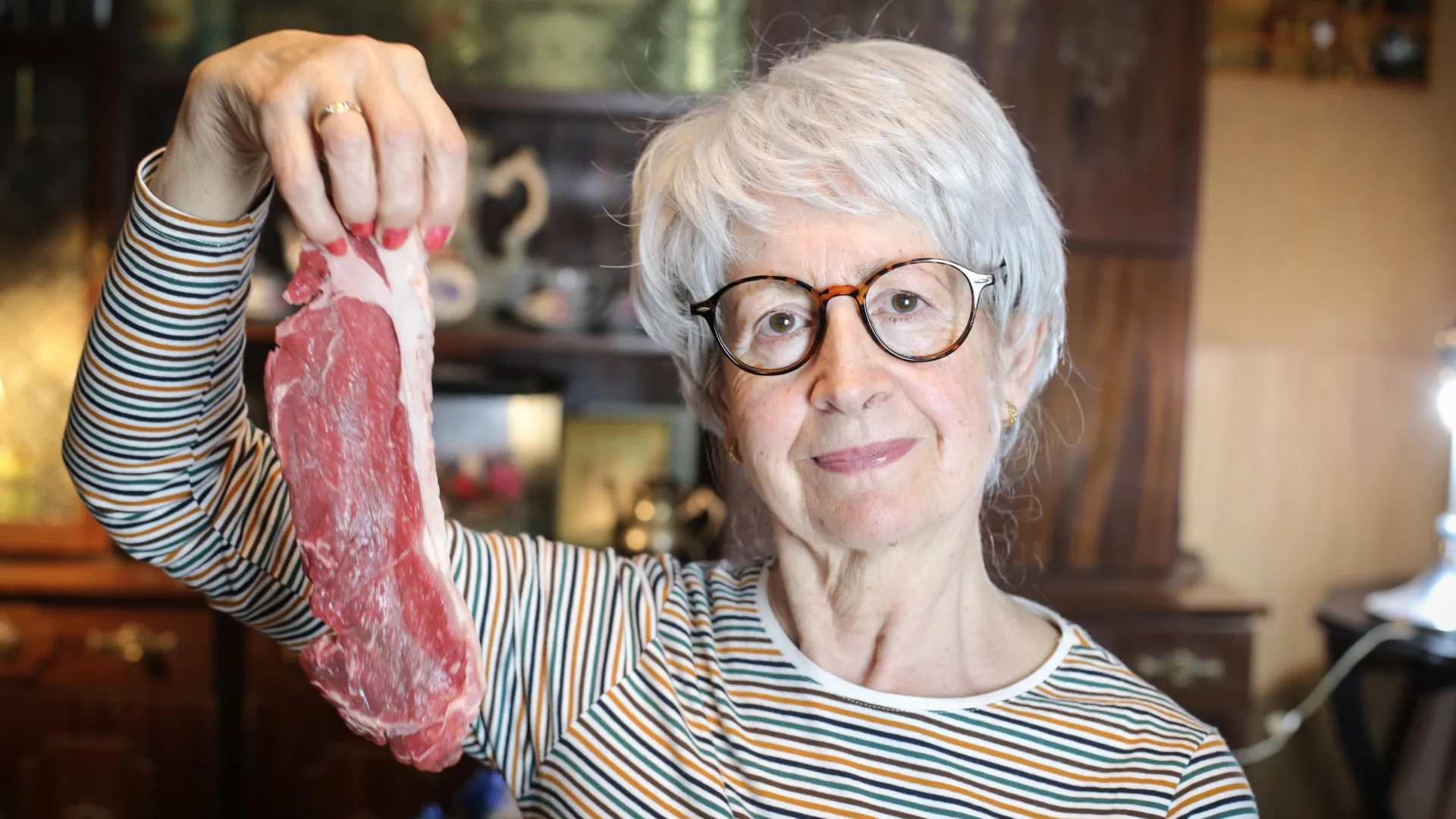
    Older people with genes associated with a higher risk of Alzheimer’s disease may eat relatively large amounts of meat and not experience the expected increase in cognitive decline. This is an important finding from a new study by researchers at Karolinska Institutet. JAMA network open. The results suggest that dietary advice may ultimately be more precisely tailored based on an individual’s genetic profile.

    The APOE gene plays a major role in determining Alzheimer’s disease risk. In Sweden, about 30% of people have the APOE 3/4 or APOE 4/4 gene combination. Almost 70% of people diagnosed with Alzheimer’s disease have one of these variants.

    Last year, the Swedish Food Agency reviewed existing research on diet and dementia and called for further research to better understand how meat consumption affects dementia risk.

    Why researchers studied meat consumption

    “This study tested the hypothesis that people with APOE 3/4 and 4/4 would have a lower risk of cognitive decline and dementia with higher meat intake, based on the fact that APOE4 is the evolutionarily oldest variant of the APOE gene and may have arisen at a time when our evolutionary ancestors ate a more animal-based diet,” said lead author Jakob Norgren, a researcher at Karolinska Institutet’s Department of Neurobiology, Care Sciences and Society.

    Long-term research on diet and brain health

    The study followed more than 2,100 adults who took part in the Swedish National Study on Aging and Care in Kungsholmen (SNAC-K). All participants were at least 60 years old at the start of the study and did not have dementia. They were followed for up to 15 years.

    Researchers analyzed self-reported eating habits along with measures of cognitive health, taking into account factors such as age, gender, education, and lifestyle.

    Meat consumption and risk of dementia

    Among participants with low meat intake, those with APOE 3/4 and 4/4 had more than twice the risk of developing dementia compared to those without these genetic variants.

    However, this increased risk was not observed in the group that consumed the most meat. In this highest intake group, the median meat intake was approximately 870 grams per week, equivalent to 2,000 calories per day.

    “People who ate more meat overall had significantly slower cognitive decline and lower risk of dementia, but only if they carried the APOE 3/4 or 4/4 gene variant,” says Jakob Norgren. He continues:

    “Research on diet regarding brain health is lacking, and our findings suggest that traditional dietary advice may be disadvantageous for genetically defined subgroups of the population. For those who identify themselves as belonging to this genetic risk group, our findings offer hope. Risk may be modifiable through lifestyle changes.”

    Processed and unprocessed meat are important

    There seems to be a difference depending on the type of meat.

    “A lower proportion of processed meat as a percentage of total meat consumption was associated with a lower risk of dementia, regardless of APOE genotype,” said Sarah García Ptacek, assistant professor in the department and last author of the study along with senior lecturer Erica J. Lauca.

    Potential benefits beyond brain health

    Researchers also found widespread health effects. In follow-up analyses, people with APOE 3/4 and 4/4 who ate more unprocessed meat had a significantly lower risk of death from any cause.

    Research limitations and the need for clinical trials

    This study is observational and cannot prove cause and effect. More rigorous intervention studies are needed to determine whether dietary changes directly impact dementia risk.

    “Clinical trials are currently needed to develop dietary recommendations tailored to APOE genotypes,” says Jakob Norgren. He continues:

    “As the prevalence of APOE4 is approximately twice as high in Nordic countries as in Mediterranean countries, we are particularly well suited to conduct research on dietary recommendations tailored to this risk group.”

    Facts about the APOE gene

    Apolipoprotein E plays an important role in transporting cholesterol and fats both in the brain and bloodstream. The APOE gene has three major forms: epsilon 2, 3, and 4. These variants influence the likelihood of developing Alzheimer’s disease and cardiovascular disease.

    Each person inherits two copies of the gene, one from each parent, resulting in six possible combinations (genotypes): 2/2, 2/3, 2/4, 3/3, 3/4, and 4/4.

    Compared to the most common genotype 3/3, having one copy of the 4 variant increases the risk of Alzheimer’s disease by about 3-4 times, and having 2 copies increases the risk by about 10-15 times. The second variant is associated with reduced risk. However, these risk levels may vary by ethnic group.

    Source: Belloy et al., JAMA Neurology, 2023

    Funding and disclosure

    This research was supported by several organizations, including the Swedish Alzheimer Foundation, the Swedish Dementia Foundation, the Emil and Vera Cornell Foundation, the Leif Lundblad family and other philanthropists, the Swedish Research Council, and FORTE. The researchers report no relevant conflicts of interest.


    Source link

    Visited 1 times, 1 visit(s) today
    Share. Facebook Twitter Pinterest LinkedIn Telegram Reddit Email
    Previous ArticlePresident Trump plans to impose 100% tariffs on medicines imported into the US
    Next Article Family building platform Sunbo begins egg freezing using AI
    healthadmin

    Related Posts

    A breakthrough could protect the visual cells that help us see faces and colors

    April 2, 2026

    Ancient bone dice reveal 12,000 years of history of American gambling

    April 2, 2026

    This simple Japanese diet could help you live longer without dieting

    April 2, 2026

    Earth’s magnetic field went wild 600 million years ago, and scientists have finally figured out why.

    April 2, 2026

    Mysterious Greek inscription may reveal lost temple beneath Syria’s Great Mosque

    April 2, 2026

    What’s hidden inside colon cancer could change treatment

    April 2, 2026
    Add A Comment
    Leave A Reply Cancel Reply

    Categories

    • Daily Health Tips
    • Discover
    • Environmental Health
    • Exercise & Fitness
    • Featured
    • Featured Videos
    • Financial Health & Stability
    • Fitness
    • Fitness Updates
    • Health
    • Health Technology
    • Healthy Aging
    • Healthy Living
    • Holistic Healing
    • Holistic Health & Wellness
    • Medical Research
    • Medical Research & Insights
    • Mental Health
    • Mental Wellness
    • Natural Remedies
    • New Workouts
    • Nutrition
    • Nutrition & Dietary Trends
    • Nutrition & Superfoods
    • Nutrition Science
    • Pharma
    • Preventive Healthcare
    • Professional & Personal Growth
    • Public Health
    • Public Health & Awareness
    • Selected
    • Sleep & Recovery
    • Top Programs
    • Weight Management
    • Workouts
    Popular Posts
    • the-pros-and-cons-of-paleo-dietsThe Pros and Cons of Paleo Diets: What Science Really Says April 16, 2025
    • Improve Mental Health10 Science-Backed Practices to Improve Mental Health… March 11, 2025
    • How Healthy Living Is Transforming Modern Wellness TrendsHow Healthy Living Is Transforming Modern Wellness… December 3, 2025
    • Healthy Living: Expert Tips to Improve Your Health in 2026Healthy Living: Expert Tips to Improve Your Health in 2026 November 16, 2025
    • "The Best Daily Health Apps to Track Your Wellness Goals"The Best Daily Health Apps to Track Your Wellness… August 15, 2025
    • daily vitamin D needsWhy Sunlight Is Crucial for Your Daily Vitamin D Needs June 12, 2025

    Demo
    Stay In Touch
    • Facebook
    • Twitter
    • Pinterest
    • Instagram
    • YouTube
    • Vimeo
    Don't Miss

    President Trump opens the wilderness to great energy

    By healthadminApril 2, 2026

    From the majestic canyons of the Grand Canyon to the granite peaks of Yosemite National…

    Analysts have high expectations for Lilly’s Foundayo launch early on

    April 2, 2026

    A breakthrough could protect the visual cells that help us see faces and colors

    April 2, 2026

    Vulnerable narcissism is associated with intense celebrity worship through parasocial relationships

    April 2, 2026

    Subscribe to Updates

    Get the latest creative news from SmartMag about art & design.

    HealthxMagazine
    HealthxMagazine

    At HealthX Magazine, we are dedicated to empowering entrepreneurs, doctors, chiropractors, healthcare professionals, personal trainers, executives, thought leaders, and anyone striving for optimal health.

    Our Picks

    Vulnerable narcissism is associated with intense celebrity worship through parasocial relationships

    April 2, 2026

    Family building platform Sunbo begins egg freezing using AI

    April 2, 2026

    Eating more meat may lower risk of Alzheimer’s disease for some people

    April 2, 2026
    New Comments
      Facebook X (Twitter) Instagram Pinterest
      • Home
      • Privacy Policy
      • Our Mission
      © 2026 ThemeSphere. Designed by ThemeSphere.

      Type above and press Enter to search. Press Esc to cancel.