

Close Menu

    Subscribe to Updates

    Get the latest creative news from FooBar about art, design and business.

    What's Hot

    How different types of exercise affect mood and brain chemistry

    July 17, 2026

    Weekly Rundown: SpotitEarly partners with HITLAB

    July 17, 2026

    Changes in brain structure are associated with different types of traumatic memories

    July 17, 2026
    Facebook X (Twitter) Instagram
    Facebook X (Twitter) Instagram
    Health Magazine
    • Home
    • Environmental Health
    • Health Technology
    • Medical Research
    • Mental Health
    • Nutrition Science
    • Pharma
    • Public Health
    • Discover
      • Daily Health Tips
      • Financial Health & Stability
      • Holistic Health & Wellness
      • Mental Health
      • Nutrition & Dietary Trends
      • Professional & Personal Growth
    • Our Mission
    Health Magazine
    Home » News » Earth’s magnetic field went wild 600 million years ago, and scientists have finally figured out why.
    Nutrition Science

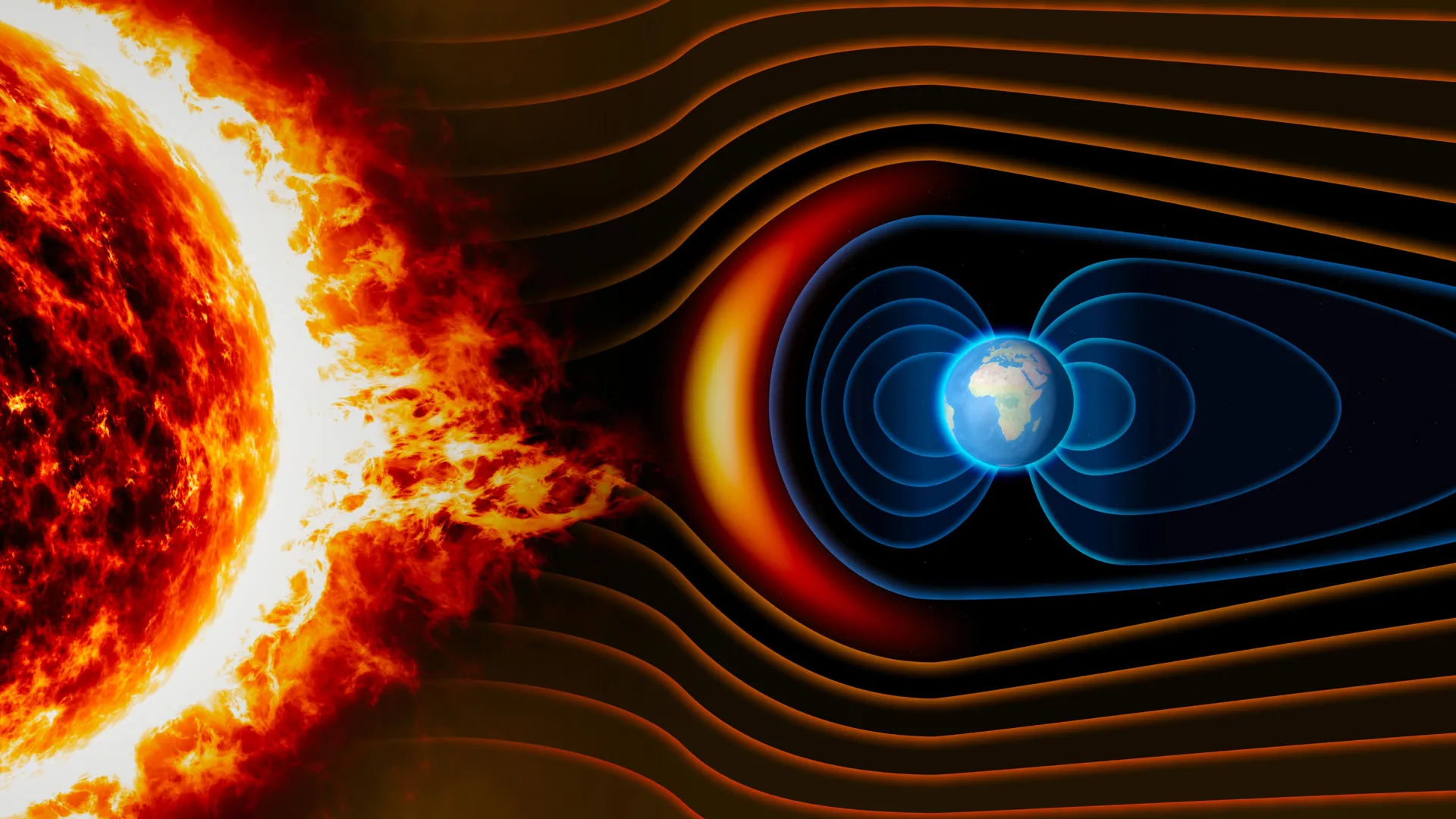
    Earth’s magnetic field went wild 600 million years ago, and scientists have finally figured out why.

    healthadminBy healthadminApril 2, 2026No Comments4 Mins Read
    Earth’s magnetic field went wild 600 million years ago, and scientists have finally figured out why.
    Share
    Facebook Twitter Reddit Telegram Pinterest Email


    Earth’s Ediacaran period, which lasted from about 630 million years ago to 540 million years ago, has long been one of the most confusing periods for scientists studying Earth’s magnetic past.

    In most other eras, the Earth behaved in a predictable manner. The tectonic plates moved at a steady rate, the climate pattern was relatively stable, and the magnetic field changed slowly around the north and south poles (though it occasionally reversed direction).

    Ediacara stands out as an exception. Rocks from this age preserve much more and dramatically fluctuating magnetic signals than those found in older or younger rocks. This unusual variability makes it difficult for researchers to use the ancient magnetism of rocks (‘paleomagnetism’) to reconstruct how continents and oceans were arranged.

    Competing theories of magnetic chaos

    Scientists have proposed several explanations for these strange magnetic patterns. One idea is that the tectonic plates were moving unusually fast during this time. Another possibility is that the entire planet has moved relative to its axis of rotation, a process known as “true polar wander.”

    But new questions arose. What if the magnetic changes weren’t random at all? What if they simply followed an unrecognized global pattern?

    That possibility is at the heart of a new study published in the journal Science Advances by an international team led by researchers at Yale University.

    A new model of the Earth’s magnetic field

    “We are proposing a new model of the Earth’s magnetic field that finds structure in its fluctuations, rather than just ignoring it as random chaos,” said David Evans, professor of earth and planetary sciences at Yale School of Arts and Sciences and co-author of the new study. “We have developed a new method for statistical analysis of paleomagnetic data from the Ediacaran period, which we believe holds the key to creating robust maps of continents and oceans at that time.”

    To investigate, the researchers focused on the Anti-Atlas region of Morocco. Collaborators from Qadi Ayyad University have identified that the mountain range contains well-preserved volcanic formations from the Ediacaran period.

    The team collected carefully oriented rock samples and analyzed them layer by layer. These samples were studied at Yale University using sensitive equipment that can detect subtle magnetic signals.

    High-resolution data reveals rapid changes

    “Previous studies of rocks from this age have often used traditional analytical tools that assume that Earth’s magnetic field behaves the same way as it did in the past,” said Dr. James Pearce, lead author of the study. student at Yale School of Arts and Sciences.

    “We took a new approach. By sampling the paleomagnets at high stratigraphic (layer-by-layer) resolution and determining the precise age of these rocks, we were able to determine exactly how fast the Earth’s magnetic poles are changing,” Pearce said.

    Additional contributions from researchers at Dartmouth College and institutions in Switzerland and Germany made it possible to establish an accurate chronology of the rock formations. Their results showed that the dramatic magnetic changes occurred over thousands of years rather than millions of years.

    This finding rules out previous explanations such as rapid plate movement or “true polar movement” that require longer timescales.

    Evidence of regular but unusual patterns

    In addition to measuring how quickly the magnetic field changes, the researchers also discovered that these changes follow a structured pattern, even if they appear anomalous.

    Using this insight, the team developed a new statistical method to track how Earth’s magnetic poles have moved. Rather than simply wobbling around the axis of rotation, the poles may have moved across the planet.

    This new framework provides a path to more accurately reconstructing the geography of the Ediacaran world.

    Bridging the great gaps in Earth’s history

    “My entire career has been dedicated to charting the movement of continents, oceans, and plates across the Earth’s surface throughout Earth’s history,” said Evans, who is also director of the Yale Institute for Paleomagnetism.

    “The Ediacaran period in particular poses a major barrier to that long-term goal, because global paleomagnetic data have not been very meaningful,” he said. “If our new statistical method proves robust, it could bridge the gap between older and younger epochs and produce a consistent visualization of plate tectonics over billions of years, from the earliest rock records to the present day.”

    This research was partially funded by a grant from the National Science Foundation.


    Source link

    Visited 13 times, 1 visit(s) today
    Share. Facebook Twitter Pinterest LinkedIn Telegram Reddit Email
    Previous ArticleNavigating 2026 Mental Health Policy Shifts: Impacts on Infrastructure and Access
    Next Article Defining obesity or delaying treatment? New paper sparks medical controversy
    healthadmin

    Related Posts

    ‘Stupid Sprinkler’ Helps Scientists Finally Solve the Mystery of Feynman’s Famous Sprinkler

    July 17, 2026

    Terraforming Mars may be more realistic than scientists once thought

    July 17, 2026

    Your fingers may hold the secret to human brain evolution

    July 17, 2026

    Tiny plastics in drinking water may strengthen dangerous bacteria

    July 17, 2026

    DNA research reveals koalas were on the verge of extinction before humans arrived

    July 17, 2026

    Scientists tested 39 different sweeteners and found unexpected effects on the gut

    July 17, 2026
    Add A Comment

    Comments are closed.

    Categories

    • Daily Health Tips
    • Discover
    • Environmental Health
    • Exercise & Fitness
    • Featured
    • Featured Videos
    • Financial Health & Stability
    • Fitness
    • Fitness Updates
    • Health
    • Health Technology
    • Healthy Aging
    • Healthy Living
    • Holistic Healing
    • Holistic Health & Wellness
    • Medical Research
    • Medical Research & Insights
    • Mental Health
    • Mental Wellness
    • Natural Remedies
    • New Workouts
    • Nutrition
    • Nutrition & Dietary Trends
    • Nutrition & Superfoods
    • Nutrition Science
    • Pharma
    • Preventive Healthcare
    • Professional & Personal Growth
    • Public Health
    • Public Health & Awareness
    • Selected
    • Sleep & Recovery
    • Top Programs
    • Weight Management
    • Workouts
    Popular Posts
    • 1773313737_bacteria_-_Sebastian_Kaulitzki_46826fb7971649bfaca04a9b4cef3309-620x480.jpgHow Sino Biological ProPure™ redefines ultra-low… March 12, 2026
    • pexels-david-bartus-442116The food industry needs to act now to cut greenhouse… January 2, 2022
    • 1773729862_TagImage-3347-458389964760995353448-620x480.jpgDespite safety concerns, parents underestimate the… March 17, 2026
    • 1773209206_futuristic_techno_design_on_background_of_supercomputer_data_center_-_Image_-_Timofeev_Vladimir_M1_4.jpegMulti-agent AI systems outperform single models… March 11, 2026
    • 1774403998_image_28620e4b6b0047f7ab9154b41d739db1-620x480.jpgGait pattern helps distinguish between Lewy body… March 24, 2026
    • Leukemia-620x480.jpgBiomimetic platform powers CAR T therapy for… March 9, 2026

    Demo
    Stay In Touch
    • Facebook
    • Twitter
    • Pinterest
    • Instagram
    • YouTube
    • Vimeo
    Don't Miss

    How different types of exercise affect mood and brain chemistry

    By healthadminJuly 17, 2026

    Mind-body practices like aerobic exercise and yoga can reduce anxiety and temporarily boost your mood,…

    Weekly Rundown: SpotitEarly partners with HITLAB

    July 17, 2026

    Changes in brain structure are associated with different types of traumatic memories

    July 17, 2026

    ‘Stupid Sprinkler’ Helps Scientists Finally Solve the Mystery of Feynman’s Famous Sprinkler

    July 17, 2026

    Subscribe to Updates

    Get the latest creative news from SmartMag about art & design.

    HealthxMagazine
    HealthxMagazine

    At HealthX Magazine, we are dedicated to empowering entrepreneurs, doctors, chiropractors, healthcare professionals, personal trainers, executives, thought leaders, and anyone striving for optimal health.

    Our Picks

    ‘Stupid Sprinkler’ Helps Scientists Finally Solve the Mystery of Feynman’s Famous Sprinkler

    July 17, 2026

    Multidisciplinary surgery improves outcome in rare corpus callosum glioma

    July 17, 2026

    ECT-like brain stimulation causes unexpected nuclear reprogramming of mature neurons

    July 17, 2026
    New Comments
      Facebook X (Twitter) Instagram Pinterest
      • Home
      • Privacy Policy
      • Our Mission
      © 2026 ThemeSphere. Designed by ThemeSphere.

      Type above and press Enter to search. Press Esc to cancel.