

Close Menu

    Subscribe to Updates

    Get the latest creative news from FooBar about art, design and business.

    What's Hot

    Ancient bone dice reveal 12,000 years of history of American gambling

    April 2, 2026

    Another AstraZeneca emerald shines as Imfinzi and Imjud slow liver cancer progression

    April 2, 2026

    Johns Hopkins University and ATA launch new interstate telehealth initiative

    April 2, 2026
    Facebook X (Twitter) Instagram
    Facebook X (Twitter) Instagram
    Health Magazine
    • Home
    • Environmental Health
    • Health Technology
    • Medical Research
    • Mental Health
    • Nutrition Science
    • Pharma
    • Public Health
    • Discover
      • Daily Health Tips
      • Financial Health & Stability
      • Holistic Health & Wellness
      • Mental Health
      • Nutrition & Dietary Trends
      • Professional & Personal Growth
    • Our Mission
    Health Magazine
    Home » News » Earth’s magnetic field went wild 600 million years ago, and scientists have finally figured out why.
    Nutrition Science

    Earth’s magnetic field went wild 600 million years ago, and scientists have finally figured out why.

    healthadminBy healthadminApril 2, 2026No Comments4 Mins Read
    Earth’s magnetic field went wild 600 million years ago, and scientists have finally figured out why.
    Share
    Facebook Twitter Reddit Telegram Pinterest Email


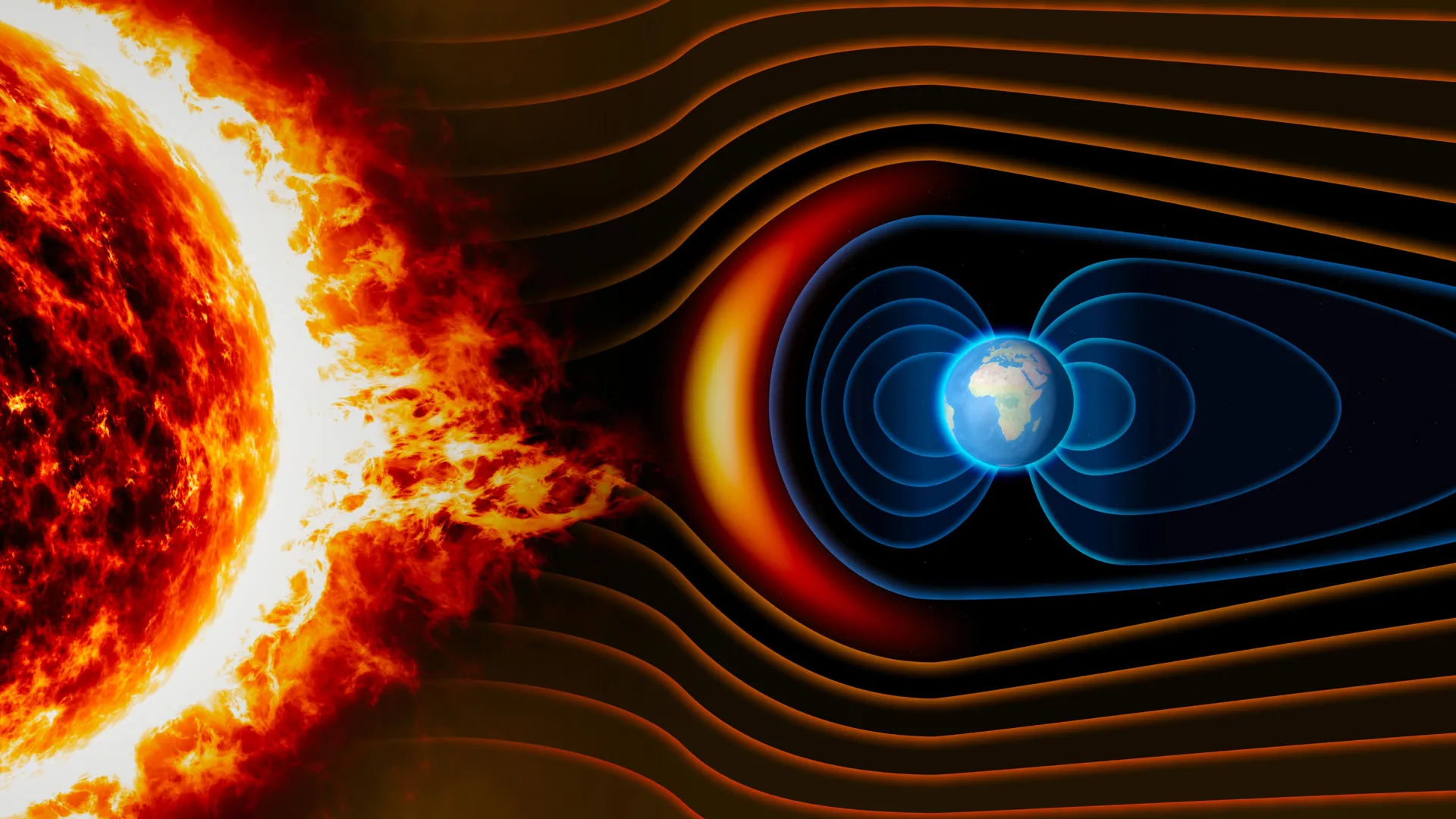
    Earth’s Ediacaran period, which lasted from about 630 million years ago to 540 million years ago, has long been one of the most confusing periods for scientists studying Earth’s magnetic past.

    In most other eras, the Earth behaved in a predictable manner. The tectonic plates moved at a steady rate, the climate pattern was relatively stable, and the magnetic field changed slowly around the north and south poles (though it occasionally reversed direction).

    Ediacara stands out as an exception. Rocks from this age preserve much more and dramatically fluctuating magnetic signals than those found in older or younger rocks. This unusual variability makes it difficult for researchers to use the ancient magnetism of rocks (‘paleomagnetism’) to reconstruct how continents and oceans were arranged.

    Competing theories of magnetic chaos

    Scientists have proposed several explanations for these strange magnetic patterns. One idea is that the tectonic plates were moving unusually fast during this time. Another possibility is that the entire planet has moved relative to its axis of rotation, a process known as “true polar wander.”

    But new questions arose. What if the magnetic changes weren’t random at all? What if they simply followed an unrecognized global pattern?

    That possibility is at the heart of a new study published in the journal Science Advances by an international team led by researchers at Yale University.

    A new model of the Earth’s magnetic field

    “We are proposing a new model of the Earth’s magnetic field that finds structure in its fluctuations, rather than just ignoring it as random chaos,” said David Evans, professor of earth and planetary sciences at Yale School of Arts and Sciences and co-author of the new study. “We have developed a new method for statistical analysis of paleomagnetic data from the Ediacaran period, which we believe holds the key to creating robust maps of continents and oceans at that time.”

    To investigate, the researchers focused on the Anti-Atlas region of Morocco. Collaborators from Qadi Ayyad University have identified that the mountain range contains well-preserved volcanic formations from the Ediacaran period.

    The team collected carefully oriented rock samples and analyzed them layer by layer. These samples were studied at Yale University using sensitive equipment that can detect subtle magnetic signals.

    High-resolution data reveals rapid changes

    “Previous studies of rocks from this age have often used traditional analytical tools that assume that Earth’s magnetic field behaves the same way as it did in the past,” said Dr. James Pearce, lead author of the study. student at Yale School of Arts and Sciences.

    “We took a new approach. By sampling the paleomagnets at high stratigraphic (layer-by-layer) resolution and determining the precise age of these rocks, we were able to determine exactly how fast the Earth’s magnetic poles are changing,” Pearce said.

    Additional contributions from researchers at Dartmouth College and institutions in Switzerland and Germany made it possible to establish an accurate chronology of the rock formations. Their results showed that the dramatic magnetic changes occurred over thousands of years rather than millions of years.

    This finding rules out previous explanations such as rapid plate movement or “true polar movement” that require longer timescales.

    Evidence of regular but unusual patterns

    In addition to measuring how quickly the magnetic field changes, the researchers also discovered that these changes follow a structured pattern, even if they appear anomalous.

    Using this insight, the team developed a new statistical method to track how Earth’s magnetic poles have moved. Rather than simply wobbling around the axis of rotation, the poles may have moved across the planet.

    This new framework provides a path to more accurately reconstructing the geography of the Ediacaran world.

    Bridging the great gaps in Earth’s history

    “My entire career has been dedicated to charting the movement of continents, oceans, and plates across the Earth’s surface throughout Earth’s history,” said Evans, who is also director of the Yale Institute for Paleomagnetism.

    “The Ediacaran period in particular poses a major barrier to that long-term goal, because global paleomagnetic data have not been very meaningful,” he said. “If our new statistical method proves robust, it could bridge the gap between older and younger epochs and produce a consistent visualization of plate tectonics over billions of years, from the earliest rock records to the present day.”

    This research was partially funded by a grant from the National Science Foundation.


    Source link

    Visited 1 times, 1 visit(s) today
    Share. Facebook Twitter Pinterest LinkedIn Telegram Reddit Email
    Previous ArticleNavigating 2026 Mental Health Policy Shifts: Impacts on Infrastructure and Access
    Next Article Defining obesity or delaying treatment? New paper sparks medical controversy
    healthadmin

    Related Posts

    Ancient bone dice reveal 12,000 years of history of American gambling

    April 2, 2026

    This simple Japanese diet could help you live longer without dieting

    April 2, 2026

    Mysterious Greek inscription may reveal lost temple beneath Syria’s Great Mosque

    April 2, 2026

    What’s hidden inside colon cancer could change treatment

    April 2, 2026

    NASA launches Artemis II for first manned lunar flight in 50 years

    April 2, 2026

    Scientists discover ‘molecular shredder’ that helps deadly parasites evade immune system

    April 2, 2026
    Add A Comment
    Leave A Reply Cancel Reply

    Categories

    • Daily Health Tips
    • Discover
    • Environmental Health
    • Exercise & Fitness
    • Featured
    • Featured Videos
    • Financial Health & Stability
    • Fitness
    • Fitness Updates
    • Health
    • Health Technology
    • Healthy Aging
    • Healthy Living
    • Holistic Healing
    • Holistic Health & Wellness
    • Medical Research
    • Medical Research & Insights
    • Mental Health
    • Mental Wellness
    • Natural Remedies
    • New Workouts
    • Nutrition
    • Nutrition & Dietary Trends
    • Nutrition & Superfoods
    • Nutrition Science
    • Pharma
    • Preventive Healthcare
    • Professional & Personal Growth
    • Public Health
    • Public Health & Awareness
    • Selected
    • Sleep & Recovery
    • Top Programs
    • Weight Management
    • Workouts
    Popular Posts
    • the-pros-and-cons-of-paleo-dietsThe Pros and Cons of Paleo Diets: What Science Really Says April 16, 2025
    • Improve Mental Health10 Science-Backed Practices to Improve Mental Health… March 11, 2025
    • How Healthy Living Is Transforming Modern Wellness TrendsHow Healthy Living Is Transforming Modern Wellness… December 3, 2025
    • Healthy Living: Expert Tips to Improve Your Health in 2026Healthy Living: Expert Tips to Improve Your Health in 2026 November 16, 2025
    • "The Best Daily Health Apps to Track Your Wellness Goals"The Best Daily Health Apps to Track Your Wellness… August 15, 2025
    • daily vitamin D needsWhy Sunlight Is Crucial for Your Daily Vitamin D Needs June 12, 2025

    Demo
    Stay In Touch
    • Facebook
    • Twitter
    • Pinterest
    • Instagram
    • YouTube
    • Vimeo
    Don't Miss

    Ancient bone dice reveal 12,000 years of history of American gambling

    By healthadminApril 2, 2026

    new research in ancient history of americaThe leading journal of North American archeology, published by…

    Another AstraZeneca emerald shines as Imfinzi and Imjud slow liver cancer progression

    April 2, 2026

    Johns Hopkins University and ATA launch new interstate telehealth initiative

    April 2, 2026

    Psychological rift between Democrats and Republicans in democratic backsliding

    April 2, 2026

    Subscribe to Updates

    Get the latest creative news from SmartMag about art & design.

    HealthxMagazine
    HealthxMagazine

    At HealthX Magazine, we are dedicated to empowering entrepreneurs, doctors, chiropractors, healthcare professionals, personal trainers, executives, thought leaders, and anyone striving for optimal health.

    Our Picks

    Psychological rift between Democrats and Republicans in democratic backsliding

    April 2, 2026

    This simple Japanese diet could help you live longer without dieting

    April 2, 2026

    Intuition Robotics’ ElliQ social robot expands to Medicaid

    April 2, 2026
    New Comments
      Facebook X (Twitter) Instagram Pinterest
      • Home
      • Privacy Policy
      • Our Mission
      © 2026 ThemeSphere. Designed by ThemeSphere.

      Type above and press Enter to search. Press Esc to cancel.