


Randomized trials have shown that early skin-to-skin care can reduce neonatal stress and support breastfeeding, but its role in reducing jaundice remains unclear.
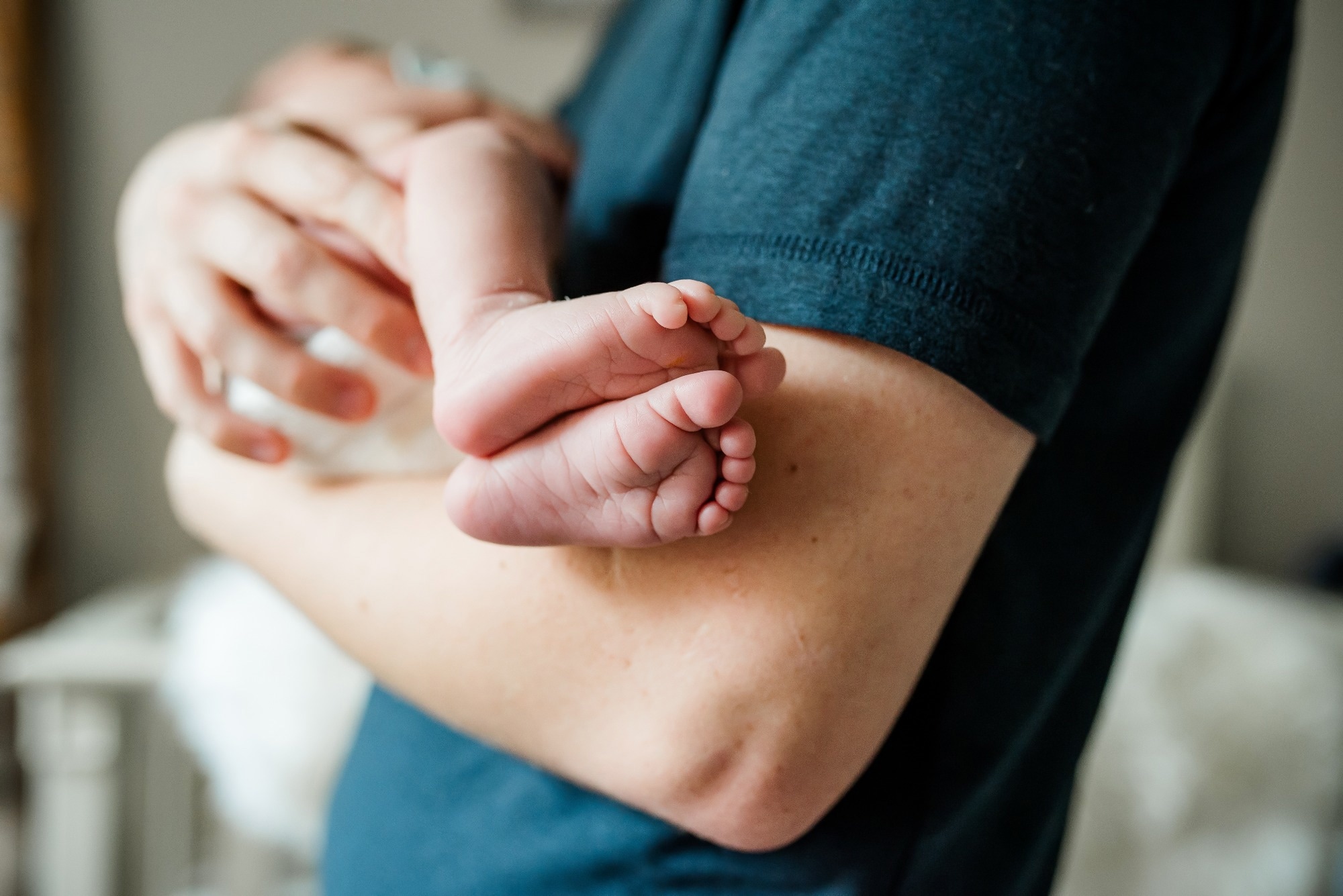
Study: Effects of early skin-to-skin contact after vaginal delivery on neonatal stress and 5-day bilirubin levels: a randomized trial. Image credit: Sbethmorris / Shutterstock
In a recent study published as a magazine article, scientific reportresearchers evaluated whether early skin-to-skin contact (SSC) after vaginal delivery, when combined with early breastfeeding, reduces neonatal stress and affects total serum bilirubin (TSB) levels at day 5 of life.
background
Each year, millions of newborns undergo routine medical procedures shortly after birth, many of which can cause unnecessary stress during the already difficult transition from the womb to the outside world. It is known that early SSC has a positive impact on adaptation, lactation, and mother-infant bonding.
Early breastfeeding also helps expel meconium and remove bilirubin from the newborn’s body, which can reduce the severity of physiological jaundice. Despite these recognized benefits, evidence regarding the combined effects of early SSC on neonatal stress and TSB levels remains limited. Further studies are needed to clarify these results under routine clinical conditions.
About research
Researchers conducted a prospective, longitudinal, randomized clinical trial among mothers of healthy full-term newborns who delivered vaginally between June 2020 and March 2021 at a university hospital in western Turkiye.
This study received ethical approval and written informed consent was obtained from participants. This study was conducted in accordance with Consolidated Standards of Reporting Trials (CONSORT) guidelines.
Eligible mothers were 18 to 45 years old with a singleton pregnancy of 37 weeks or more of gestation and no medical conditions that could interfere with breastfeeding or neonatal outcomes. Healthy newborns with a 5-minute Apgar score of at least 8 and no congenital abnormalities or need for resuscitation were included.
After simple randomization by tossing a coin, mother-newborn pairs were assigned to either routine care or SSC. After exclusion, 30 mother-newborn dyads remained in each group for final analysis. In the intervention group, after routine procedures, SSC was initiated approximately 2–3 minutes after birth and continued until transfer to the maternity ward, and breastfeeding was initiated during contact.
The control group received regular hospital treatment without SSC, but breastfeeding began within 1 hour of birth. Neonatal stress was measured using the Neonatal Stress Scale (NSS) at various time points, including immediately after birth, in a radiant warmer, and during intramuscular (IM) administration of vitamin K. In the intervention group, stress was also assessed 5 minutes after the start of SSC.
Day 5 TSB concentrations were obtained from hospital routine laboratory records, and lactation status and neonatal weight loss were also recorded. Data were analyzed using IBM Statistical Package for the Social Sciences (IBM SPSS) Statistics 20.0, and statistical significance was defined as p<0.05.
Research results
Maternal and neonatal characteristics of both intervention and control groups were comparable with respect to maternal age, birth weight, maternal education status, employment status, previous pregnancy history, breastfeeding knowledge, and 5-minute Apgar score. However, the mean gestational age of the control group was slightly lower than the intervention group (38.53±1.10 weeks vs. 39.10±1.06 weeks; p=0.040).
Infants in the intervention group received SSC for an average of 32.27±3.80 minutes, starting approximately 2 to 3 minutes after birth and ranging from 25 to 38 minutes after the usual procedure.
Immediately after birth, the median NSS score of the intervention group was 5.00, interquartile range (IQR) 2.00, and the median score of the control group was 5.50, IQR 1.00, with no statistically significant difference (p=0.237). Similarly, stress scores measured while the newborns were under the radiant heater were not significantly different between groups (p=0.485).
In contrast, 5 minutes after the start of SSC, neonates in the intervention group showed a median NSS score of 0.00 (IQR 1.00), indicating a significant decrease in stress.
During IM vitamin K administration, neonates receiving SSC had significantly lower stress scores than neonates receiving routine care (median 4.00 vs. 6.00; p<0.001), with a large effect size (r=0.682).
Within-group analysis further showed that NSS scores were significantly different across assessment points for both groups. In the intervention group, the score was lowest 5 minutes after the start of SSC, whereas in the control group, the score was lowest under radiant heating and rose again during IM vitamin K administration.
Breastfeeding results showed differences between the two groups. During the first 24 hours of life, nearly all infants in both groups were exclusively breastfed. During this period, 29 infants in each group were exclusively fed breast milk. However, by the fifth day of life, 86.7% (26/30) of the infants in the SSC group continued to exclusively breastfeed compared to 60.0% (18/30) of the infants in the control group, a statistically significant difference (p=0.020).
Despite higher exclusive breastfeeding rates in the intervention group, there was no significant difference in TSB levels at 5 days of age. The median TSB level in the intervention group was 10.90 mg/dL (IQR 4.61) compared to 11.54 mg/dL (IQR 5.28) in the control group (p=0.126). Similarly, neonatal weight loss was not significantly different between groups. Median weight loss in the 24 hours before breastfeeding was 2.98% in the intervention group and 3.41% in the control group (p=0.149).
The median percent weight loss on day 5 was 2.94% and 3.38%, respectively (p=0.574). Although these findings indicate that early SSC reduces neonatal stress assessed by NSS and is associated with increased exclusive breastfeeding rates, this study did not show statistically significant differences in day 5 bilirubin concentrations or early neonatal weight loss.
conclusion
Early SSC after vaginal delivery was associated with lower neonatal stress levels, especially during intramuscular vitamin K administration. Early SSC was associated with higher rates of exclusive breastfeeding during the first 5 days of life. However, despite this clear advantage of breastfeeding, no significant differences in 5-day TSB levels or infant weight loss were observed between early SSC and normal postnatal care conditions.
While these findings support incorporating early SSC into postnatal care to improve neonatal comfort and breastfeeding success, they indicate that the impact of SSC on bilirubin levels remains uncertain. However, this result should be interpreted with caution because this study was conducted at a single center, had a small final sample, was enrolled retrospectively, used coin-flip randomization without concealment of allocation, relied on unblinded NSS assessment, and measured bilirubin at only one postnatal time point.
As a result, the bilirubin findings should be considered exploratory and hypothesis-generating rather than definitive. Larger studies are needed to further evaluate this relationship.
Reference magazines:
- Kanad, N., Yavuz, B. (2026). Effects of early skin-to-skin contact after vaginal delivery on neonatal stress and 5-day bilirubin levels: a randomized trial. scientific report. Doi: 10.1038/s41598-026-60971-3 Accepted manuscript/press article. https://www.nature.com/articles/s41598-026-60971-3
