


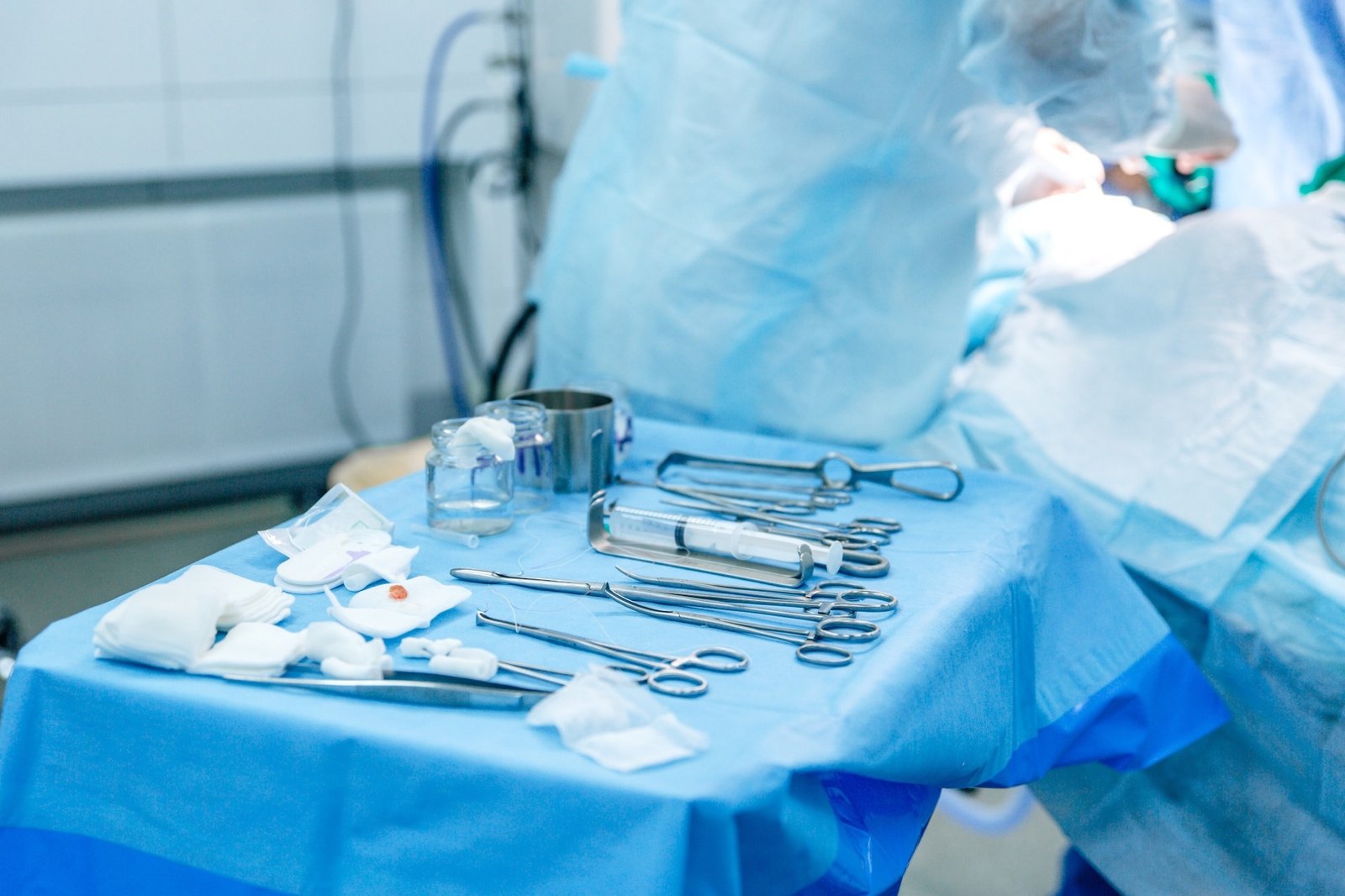
The “5 second rule” does not apply in the operating room. In the operating room, even brief contact with the floor can contaminate implants, making real-time response difficult for surgeons.
 study: The “5 second” rule for dropped food: Does it apply to medical items dropped in the operating room? A randomized study of disinfection approaches for contaminated arthroplasty implants. Image credit: Yulai Studio/Shutterstock.com
A recent randomized bench study published in IInfection control and hospital epidemiology evaluated whether immersion in sterile chlorhexidine alcohol (CHG) or povidone-iodine (PI) could effectively reduce the bioburden of polyethylene liners accidentally dropped onto the operating room (OR) floor compared with ethanol immersion or no intervention.
Implant fall in the operating room: an overlooked clinical risk
Contrary to common assumptions, implants that have been briefly dropped into the operating room are not free of contamination and result in measurable microbial contamination. Accidental implant falls occur more frequently than expected, with a significant proportion occurring during emergency procedures when surgical conditions are most demanding. Despite the clinical importance of this event, no standardized guidelines currently exist to instruct surgeons in the management of intraoperatively dropped implants.
Operating room floors, like most surfaces in the clinical environment, are regularly colonized by harmful pathogens. Therefore, any item that comes into contact with the floor, especially surgical implants, poses a real risk of contamination. A previous study investigated professionals’ reactions to the use of drop polyethylene (PE) implants in the operating room. This study found that the majority of experienced orthopedic surgeons preferred replacement over contaminated implants. However, some surgeons describe alternative approaches such as soaking the implant in antiseptic solution or temporarily placing an interim implant while a replacement is obtained.
Evaluation of disinfectant effectiveness on contaminated PE liners
The current prospective randomized controlled bench study evaluated the effectiveness of disinfectants in decontaminating PE liners dropped on the operating room floor. The study was conducted from June to July 2025 in four orthopedic ORs at Duke University Medical Center. The actual intraoperative situation was simulated.
The PE liner from the initial hip or knee arthroplasty case was placed on the operating room floor by the surgeon in a standing position for 10 seconds. Each liner surface was divided into two halves, with the left side wiped before the intervention and the right side wiped after the intervention. Liners were randomized 1:1:1:1 to control (no disinfection), 2% chlorhexidine alcohol (CHG) in 70% isopropyl alcohol, 10% povidone-iodine (PI), or 70% ethanol (EtOH). All disinfectants were sterile.
Floor sponge samples were collected to assess baseline bioburden. Samples were plated on standard microbial media, colony forming units (CFU) were quantified, and microorganisms were identified by 16S rRNA sequencing.
The primary outcome was the total number of CFU after intervention. The secondary outcome was the proportion of liners contaminated with clinically important pathogens. The researchers defined clinically important pathogens as Staphylococcus aureus, Enterococcus species, and Gram-negative bacteria.
Dropped PE liners harbor clinically relevant pathogens, which are effectively reduced by CHG and PI disinfectants
In the present study, we analyzed 213 PE liners (142 hips, 71 knees) and prospectively randomized them into a control group (35 hips, 21 knees), an EtOH group (31 hips, 22 knees), a CHG group (38 hips, 16 knees), and a PI group (38 hips, 12 knees). This randomized design allowed for a direct comparative assessment of disinfectant efficacy under standardized operating conditions.
To characterize the baseline microbial environment of the operating room, 19 sponge samples were collected from designated floor fall sites. Analysis revealed that the operating room floor environment was heavily contaminated. The median total CFU count was 2,958, and all 19 samples had microbial growth, indicating universal contamination across sampling locations.
Pathogen-specific assays identified methicillin resistance and methicillin sensitivity Staphylococcus aureus Enterococcus spp. (MRSA/MSSA) was detected in 42% of samples (MRSA/MSSA) despite a median CFU of 0. 95% (median CFU 3,690) and 63% (median CFU 399) were Gram-negative bacterial species, confirming a diverse and substantial microbial load that poses a direct contamination risk to the PE liner upon contact with the floor.
Preintervention bioburden across all liners was 10 CFU, confirming measurable microbial contamination of the implant surfaces prior to disinfection. After intervention, the overall median bioburden decreased to 0 CFU, reflecting a statistically significant reduction in surface contamination.
CHG and PI showed comparable efficacy and achieved a statistically significant reduction in CFU compared to the untreated control, highlighting their superior antibacterial performance. However, ethanol failed to achieve a statistically significant reduction compared to the control and was significantly less effective than both CHG and PI, suggesting that it is insufficient as a sole disinfectant for implant surfaces.
When stratified by implant type, all three disinfectants significantly reduced CFU of knee liners compared to the control. However, in the hip liner, only CHG and PI showed statistically significant decreases. Although ethanol did not outperform the control, this highlighted potential differences in performance that may be related to implant characteristics or sample size rather than a confirmed mechanism.
Clinically important pathogens, i.e., microorganisms with established associations with periprosthetic joint infections (PJI), were recovered from 34.3% of PE liners before disinfection. After intervention, the pathogen recovery rate was significantly reduced to 19.2% of the liner.
Both CHG and PI significantly reduced recovery of clinically important pathogens compared to controls. Ethanol showed no statistically significant differences from either control or PI and was significantly less effective than CHG, further reinforcing the limited clinical utility of ethanol in this setting.
Staphylococcus aureus After disinfection, the prevalence decreased from 22% to 12%, with CHG outperforming both the control and ethanol and performing similarly to PI. Enterococcus prevalence decreased from 16% to 8%, but no significant differences between groups were observed. The prevalence of Gram-negative bacteria decreased from 12% to 3%, and all three disinfectants outperformed the control but did not show significant differences from each other, indicating similar efficacy rather than defined class-level mechanisms.
By implant type, knee liners did not differ significantly between arms, whereas hip liners reflected the overall trend, with CHG and PI outperforming control and ethanol, possibly due to differences in shape, surface area, or sample size.
Disinfection reduces risk but does not eliminate germs
Current study results demonstrate that the operating room floor is an important but underappreciated source of microbial contamination, and contact can transfer clinically relevant pathogens to the PE liner. Although CHG and PI reduced bacterial loads, neither could reliably achieve sterility and present a persistent residual risk that cannot be ignored. Residual contamination may remain even after disinfection.
Therefore, replacement of fallen PE liners remains the recommended action. If replacement is not possible, immersion in CHG or PI is the most protective rescue strategy. Patients should be informed of such events and monitored for signs of infection. In the future, standardized intraoperative rescue protocols are needed to reduce variability in clinical decision-making and improve patient safety. Importantly, these findings are based on bench studies of contamination and do not directly represent outcomes in clinical infections.
Click here to download your PDF copy.
Reference magazines:
-
Warren, BG et al. (2026) The “5 second” rule for dropped food: Does it also apply to medical items dropped in the operating room? A randomized study of disinfection approaches for contaminated arthroplasty implants. Infection control and hospital epidemiology. 1-5. Toi:10.1017/ice.2026.10418
