


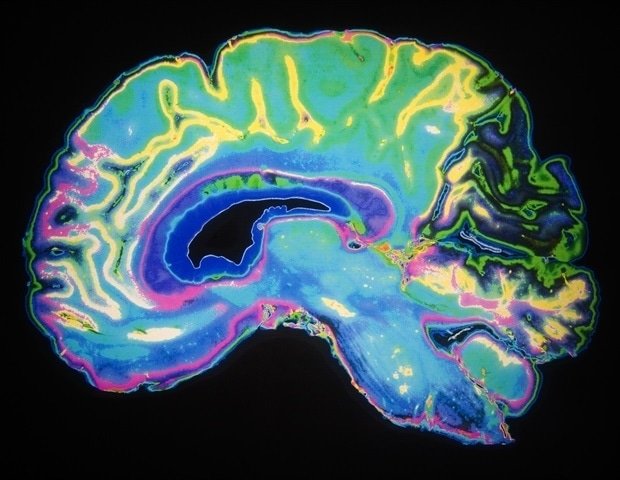
To reach the regions of the cerebral cortex that form neural circuits, newborn nerve cells must pass through dense, narrow spaces, through dense tissue, past other cells, and between fibers.
In a new study published in natureresearchers at Kyoto University’s Institute for Cellular and Materials Science (WPI-iCeMS) and their collaborators report that this journey causes extensive DNA damage in neurons, causing double-strand breaks in which both strands of the double helix are completely severed. Although this is the most severe type of DNA damage that can cause mutations and cell death, the researchers surprisingly discovered that this is a normal, everyday feature of brain cortical formation, and that healthy brains quickly repair damage before it occurs.
“The developing brain appears to have evolved to withstand and efficiently repair damage to neurons,” says WPI-iCeMS professor Mineko Kengaku, who led the study. “But by understanding the limits of that tolerance and what happens when repair is incomplete, we can move closer to understanding a variety of neurological conditions.”
The researchers mimicked this journey by guiding neurons through microchannels designed to mimic the tight spaces of developing brain tissue. Fluorescent markers revealed that DNA double-strand breaks are formed as cells pass through the channel and disappear when they reach the other side. Most were repaired within 24 hours with no permanent impact on functionality.
Researchers pinpointed the cause of DNA breaks to topoisomerase IIβ. Topoisomerase IIβ is an enzyme that makes controlled cuts in DNA to release torsional strains normally caused by daily cellular activities. This is similar to cutting a twisted cable, unraveling it, and then reattaching it. Mechanical stress causes the enzyme to get stuck in the process, causing the ends of the DNA to break. A repair pathway known as non-homologous end joining sews these broken ends back together.
This is very different from what happens with some cancer cells that migrate through the same microchannels. DNA damage occurs more randomly and can impair cell function or even kill cells. In neurons, this damage occurs primarily in non-critical regions of the genome rather than active genes, so overall function is preserved.
To test what happens when this repair fails, the researchers created mice in which new neurons in the cerebellum lacked ligase 4, a key repair enzyme. The animals developed normally, but in early adulthood they gradually developed mild and progressive balance impairments, symptoms reminiscent of human genome instability syndrome affecting the cerebellum.
This finding raises new questions about whether these early disruptions contribute to neuronal individuality and neurodevelopmental and neurodegenerative diseases.
It changes the way we think about neuronal genomes. Although all neurons are derived from the same DNA, DNA damage and repair can create small genetic differences between individual neurons through small mechanical processes. Part of that history could be written into the genome itself. ”
WPI-iCeM Professor Mineko Kengaku
This research is a collaboration between Kyoto University, the University of Tokyo, Osaka University, the National University of Singapore, and the Tokyo Metropolitan Institute of Medical Science.
sauce:
Reference magazines:
Chan, Z. others. (2026). Limited migration causes nonlethal DNA damage to developing neurons. nature. DOI: 10.1038/s41586-026-10648-8. https://www.nature.com/articles/s41586-026-10648-8
