


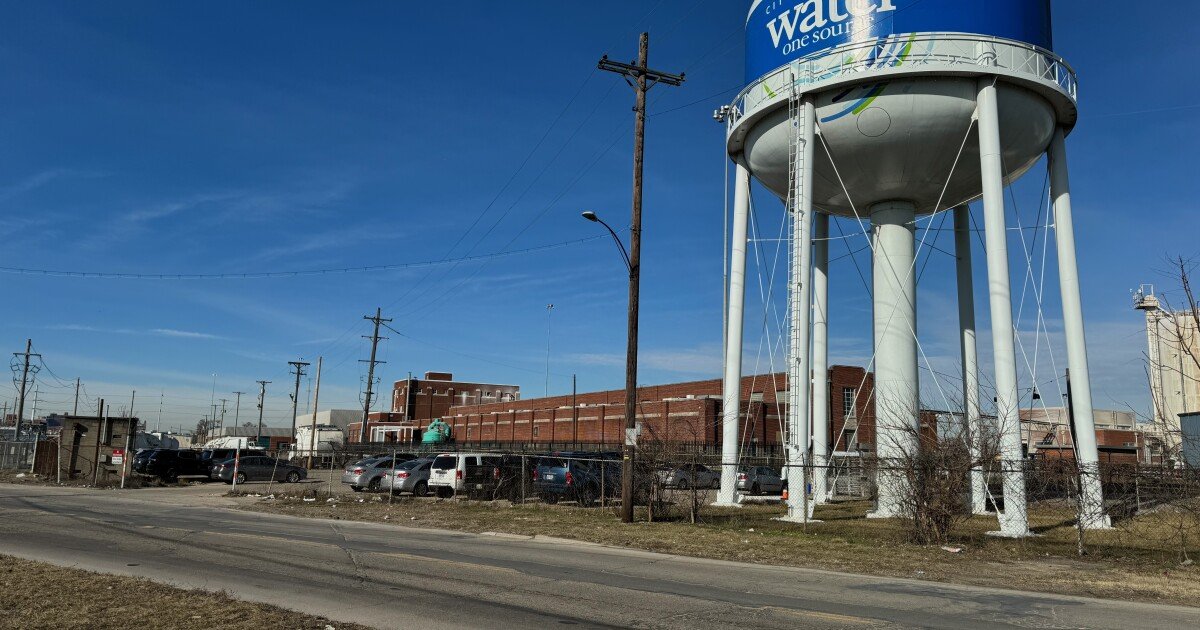
The city of Dayton expects to spend hundreds of millions of dollars to remove PFAS from drinking water.
The city recently filed a new lawsuit accusing Wright-Patterson Air Force Base of being responsible for the costs.
Cities across America are grappling with what to do about PFAS contamination. These “forever chemicals” are notoriously difficult to remove, and the high cost of compliance has sparked legal battles across the country over who is responsible for cleaning them up.
The lawsuit filed by the city of Dayton is the latest in a five-year legal dispute between the Department of Defense and Wright-Patt over PFAS.
Dayton: Wright-Patt ‘jeopardized’ ability to meet PFAS rules
At the Ottawa Treatment Plant, one of two water treatment plants operated by the City of Dayton, PFAS levels exceed upcoming drinking water standards.
Dayton has already spent $14 million on emergency measures to lower levels, including a system to mix water between two treatment plants, according to a lawsuit filed Feb. 19 in federal court in Cincinnati.
The city is currently considering installing a filtration system at the Ottawa plant, which is estimated to cost $384 million to build and $70 million to maintain over 20 years.
The lawsuit alleges that the contamination comes from PFAS migrating off base.
The city wants the base to pay for those costs and the cost of installing a groundwater treatment system on base grounds, saying Wright-Patt “jeopardized” Dayton’s ability to comply with future federal PFAS limits.
“The Ottawa Treatment Plant has consistently exceeded the U.S. Environmental Protection Agency’s new drinking water standards for PFAS by a factor of three to four times, effective June 2029, and continues to do so,” the new complaint states.
“Perhaps even more ominous is the fact that data collected from the city’s monitoring wells just upstream of the Mad River oil field’s production wells continues to show that PFAS concentrations hundreds of times higher than new drinking water standards are migrating from WPAFB Area A to the city’s wells.”
Dayton’s lawyers argue that this represents a “massive PFAS plume that will not subside or diminish at any time in the foreseeable future” without groundwater treatment.
Prior to the legal filing, the city said it sent letters to Wright-Patterson officials in February and June of last year saying the city was entitled to a refund, but received no response.
Neither the City of Dayton nor Wright-Patterson officials responded to direct questions from WYSO.
Air Force “remains committed” to addressing concerns
The city of Dayton has been actively pursuing a lawsuit with the Department of Defense (now known as the Department of the Army) since 2021 over Wright-Pat’s failure to prevent PFAS from entering the city’s oil fields.
Base and Pentagon officials dispute the claims and say they are taking an aggressive approach to remediation. The case has not yet reached a conclusion.
In June, base officials told WYSO that Wright-Patt spent $61.9 million responding to PFAS contamination.
“The Air Force is aware of the City of Dayton’s lawsuit and remains committed to working collaboratively with local, state, and federal partners to address environmental concerns in accordance with CERCLA and all applicable laws,” the base’s public information office told WYSO in a statement.
“We will continue to prioritize transparency, protect public health, and support our continued efforts to ensure safe and sustainable solutions for our communities,” the rest of the statement reads.
“Since 2017, the city has spent millions of dollars working with state and federal partners to protect public health. These actions are part of a long-standing effort to ensure safe drinking water for Dayton residents and businesses,” Dayton City Manager Sherry Dickstein told WYSO in a statement.
The statement continued: “These claims are necessary to enforce federal action, recover costs, and protect Dayton ratepayers from an unreasonable and overwhelming financial burden. The federal government, and in particular the Department of the Army, must provide funding to Wright-Patterson Air Force Base to pay for the significant costs of this renovation.”
