


- A new study has found that most countries are on the wrong track when it comes to meeting the United Nations’ 2030 global pesticide risk reduction targets, and are unlikely to be met without significant changes to agricultural systems around the world.
- To determine global pesticide risk, researchers used data on pesticide use in 65 countries from 2013 to 2019, as well as data on the toxicity of 625 pesticides associated with eight different species groups.
- Researchers found that only one country, Chile, is on track to meet the UN goal of reducing pesticide risks by 50% by 2030. The research team noted that while the overall ecotoxicity of pesticides is rising worldwide, only four countries account for more than half of the world’s total applied toxicity (TAT): the United States, Brazil, China, and India.
- The researchers also found that global pesticide risks are dominated by a small number of highly toxic chemicals and, acting on this finding, suggest that targeted reductions in the use of these specific chemicals may be one of the best opportunities for countries to get back on track to meeting their 2030 pesticide risk reduction targets.
See all ideas that matter
At the 15th United Nations Conference on Biological Diversity in 2022, countries around the world pledged to halve the overall threat to biodiversity from pesticides and other hazardous chemicals by 2030. But new research shows that most countries are on the wrong track when it comes to ecological risks from pesticides, and the United Nations’ global risk reduction targets are unlikely to be met without major changes to agricultural systems.
In fact, only one country, Chile, is currently on track to meet the United Nations goal of reducing pesticide risks by 50% by 2030, according to a recent study by a team of environmental scientists from the German university RPTU Kaiserslautern-Landau published in the journal Pesticides. science.
Pesticide risk in this context is defined as the potential for chemicals used to control agricultural pests (including insecticides, herbicides, and fungicides) to adversely affect species that are not the direct target of the pesticide, and thus the broader ecosystem and ultimately humans.
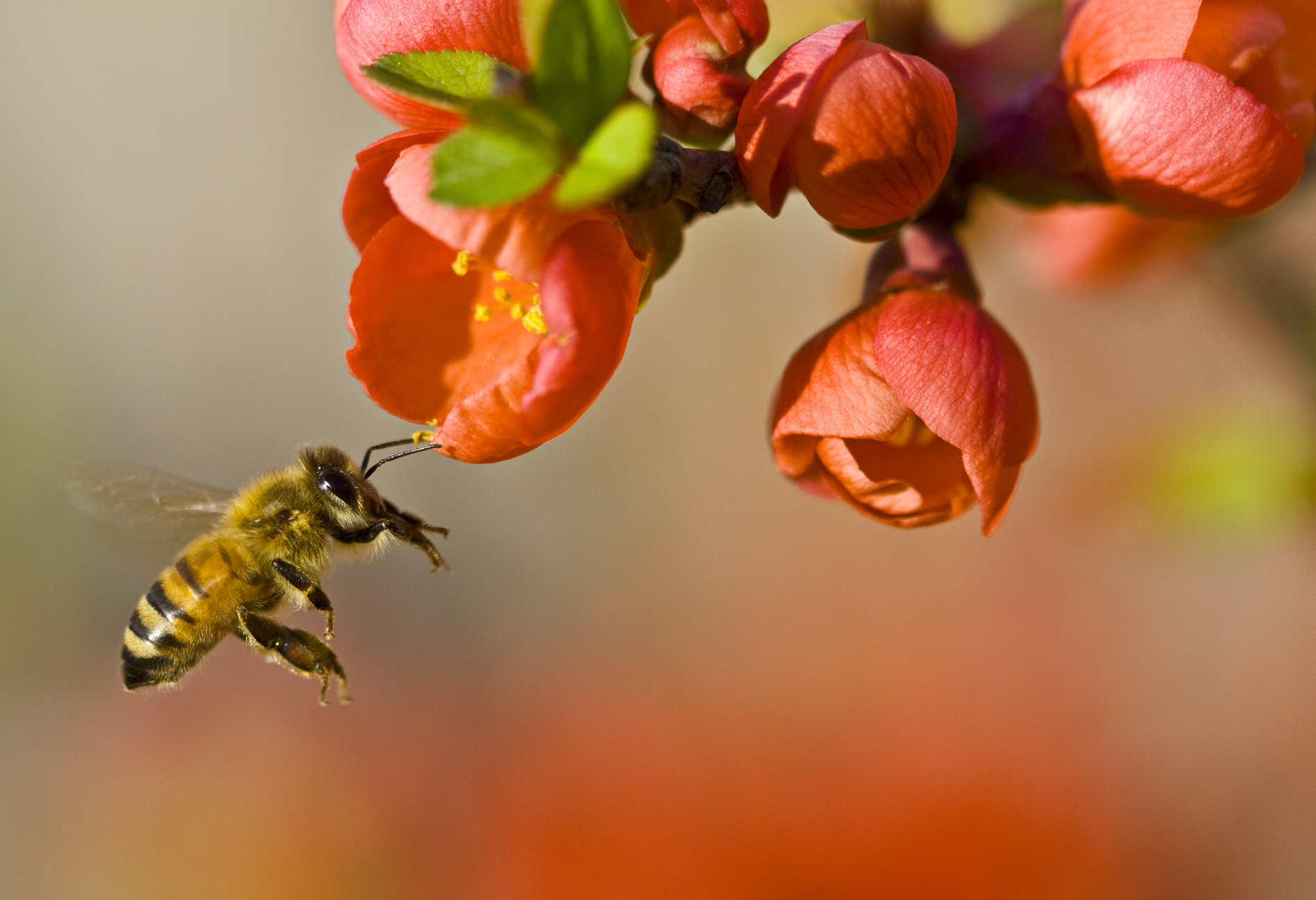 A new study has found that the toxicity of pesticides applied to pollinating insects such as honeybees is increasing. Image by Louise Docker via Wikimedia Commons (CC BY 2.0).
To determine global pesticide risks, researchers looked at data on pesticide use from 2013 to 2019 in 65 countries, representing nearly 80% of the world’s planted area. These statistics were then combined with data on the toxicity of 625 pesticides to eight different species groups, including aquatic invertebrates and plants, fish, pollinating insects, soil organisms, terrestrial arthropods, plants, and vertebrates. This new analytical approach, called Total Applied Toxicity (TAT), was developed by RPTU researchers and first introduced by the same team in a 2021 paper that found that pesticide toxicity has increased significantly in the United States, particularly to aquatic invertebrates and pollinators.
“TAT essentially expresses the amount of pesticide used in terms of its toxicity rather than its mass, thus giving a toxicity-weighted usage estimate,” explains ecotoxicologist and RPTU Kaiserslautern-Landau Professor of Environmental Sciences Ralf Schulz, who led the study with environmental scientist Dr. Jakob Wolfram. Candidate in Aquatic Ecotoxicology at RPTU.
“When the United Nations decided in December 2022 to (reduce) pesticide risks in the Kunming-Montreal (Global Framework for Biodiversity) Protocol, it did not define what this meant,” Schulz said. The TAT is the result of the RPTU team’s efforts to “come up with a simple indicator that countries can use to determine how well they have actually reduced pesticide risks.” This will now be used to track progress towards achieving the 2030 pesticide risk reduction targets (draft guidelines have already been published by the United Nations and are expected to be finalized in June).
 A self-propelled pesticide duster sprays pesticides on a field. Research shows that most countries are on the wrong track when it comes to meeting the United Nations’ 2030 global pesticide risk reduction goals. Image by Lite-Trac via Wikimedia Commons (CC BY-SA 3.0).
The research team found that the overall ecological toxicity of pesticides is increasing around the world, with just four major agricultural producers, Brazil, China, India, and the United States, accounting for more than half of the world’s TAT.
They determined that while pesticide risks in some countries, such as China, Japan and Venezuela, are trending in the right direction, these countries also need to accelerate efforts to meet the UN’s 2030 targets. Meanwhile, countries such as Thailand, Denmark, Ecuador and Guatemala are moving in the wrong direction and must take urgent action to reverse the ecological damage caused by pesticide use.
The researchers found that while global TAT increased for most species groups, particularly terrestrial arthropods, soil organisms, and fish, only two species groups, aquatic plants and terrestrial vertebrates, showed a decline in applied toxicity. They also found that the processing of fruits and vegetables, corn, soybeans, grains, and rice accounts for more than three-quarters of the world’s pesticide toxicity.
Perhaps most importantly, the researchers determined that global pesticide risk is dominated by just a small number of highly toxic chemicals. They suggest that a focus on reducing these high-risk chemicals may be one of the best opportunities for countries to stay on track to achieving their 2030 pesticide risk reduction targets.
“When it comes to countries,” Schulz said, “obviously there are very important (domestic) pesticide users that contribute significantly to the overall TAT. But if you look at different species groups, you often find that it’s a small number of pesticides, or maybe a dozen or so, that are most associated with TAT.”
“In my view, this is good news, because if we know that there is a risk to pollinators, for example, we can look at which pesticides are the biggest cause of pollinator risk (pollinator TAT) and then… come up with measures to deal with these types of pesticides,” he explained.
For example, countries can replace highly toxic pesticides with less toxic ones or change their agricultural systems so that there is less need to use toxic pesticides.
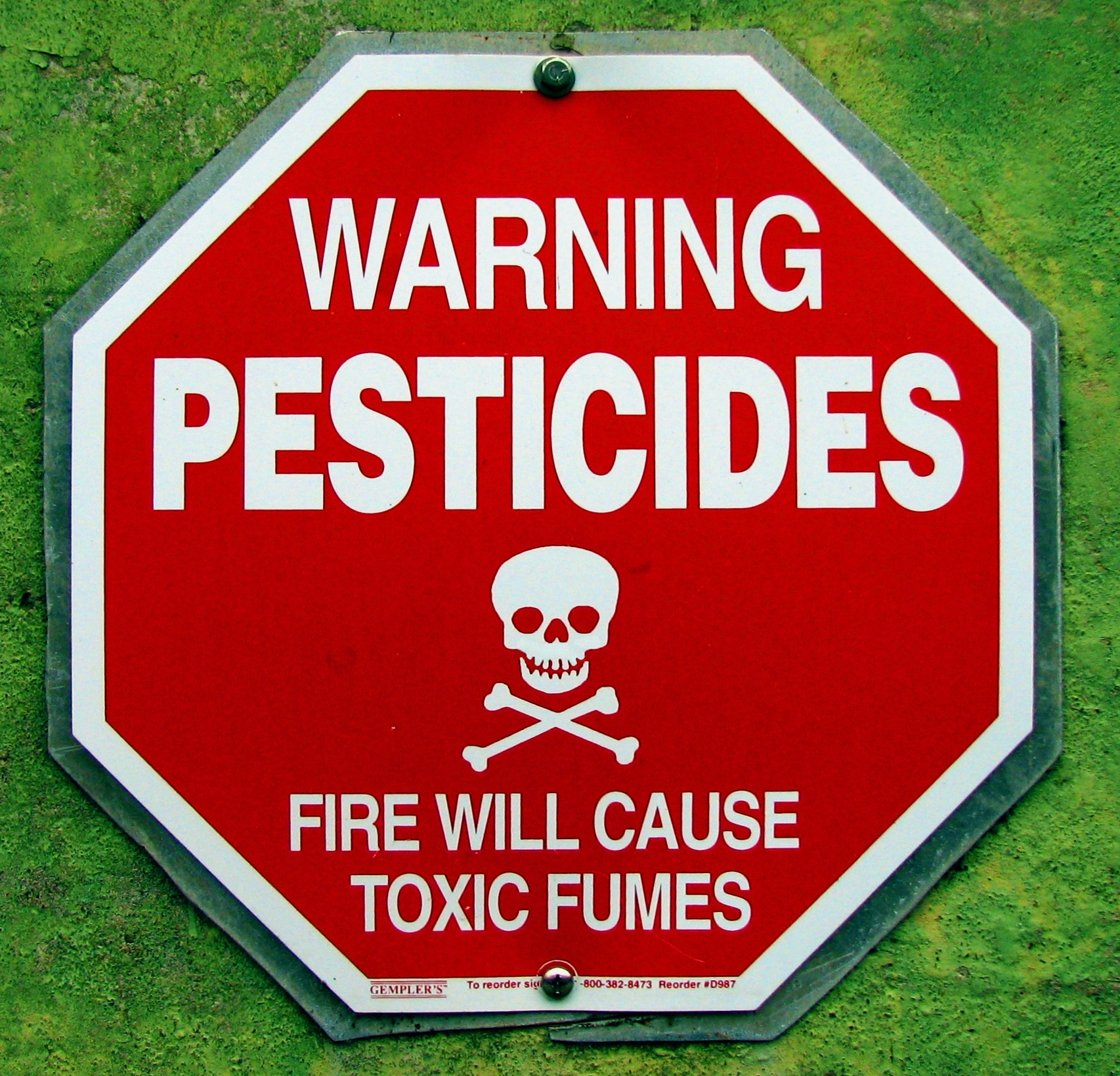 Signs warning of possible exposure to pesticides. Pesticides are intended to kill insects, but depending on the type and exposure, they are associated with a myriad of effects on a wide range of species, as well as human health problems (including various cancers, neurological disorders, reproductive and developmental diseases, respiratory and immune problems, and endocrine disruption). Image by CGP Gray via Wikimedia Commons (CC BY-SA 3.0).
Jason Rohr, a professor of biological sciences at the University of Notre Dame in the US who was not involved in the study, told Mongabay: “This is a very powerful and policy-relevant study because it not only tracks the sheer volume of pesticides used, but also quantifies the toxicity-weighted impacts of pesticides on biodiversity on a global scale.”
“By integrating pesticide application data with regulatory toxicity thresholds across multiple species groups and countries, the authors provide one of the most comprehensive assessments to date of how pesticides affect non-target organisms,” he said.
Lohr called the RPTU team’s TAT approach an “important advance” because it shows that pressure on biodiversity can still increase even if overall pesticide use may remain the same or decline.
“The finding that global toxicity trends increased for many taxa between 2013 and 2019 is particularly shocking, contrary to the UN goal of reducing pesticide risks by 50% by 2030,” he said. “Importantly, this study also identifies geographic variation, highlighting that a relatively small number of highly toxic compounds pose a disproportionate share of risk, suggesting clear leverage points for more strategic and effective policy interventions.”
Study co-lead Jakob Wolfram pointed out that while efforts to reduce pesticide risks by 50% can pose serious challenges for agricultural producers, it is hoped that applying the TAT approach may enable breakthrough advances in biodiversity conservation and pesticide risk reduction without significantly interfering with agricultural production or food security.
However, Wolfram emphasized that good data is important to effectively reduce pesticide risks, and that data is currently very limited. “The success of guiding these national and (2030) global targets ultimately depends on reliable pesticide use data, and even in developed countries, reliable and accurate pesticide use data are rare,” he said.
 Pesticide duster agricultural plane sprays soybean plants. Processing of soybeans, along with fruits and vegetables, corn, grains, and rice, was found to account for more than three-quarters of the world’s pesticide toxicity. USDA Image by Ken Hammond (via Pixnio).
Wolfram urges a large-scale effort to chart a “data-driven, science-backed future direction.” They will then be able to track targeted progress and use informed policy recommendations to implement impactful and successful changes to agricultural systems.
Wolfram cautioned that the study’s finding that most countries are not on track to meet their 2030 pesticide risk reduction goals is based on the research team’s predictions, due to limited data available. “We rank (nations) based on their current trajectories…and when you look at these trajectories, there’s still a lot of work to do for almost every country.”
But despite these national shortfalls, Wolfram said he and his colleagues are very optimistic about the potential for positive change. “The 2030 target that has been set was announced very hastily. Navigating and restructuring the agricultural system is difficult, but it is still important. We have been locked into this agricultural system for decades now, and that means some real changes need to occur to move us towards the target, rather than many countries currently moving away from it.”
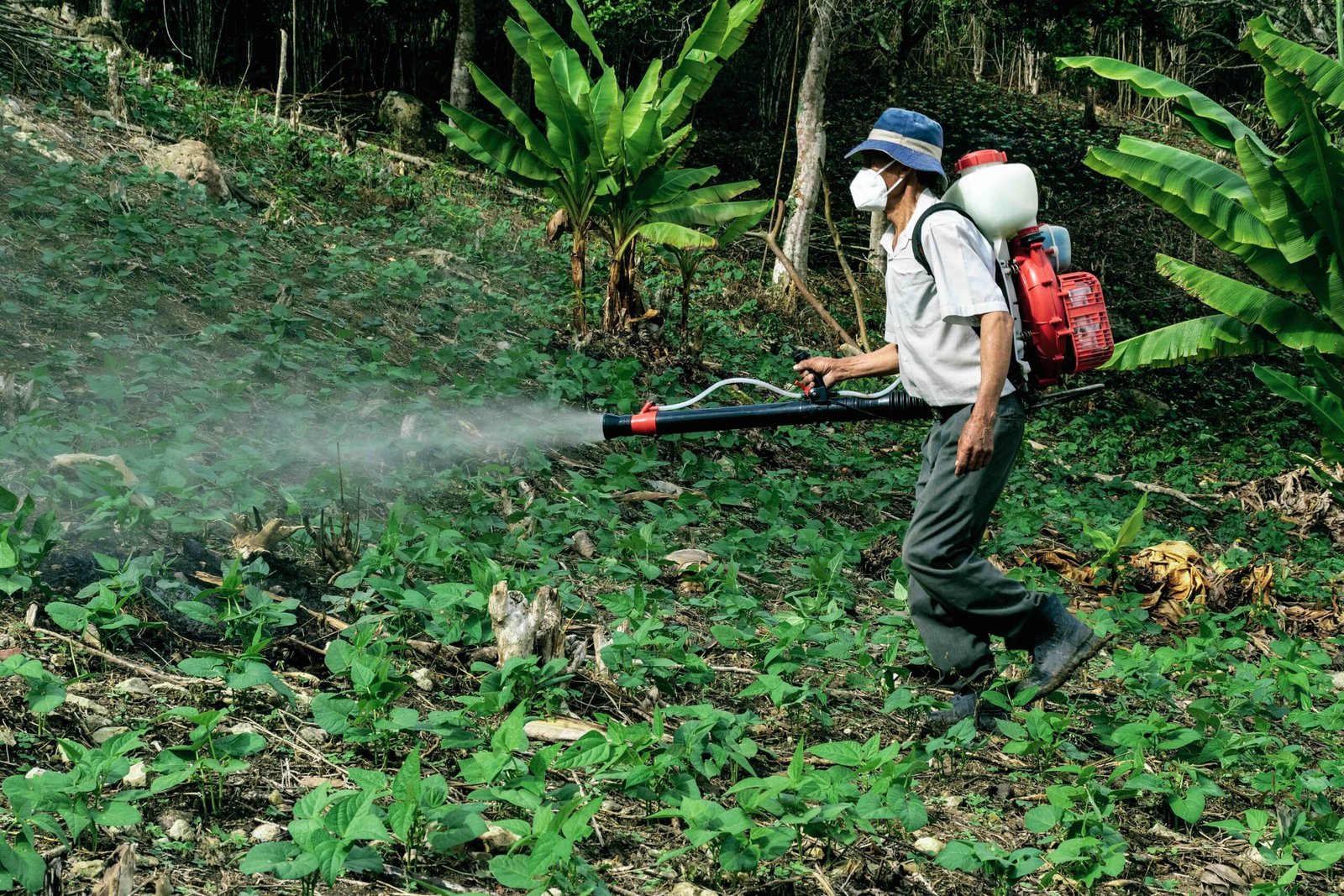
Banner image: A man spraying pesticides in the forest. Image by Gilmer Diaz Estela via Pexels.
Scientists point out that “silent spread of chemical pollution” requires drastic regulatory overhaul
Quote:
Schulz, R., Bub, S., Petschick, LL, Stehle, S., and Wolfram, J. (2021). The toxicity of applied pesticides is transferred to plants and invertebrates, even in genetically modified crops. science, 372(6537), 81-84. doi:10.1126/science.abe1148
Wolfram, J., Bussen, D., Bub, S., Petschick, LL, Herrmann, LZ, and Schulz, R. (2026). The increasing toxicity of applied pesticides runs counter to global reduction targets to protect biodiversity. science, 391(6785), 616-621. doi:10.1126/science.aea8602
Feedback: Use this form to send a message to the author of this post. If you would like to post a public comment, you can do so at the bottom of the page.

