


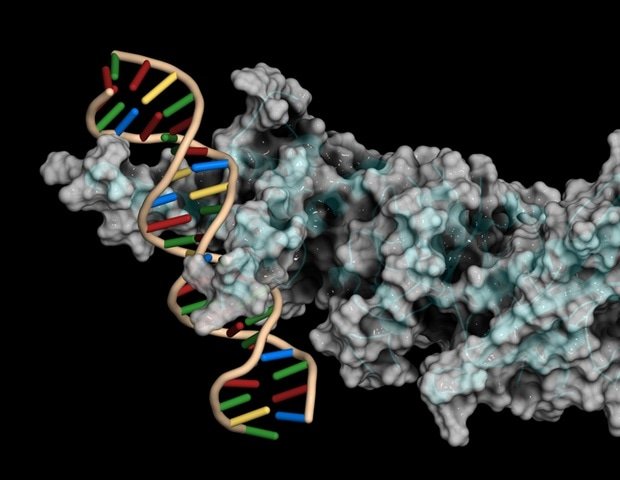
Clinically available KRAS inhibitors primarily target G12C, which is rare in PDAC and often develops resistance. Oncogenic KRAS inactivates RB1 through CDK4/6, but RB1 mutations are rare. Therefore, CDK4/6 inhibition provides an indirect strategy to combat KRAS-mediated malignancies without directly targeting KRAS.
Virtually all pancreatic ductal adenocarcinomas (PDACs) result from activating mutations in the oncogene KRAS, which occurs in multiple different allelic forms. Although significant efforts have been made to develop inhibitors that target specific mutant KRAS proteins, the only drugs currently approved for clinical use are those that selectively target the KRASG12C variant. However, KRASG12C mutations are extremely rare in pancreatic cancer.
Furthermore, in patients with KRASG12C-mutant pancreatic cancer, treatment with KRASG12C inhibitors has shown comparable clinical benefit to conventional chemotherapy regimens, and even in cases with initial objective responses, acquired resistance almost universally develops within a limited time frame.
More broadly, direct pharmacological inhibition of driver oncogenes often promotes the rapid development of sustained therapeutic resistance. These observations highlight the important unmet need for therapeutic strategies that avoid direct targeting of driver mutant proteins while achieving antitumor effects comparable to their direct inhibition.
Zhang Others. mentioned how to avoid direct inhibition of KRAS to treat PDAC patients (Zhang others,, Cell death and differentiation Published online on December 18, 2025).
Constitutively activated mutant KRAS drives transcriptional upregulation of the cyclin D1 (CCND1) gene primarily through sequential activation of the RAF-MEK-ERK signaling cascade. Cyclin D1 forms an active complex with cyclin-dependent kinases 4 or 6 (CDK4/6) and phosphorylates multiple substrate proteins. Among these substrates, the tumor suppressor RB1 is the most important.
RB1 binds to members of the E2F family of transcription factors to inhibit cell cycle progression. Initial monophosphorylation at one of the 14 phosphorylation sites of RB1 by the cyclin D1-CDK4/6 complex then permits further phosphorylation of the remaining sites by the cyclin E-CDK2 complex, resulting in functional inactivation of RB1 and release of cell cycle entry by E2F. Therefore, aberrant KRAS activation strongly suppresses RB1 tumor suppressor function.
This concept was originally inspired by seminal research such as: Caenorhabditis elegans Horwitz et al. won the Nobel Prize for their research. Biochemical and genetic evidence is provided by Ewen et al.
Newly synthesized KRAS initially resides in the cytosol and is unable to send signals in this state. Through isoprenylation, a post-translational modification, KRAS is transported to the Golgi apparatus where it can be activated.
Activation of RB1 suppresses this isoprenylation process, thereby inhibiting KRAS activation. Therefore, activated KRAS suppresses RB1 function, whereas activated RB1 suppresses KRAS signaling, establishing a mutual inhibitory circuit. This mutual conflict was previously reported by Takahashi. Others. (natural genetics 38, 113–128, 2006. cancer cells 15, 255–269, 2009).
The mutually inhibitory relationship between RB1 and KRAS predicts that in cancer, either RB1 inactivation or KRAS activating mutations alone may be sufficient to promote tumorigenesis. Consistent with this concept, genetic inactivation of RB1 is extremely rare in pancreatic cancers, where activating KRAS mutations are predominant.
This means that in nearly all pancreatic cancers, RB1 remains wild-type and functionally intact, providing substantial therapeutic opportunities to enhance RB1 activity. Importantly, such activation of RB1 is expected not only to restore cell cycle control but also to indirectly suppress oncogenic KRAS signaling.
Against this background, we focused on CDK4/6 inhibitors, which are clinically approved for the treatment of hormone receptor-positive, HER2-negative advanced breast cancer. These drugs inhibit the kinase activity of CDK4/6, which forms a complex with cyclin D1 and mediates monophosphorylation of RB1, thereby prolonging the hypophosphorylated active state of RB1. Sustained activation of RB1 can place significant stress on cells and ultimately lead to cell death. Therefore, we first evaluated the efficacy of CDK4/6 inhibition as monotherapy in pancreatic cancer.
Although CDK4/6 inhibitors efficiently induced cellular senescence, they were unable to induce cell death to a degree sufficient for therapeutic efficacy. In breast cancer, CDK4/6 inhibitors are always given in combination with drugs that suppress estrogen receptor signaling. By analogy, these observations suggested that effective treatment of pancreatic cancer with CDK4/6 inhibitors would require combination with additional therapeutic agents as well.
The research team led by Takahashi established an inducible system that allows temporally controlled expression of a constitutively active RB1 mutant, thereby functionally mimicking the effects of CDK4/6 inhibition. Using this platform, we screened for compounds that could selectively kill pancreatic cancer cells upon RB1 activation and identified ERK inhibitors as strong candidates.
As expected, treatment of pancreatic cancer cells with CDK4/6 inhibitors suppressed the activity of mutant KRAS. Given that ERK is downstream of KRAS signaling, its activity was expected to decrease accordingly. However, unexpectedly, ERK activity gradually increased over time after CDK4/6 inhibition.
This paradoxical reactivation of ERK provided a mechanistic rationale for the efficacy of ERK inhibitors in this setting and prompted us to deeply investigate the underlying mechanisms. Importantly, this sustained increase in ERK activity attenuated the antitumor effect of CDK4/6 inhibitors, thereby limiting their therapeutic efficacy.
By tracing upstream of the ERK activation signaling pathway, researchers discovered for the first time that activation of the epidermal growth factor receptor (EGFR), a receptor for the proliferation ligand EGF, is rapidly enhanced immediately after treatment with a CDK4/6 inhibitor. We next examined the expression of EGFR-stimulating ligands and observed significant upregulation of a subset of EGFR ligands known to be induced during cellular senescence.
Consistent with this finding, conditioned media collected from cells expressing a constitutively active RB1 mutant that phenomimetic CDK4/6 inhibitor treatment contained significantly elevated levels of EGFR ligand.
This phenomenon is characteristic of the senescence-associated secretory phenotype (SASP), in which senescent cells secrete a wide range of soluble factors that exert autocrine and paracrine effects on both senescent cells and neighboring cells. Our data indicate that CDK4/6 inhibition promotes SASP-dependent production of EGFR ligands, leading to activation of EGFR and downstream ERK signaling, likely through a RAS-independent mechanism. This signaling cascade subsequently enhances pro-survival pathways including BCL2 and NF-κB signaling.
Taken together, these findings suggest that pancreatic cancer cells acquire resistance to cell death induced by CDK4/6 inhibitors through SASP-mediated activation of EGFR signaling and its downstream survival pathway.
So, given these findings, how can pancreatic cancer be effectively treated? Currently, no ERK inhibitors are approved for routine clinical use, but a wide range of drugs targeting EGFR are already available and covered by health insurance. Based on this rationale, we evaluated combination therapy combining a CDK4/6 inhibitor with either the EGFR tyrosine kinase inhibitor gefitinib or the anti-EGFR monoclonal antibody cetuximab.
Remarkably, these combination therapies demonstrated potent therapeutic efficacy not only in vitro but also in vivo, both in immunodeficient mice bearing human pancreatic cancer xenografts and in genetically engineered mouse models that spontaneously develop pancreatic cancer. These results demonstrate that pharmacological blockade of EGFR effectively overcomes CDK4/6 inhibitor-induced resistance mechanisms and provides a promising and immediately applicable therapeutic strategy for pancreatic cancer.
Furthermore, by carefully examining the trajectory of cells leading to cell death during combination therapy, we found that PDAC initially undergoes CDK4/6 inhibitor-dependent cellular senescence. Remarkably, inhibition of EGFR in these senescent cells subsequently causes cell death. Selective removal of senescent cells by such an approach is called senolysis.
Importantly, this effect was not observed when EGFR inhibition preceded CDK4/6 inhibitor treatment. Based on these findings, we predict that administering EGFR inhibitors or anti-EGFR antibodies prior to CDK4/6 inhibition is unlikely to be therapeutically effective in clinical practice. Instead, our data highlight the critical importance of treatment sequencing, as EGFR inhibition exerts a senolytic effect, particularly in CDK4/6 inhibitor-induced senescent pancreatic cancer cells.
The main concern associated with this combination therapy was that CDK4/6 inhibitor treatment could induce cellular senescence in normal tissues, thereby making non-malignant cells susceptible to cell death induced by EGFR inhibition. To address this issue, we administered CDK4/6 inhibitors to a reporter mouse model. This allowed us to track in vivo the activity of the gene encoding p16, a protein whose expression is frequently upregulated during cellular aging.
Of note, we did not observe an increase in p16 expression in normal tissues after CDK4/6 inhibitor treatment. These findings suggest that under the conditions tested, CDK4/6 inhibition does not induce detectable senescence in normal cells, supporting the preferred therapeutic area for the proposed combination strategy.
EGFR tyrosine kinase inhibitors are typically given only to patients whose tumors carry activating mutations in the EGFR gene and are therefore rarely used in patients with EGFR wild-type cancers. In contrast, anti-EGFR monoclonal antibodies can be administered regardless of EGFR mutational status. Based on this distinction, we propose a therapeutic strategy that combines CDK4/6 inhibitors and anti-EGFR antibodies.
CDK4/6 inhibitors have been evaluated in clinical trials in multiple cancer types, but their efficacy as monotherapy is generally limited. However, this study provides mechanistic insight and proof of concept (POC) demonstrating that a rational combination therapy can significantly enhance antitumor activity. Importantly, these findings are not limited to pancreatic cancer but may expand the clinical applicability of CDK4/6 inhibitors to a broader range of refractory malignancies.
Because this strategy relies on existing clinically approved drug combinations, it is expected to facilitate rapid transition to investigator-initiated clinical trials.
sauce:
Reference magazines:
Zhang Yu others. (2025). Deprivation of EGFR signaling causes senolysis of PDAC with CDK4/6 inhibition. Cell death and differentiation.DOI: 10.1038/s41418-025-01634-0. https://www.nature.com/articles/s41418-025-01634-0
