


Microplastics can enter our bodies from a variety of shocking everyday sources, a new report reveals.

advertisement
advertisement
Dr. Heather Leslie, the pioneering scientist who first discovered microplastics in the human bloodstream, describes this as a “microplastic storm” caused by poorly understood exposure routes.
Hospital equipment for premature babies, children’s toys and paint all pose potential risks, the study found.
From breast implants to infant feeding tubes: microplastics in hospitals
Exploring Everyday Microlast Exposures, funded by the Plastic Soup Foundation and the Flotilla Foundation and written by Leslie, highlights the enormous scale of microplastic exposure in everyday life.
These particles accumulate in organs and endanger human health by increasing the risk of inflammation, cell damage, cancer, and cardiovascular problems.
The report maps microplastic emissions across five categories of daily life: outdoor sources, indoor environments, children’s products, health and personal care, and food and beverages, based on more than 350 peer-reviewed studies.
In hospitals, plastic particles can enter the body through equipment and treatments, with microplastic fallout in operating rooms being recorded at up to 9,258 particles per square meter in a single shift, the study found.
Cardiac catheters, silicone breast implants, orthopedic implants, or intravenous fluids have all been cited as potential sources of inadvertently administering microplastics to patients.
Alarmingly, premature infants receiving intravenous nutrition in the neonatal unit are estimated to ingest up to 115 microplastic particles from the IV circuit alone during a 72-hour feeding period.
Children’s toys and paints: Microplastics at home
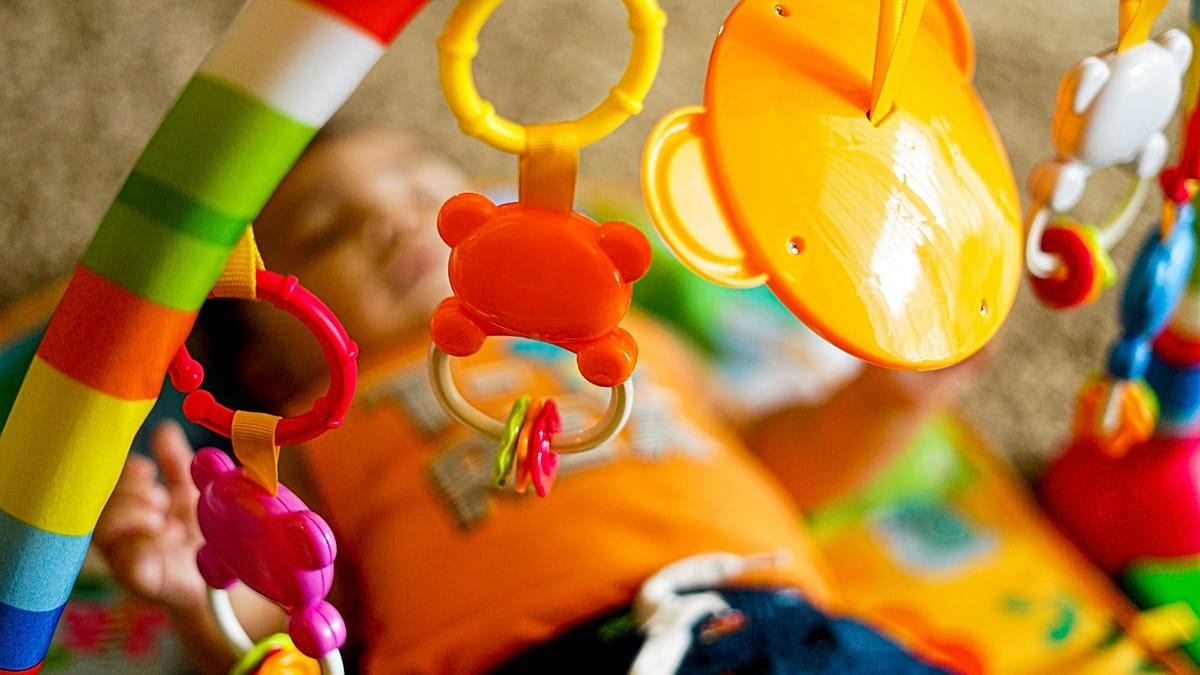
Children’s products are also a significant concern, as building bricks, baby play mats, and other children’s products can release PET, polypropylene, polyethylene, and PVC into children’s living environments.
Because children naturally ingest more settled dust while playing and breathe more air per kilogram of body weight, their exposure is proportionately higher than that of adults.
Consumption of infant formula exposes infants to levels of microplastics ranging from 1 to less than 17 particles per gram through packaging.
Another unexpected indoor exposure comes from paint. Plastic is the main component of many paint products. So when the paint wears away or the old layer is scraped away, microplastics are released.
It is estimated that one coat applied to 100 square meters contains between 17 and 68 quintillion polymer particles.
Climate-changing technologies could worsen microplastic exposure
One of the report’s most shocking findings is evidence that new climate change interventions can significantly worsen exposure to microplastics.
For example, stratospheric aerosol injection (a form of solar geoengineering advanced by countries such as the UK and the US) requires large amounts of particles to be dispersed into the atmosphere.
Several patents already exist that describe the potential for particles, including micro-sized polymer particles, to be emitted up to 20 km altitude in the atmosphere, creating a “terascale” source of intentionally added airborne microplastics and fallout.
The study found that rainfall already contains microplastics from car tires, synthetic fibers, and clothing wear.
Plastic needs to stop being ‘the answer to every design question’
This report aims to help people reduce their exposure through individual and collective action.
“Exposure is happening all the time, not only from products that we are aware of, but also from systems and processes that most people never consider,” Leslie says.
“This is not just a problem of waste and pollution, but of the materials manufacturers put into our world and the particles they continually release into the spaces we live in.”
The report urges policymakers to adopt precautionary principles, accelerate research into health effects, and prioritize mitigation over “paralysis by analysis.”
“Humanity may finally succeed in quelling the microplastic storm when plastic is no longer the answer to almost every design question, from tea bags to towels to toys,” Leslie added.
