

Close Menu

    Subscribe to Updates

    Get the latest creative news from FooBar about art, design and business.

    What's Hot

    AMA billing codes are a new target for DC. Fighting medical fraud

    May 5, 2026

    Hantavirus infection spread on cruise ship, warning sign for World Cup travel

    May 5, 2026

    Study links microplastics in arterial plaque to 4-fold increased risk of stroke

    May 5, 2026
    Facebook X (Twitter) Instagram
    Facebook X (Twitter) Instagram
    Health Magazine
    • Home
    • Environmental Health
    • Health Technology
    • Medical Research
    • Mental Health
    • Nutrition Science
    • Pharma
    • Public Health
    • Discover
      • Daily Health Tips
      • Financial Health & Stability
      • Holistic Health & Wellness
      • Mental Health
      • Nutrition & Dietary Trends
      • Professional & Personal Growth
    • Our Mission
    Health Magazine
    Home » News » Brain scans reveal universal neural signatures of addiction
    Mental Health

    Brain scans reveal universal neural signatures of addiction

    healthadminBy healthadminMay 4, 2026No Comments4 Mins Read
    Brain scans reveal universal neural signatures of addiction
    Share
    Facebook Twitter Reddit Telegram Pinterest Email


    People with drug use disorders, whether they are addicted to alcohol, cocaine, heroin, or nicotine, have strikingly similar patterns of abnormal brain connectivity, particularly within the brain’s reward and self-control circuits, according to a new meta-analysis published in 2006. translational psychiatry.

    Substance use disorder (SUD) is characterized by an ongoing struggle to control drug or alcohol use despite harmful consequences. Scientists have long suspected that this loss of control is related to changes in the brain’s reward system, which helps us experience pleasure, form habits, and make decisions. However, past brain imaging studies have yielded inconsistent results, largely due to studies differing in the specific substances used, the stage of addiction (e.g., active use vs. long-term withdrawal), and the specific brain regions investigated.

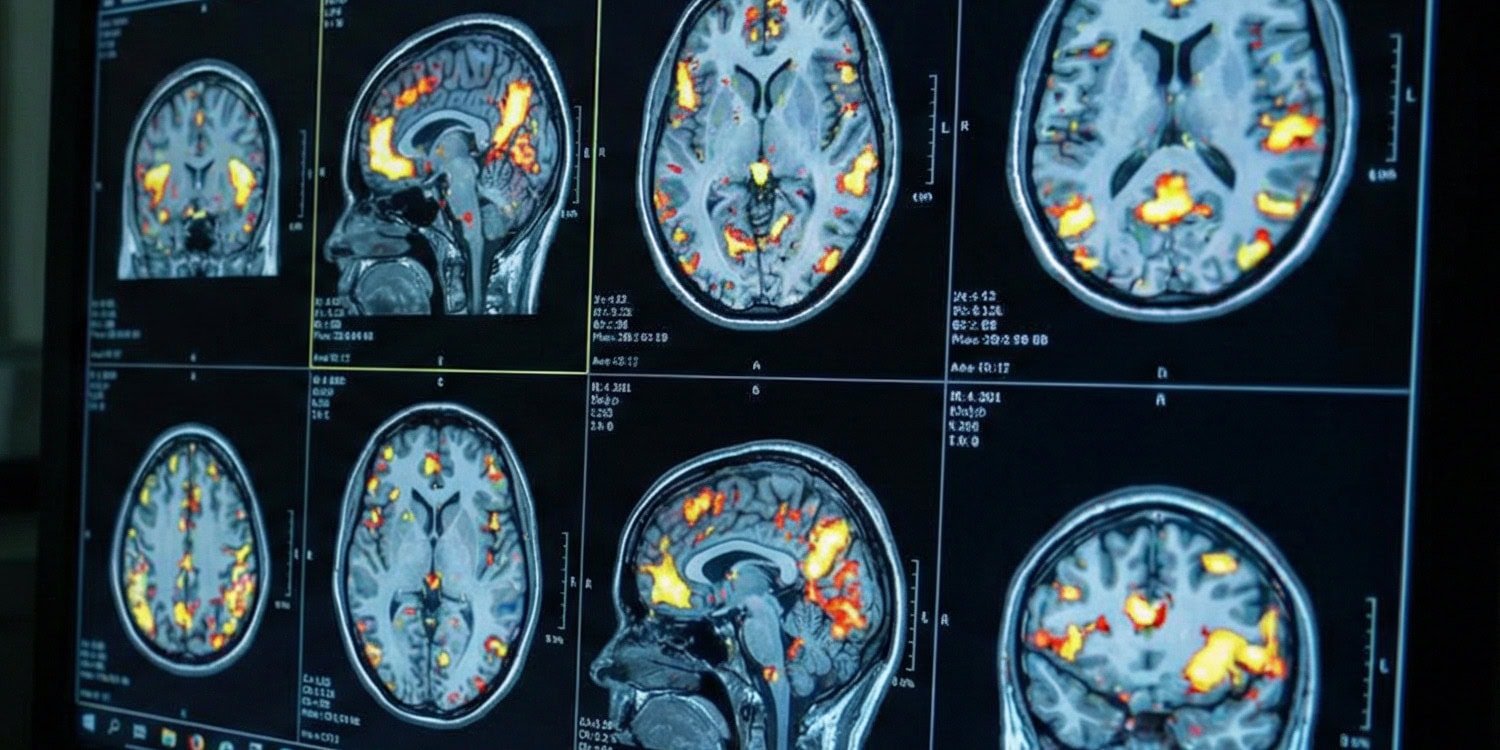
    To address this gap, a research team led by Xiaonan Zhang from the First Hospital of Shanxi Medical University in China conducted a comprehensive meta-analysis. This is a statistical method that pools data from many previous studies to identify overall trends. They specifically focused on studies using resting-state functional MRI (rs-fMRI). This is a technique that measures how different brain regions communicate when a person is awake but not performing a specific task.

    The researchers ultimately included 53 whole-brain fMRI studies in their analysis that covered nine substances: alcohol, nicotine, cocaine, cannabis, heroin, ketamine, amphetamines, areca nut, and methamphetamine. Together, these studies included 1,700 people diagnosed with SUD (mean age 39 years, approximately 19% female) and 1,792 healthy control participants (mean age 38 years, approximately 30% female).

    Zhang et al. mapped functional connectivity patterns based on five major “seed” regions within the reward circuit: anterior cingulate cortex, prefrontal cortex, striatum, thalamus, and amygdala. The results revealed consistent and specific connectivity abnormalities common to all types of SUD.

    Broadly speaking, individuals with substance use disorders exhibited significant dysfunction in cortico-striatal-thalamo-cortical (CSTC) circuits. This is an important neural loop that connects the frontal regions of the brain (responsible for logic, control, and decision-making), the striatum (motivation and reward center), and the thalamus (which relays sensory and motor signals throughout the brain).

    Within this circuit, certain connections were overactive (hyperconnected) and other connections were underactive (hyperconnected). For example, the prefrontal cortex showed stronger than normal connections with areas involved in heightened attention and executive function, but significantly weaker connections with the inferior frontal gyrus, an area important for impulse control.

    Similarly, the striatum was over-connected to the superior frontal gyrus, suggesting an exaggerated response to drug-related cues, but poorly connected to the median cingulate gyrus, an area involved in emotion regulation and pain processing. Furthermore, the thalamus shows reduced connectivity with several frontal and cingulate regions, consistent with the cognitive and impulse control deficits commonly seen in addiction.

    The researchers also found evidence that a second circuit that connects the striatum to memory and emotional processing regions such as the hippocampus and amygdala was disrupted. This indicates that memory and regulation of disorganized emotions plays a role in maintaining addictive behaviors.

    Remarkably, when researchers analyzed psychological assessments, they found a direct link to behavior. That is, the degree of disconnection between the striatum and the median cingulate gyrus was strongly negatively correlated with patients’ impulsivity scores. In other words, the weaker a particular neural connection, the more impulsive a person tends to be.

    “We present for the first time specific patterns of network abnormalities in (substance use disorder) patients based on key nodes of reward circuits, providing new insights into functional deficits within and between these networks,” the authors concluded. They noted that by mapping these specific broken circuits, the medical field could gain a theoretical basis for targeted interventions, such as deep brain stimulation and transcranial magnetic stimulation, designed to restore normal brain connectivity.

    This study has important limitations. Because we relied on existing data, there were significant age and gender differences between the SUD group and the healthy control group. Additionally, people with serious mental illness in addition to addiction were excluded from the original study. Therefore, these findings may not fully apply to the many patients in the real world who suffer from both addiction and co-occurring mental illness.

    The study, “Common neural patterns in substance use disorders: A seed-based resting-state functional connectivity meta-analysis,” was authored by Xiaonan Zhang, Haoyu Zhang, Yingbo Shao, Yang Li, Feifei Zhang, and Hui Zhang.


    Source link

    Visited 1 times, 1 visit(s) today
    Share. Facebook Twitter Pinterest LinkedIn Telegram Reddit Email
    Previous ArticleAHA, West Health Institute Health Technology Deployment Partner
    Next Article Dark personality traits predict manipulation and aggression in romantic relationships
    healthadmin

    Related Posts

    Depression worsens rapidly in the last four years of life

    May 5, 2026

    Dark personality traits predict manipulation and aggression in romantic relationships

    May 5, 2026

    Unexpected bilingualism is surprisingly common in children with autism

    May 4, 2026

    FOX News ratings are associated with belief in racist conspiracy theories

    May 4, 2026

    Improved cardiorespiratory fitness is associated with lower risk of dementia and depression

    May 4, 2026

    Perceived dissatisfaction and psychological distress are associated with left-wing authoritarianism

    May 4, 2026
    Add A Comment
    Leave A Reply Cancel Reply

    Categories

    • Daily Health Tips
    • Discover
    • Environmental Health
    • Exercise & Fitness
    • Featured
    • Featured Videos
    • Financial Health & Stability
    • Fitness
    • Fitness Updates
    • Health
    • Health Technology
    • Healthy Aging
    • Healthy Living
    • Holistic Healing
    • Holistic Health & Wellness
    • Medical Research
    • Medical Research & Insights
    • Mental Health
    • Mental Wellness
    • Natural Remedies
    • New Workouts
    • Nutrition
    • Nutrition & Dietary Trends
    • Nutrition & Superfoods
    • Nutrition Science
    • Pharma
    • Preventive Healthcare
    • Professional & Personal Growth
    • Public Health
    • Public Health & Awareness
    • Selected
    • Sleep & Recovery
    • Top Programs
    • Weight Management
    • Workouts
    Popular Posts
    • 1773313737_bacteria_-_Sebastian_Kaulitzki_46826fb7971649bfaca04a9b4cef3309-620x480.jpgHow Sino Biological ProPure™ redefines ultra-low… March 12, 2026
    • the-pros-and-cons-of-paleo-dietsThe Pros and Cons of Paleo Diets: What Science Really Says April 16, 2025
    • pexels-david-bartus-442116The food industry needs to act now to cut greenhouse… January 2, 2022
    • Improve Mental Health10 Science-Backed Practices to Improve Mental Health… March 11, 2025
    • 1773729862_TagImage-3347-458389964760995353448-620x480.jpgDespite safety concerns, parents underestimate the… March 17, 2026
    • 1773209206_futuristic_techno_design_on_background_of_supercomputer_data_center_-_Image_-_Timofeev_Vladimir_M1_4.jpegMulti-agent AI systems outperform single models… March 11, 2026

    Demo
    Stay In Touch
    • Facebook
    • Twitter
    • Pinterest
    • Instagram
    • YouTube
    • Vimeo
    Don't Miss

    AMA billing codes are a new target for DC. Fighting medical fraud

    By healthadminMay 5, 2026

    WASHINGTON — For decades, politicians have blamed some of the health care system’s problems on…

    Hantavirus infection spread on cruise ship, warning sign for World Cup travel

    May 5, 2026

    Study links microplastics in arterial plaque to 4-fold increased risk of stroke

    May 5, 2026

    Scientists say travel may slow aging and improve health

    May 5, 2026

    Subscribe to Updates

    Get the latest creative news from SmartMag about art & design.

    HealthxMagazine
    HealthxMagazine

    At HealthX Magazine, we are dedicated to empowering entrepreneurs, doctors, chiropractors, healthcare professionals, personal trainers, executives, thought leaders, and anyone striving for optimal health.

    Our Picks

    Scientists say travel may slow aging and improve health

    May 5, 2026

    Telemedicine autism tool provides high accuracy for children using short phrases

    May 5, 2026

    Research links educator confidence to improved outcomes for vulnerable youth

    May 5, 2026
    New Comments
      Facebook X (Twitter) Instagram Pinterest
      • Home
      • Privacy Policy
      • Our Mission
      © 2026 ThemeSphere. Designed by ThemeSphere.

      Type above and press Enter to search. Press Esc to cancel.