

Close Menu

    Subscribe to Updates

    Get the latest creative news from FooBar about art, design and business.

    What's Hot

    Highly synchronized brains perform poorly on complex tasks

    July 18, 2026

    How different types of exercise affect mood and brain chemistry

    July 17, 2026

    New portable strip test accurately detects mosquito-borne viruses

    July 17, 2026
    Facebook X (Twitter) Instagram
    Facebook X (Twitter) Instagram
    Health Magazine
    • Home
    • Environmental Health
    • Health Technology
    • Medical Research
    • Mental Health
    • Nutrition Science
    • Pharma
    • Public Health
    • Discover
      • Daily Health Tips
      • Financial Health & Stability
      • Holistic Health & Wellness
      • Mental Health
      • Nutrition & Dietary Trends
      • Professional & Personal Growth
    • Our Mission
    Health Magazine
    Home » News » Brain research reveals the roles of senders and receivers in the default mode network
    Discover

    Brain research reveals the roles of senders and receivers in the default mode network

    healthadminBy healthadminApril 8, 2026No Comments2 Mins Read
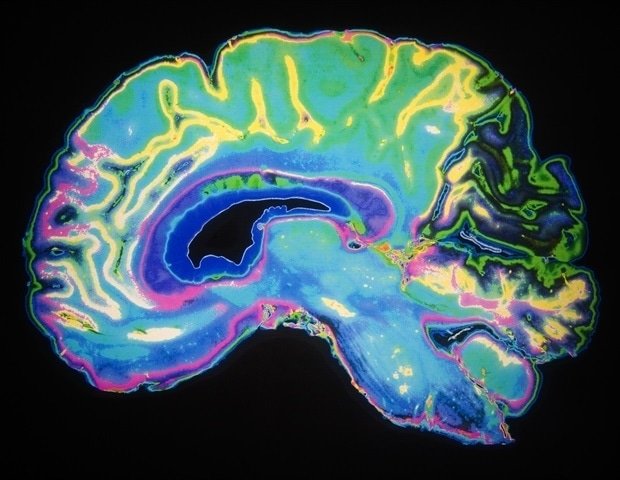
    Brain research reveals the roles of senders and receivers in the default mode network
    Share
    Facebook Twitter Reddit Telegram Pinterest Email


    The default mode network (DMN) is a distributed set of interconnected brain regions that has long been associated with inward-directed cognition, such as remembering the past, thinking about the future, and thinking about oneself. Accumulating evidence also indicates that the DMN is engaged during tasks involving external perceptual input, such as language comprehension and social cognition. However, the mechanisms by which the same network supports both internally and externally directed cognition remain unclear.

    Now, a research team led by ZHANG Meichao from the Department of Psychology at the Chinese Academy of Sciences (CAS) has identified organizational principles within the DMN that help explain how the network supports both internal and external cognition.

    This study PNAS The April 7 paper reveals that different subregions within the DMN act as “senders” and “receivers” of information, allowing flexible transitions between perception and memory-driven thinking.

    To understand how the DMN functions, researchers combined analysis of directional functional connectivity, intrinsic network configuration, and task-induced brain activity across multiple independent datasets. Their findings revealed that the DMN is not functionally homogeneous but is composed of subregions with distinct connectivity biases.

    Specifically, receiver-like DMN subregions biased toward afferent (input) inputs exhibit stronger connectivity with heteromodal association networks, a profile that may support information integration during perception. Conversely, sender-like subregions biased toward efferent (outward) projections show stronger connections with distributed sensorimotor systems, a profile that may guide memory-based behavior.

    Consistent with this interpretation, these subdivisions correspond to systematically different cognitive modes. Receiver-like subregions are preferentially involved during perceptually-based face decisions, that is, decisions based on visual information from the face, and sender-like subregions are preferentially involved during memory-based decisions.

    These findings suggest that DMN involvement in both external and internal cognition is rooted in microarchitectural differentiation into complementary receiver- and sender-like zones. ”

    Dr. ZHANG Meichao, corresponding author of this study, Institute of Psychology, Chinese Academy of Sciences

    This study provides a new organizational framework for understanding how the association cortex supports both external perception and internal thought. This provides a multilevel explanation of how the brain facilitates the transition between perception and memory-based cognition.

    This research was supported by the National Natural Science Foundation of China, CAS, and the European Research Council.

    sauce:

    Chinese Academy of Sciences

    Reference magazines:

    Chan, M. others. (2026). Sender and receiver subdivisions of the default mode network in perceptual and memory-guided cognition. Proceedings of the National Academy of Sciences. DOI: 10.1073/pnas.2528851123. https://www.pnas.org/doi/10.1073/pnas.2528851123


    Source link

    Visited 12 times, 1 visit(s) today
    Share. Facebook Twitter Pinterest LinkedIn Telegram Reddit Email
    Previous ArticleScientists discover reversible male birth control that stops sperm production
    Next Article Non-invasive urine test improves prediction of bladder cancer treatment outcome
    healthadmin

    Related Posts

    New portable strip test accurately detects mosquito-borne viruses

    July 17, 2026

    Training helps pediatricians independently treat anxiety and depression in children

    July 17, 2026

    Multidisciplinary surgery improves outcome in rare corpus callosum glioma

    July 17, 2026

    ECT-like brain stimulation causes unexpected nuclear reprogramming of mature neurons

    July 17, 2026

    Study reveals mechanisms underlying HBV-induced hepatitis

    July 17, 2026

    New battery-powered device detects Bundibugyo Ebola virus in 30 minutes

    July 17, 2026
    Add A Comment

    Comments are closed.

    Categories

    • Daily Health Tips
    • Discover
    • Environmental Health
    • Exercise & Fitness
    • Featured
    • Featured Videos
    • Financial Health & Stability
    • Fitness
    • Fitness Updates
    • Health
    • Health Technology
    • Healthy Aging
    • Healthy Living
    • Holistic Healing
    • Holistic Health & Wellness
    • Medical Research
    • Medical Research & Insights
    • Mental Health
    • Mental Wellness
    • Natural Remedies
    • New Workouts
    • Nutrition
    • Nutrition & Dietary Trends
    • Nutrition & Superfoods
    • Nutrition Science
    • Pharma
    • Preventive Healthcare
    • Professional & Personal Growth
    • Public Health
    • Public Health & Awareness
    • Selected
    • Sleep & Recovery
    • Top Programs
    • Weight Management
    • Workouts
    Popular Posts
    • 1773313737_bacteria_-_Sebastian_Kaulitzki_46826fb7971649bfaca04a9b4cef3309-620x480.jpgHow Sino Biological ProPure™ redefines ultra-low… March 12, 2026
    • pexels-david-bartus-442116The food industry needs to act now to cut greenhouse… January 2, 2022
    • 1773729862_TagImage-3347-458389964760995353448-620x480.jpgDespite safety concerns, parents underestimate the… March 17, 2026
    • 1773209206_futuristic_techno_design_on_background_of_supercomputer_data_center_-_Image_-_Timofeev_Vladimir_M1_4.jpegMulti-agent AI systems outperform single models… March 11, 2026
    • 1774403998_image_28620e4b6b0047f7ab9154b41d739db1-620x480.jpgGait pattern helps distinguish between Lewy body… March 24, 2026
    • Leukemia-620x480.jpgBiomimetic platform powers CAR T therapy for… March 9, 2026

    Demo
    Stay In Touch
    • Facebook
    • Twitter
    • Pinterest
    • Instagram
    • YouTube
    • Vimeo
    Don't Miss

    Highly synchronized brains perform poorly on complex tasks

    By healthadminJuly 18, 2026

    Recent research published in journals neuroimage When people collaborate on a video game, their brain…

    How different types of exercise affect mood and brain chemistry

    July 17, 2026

    New portable strip test accurately detects mosquito-borne viruses

    July 17, 2026

    Exposure to high temperatures during pregnancy may slow the growth of your child’s thalamus

    July 17, 2026

    Subscribe to Updates

    Get the latest creative news from SmartMag about art & design.

    HealthxMagazine
    HealthxMagazine

    At HealthX Magazine, we are dedicated to empowering entrepreneurs, doctors, chiropractors, healthcare professionals, personal trainers, executives, thought leaders, and anyone striving for optimal health.

    Our Picks

    Exposure to high temperatures during pregnancy may slow the growth of your child’s thalamus

    July 17, 2026

    Training helps pediatricians independently treat anxiety and depression in children

    July 17, 2026

    Weekly Rundown: SpotitEarly partners with HITLAB

    July 17, 2026
    New Comments
      Facebook X (Twitter) Instagram Pinterest
      • Home
      • Privacy Policy
      • Our Mission
      © 2026 ThemeSphere. Designed by ThemeSphere.

      Type above and press Enter to search. Press Esc to cancel.