

Close Menu

    Subscribe to Updates

    Get the latest creative news from FooBar about art, design and business.

    What's Hot

    Why Traditional Clinical Trial Methods Are Failing Researchers in 2026

    August 20, 2026

    Confronting Population Health Trends and the Threat of Reversed Gains

    August 19, 2026

    Navigating 2026 Clinical Trial Uncertainty: What Researchers Must Prioritize Now

    August 18, 2026
    Facebook X (Twitter) Instagram
    Facebook X (Twitter) Instagram
    Health Magazine
    • Home
    • Environmental Health
    • Health Technology
    • Medical Research
    • Mental Health
    • Nutrition Science
    • Pharma
    • Public Health
    • Discover
      • Daily Health Tips
      • Financial Health & Stability
      • Holistic Health & Wellness
      • Mental Health
      • Nutrition & Dietary Trends
      • Professional & Personal Growth
    • Our Mission
    Health Magazine
    Home » News » Brain imaging reveals characteristics of professional visual artists
    Mental Health

    Brain imaging reveals characteristics of professional visual artists

    healthadminBy healthadminJuly 3, 2026No Comments3 Mins Read
    Brain imaging reveals characteristics of professional visual artists
    Share
    Facebook Twitter Reddit Telegram Pinterest Email


    According to a study published in Psychology of Aesthetics, Creativity, and the Arts, professional visual artists have unique brain structures and activity patterns that appear to support the vivid mental imagery needed to create art.

    Most people can draw, paint, or sketch to some extent, but only a few develop the expertise necessary to become a professional artist. Scientists have long been interested in creativity, but little is known about how years of artistic training affect the brain. Previous research has identified brain networks involved in idea generation and refinement, but most research has focused on creativity in ordinary people rather than professional artists.

    To address this gap, researchers wanted to investigate whether professional visual artists have unique brain characteristics that distinguish them from people with no artistic training. Rather than looking at a single brain measurement, they combined several types of brain images to build a more complete picture of the artists’ brains.

    A research team led by Erdem Taskilan from the University of Trento in Italy surveyed 24 adults, including 12 professional visual artists and 12 matched non-artists. The sample consisted of 14 men and 10 women, with an average age of approximately 31 years for artists and approximately 30 years for controls.

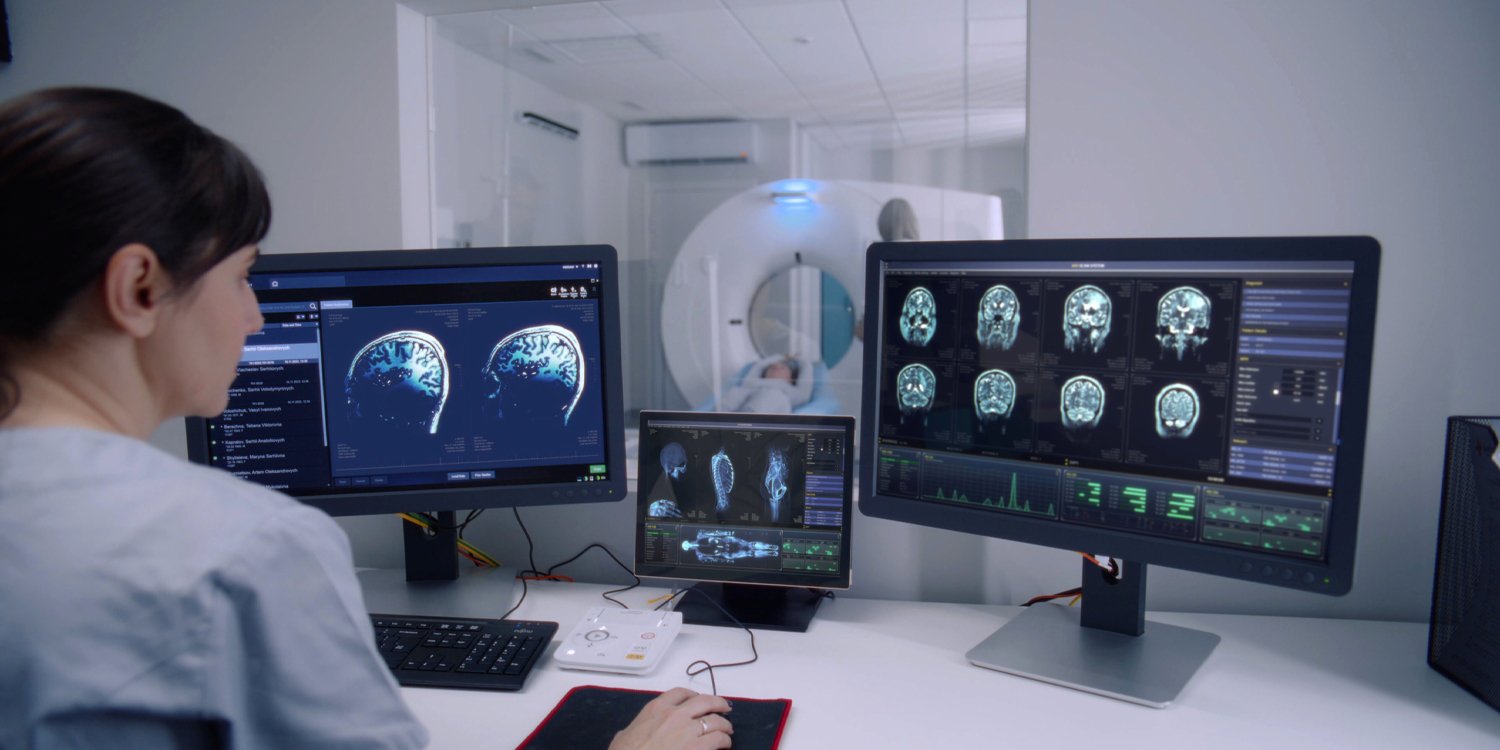
    Participants completed three different magnetic resonance imaging brain scans that measured brain structure, communication pathways, and resting brain activity. They also completed a questionnaire that measured how clearly they could imagine visual scenes in their minds. The researchers then used machine learning techniques to identify common patterns across different brain scans.

    This analysis revealed one combined brain pattern that clearly differentiates artists from non-artists. Compared to a control group, artists had greater gray matter volume in several brain regions involved in planning, visual processing, and memory. It was also shown that white matter has strong connections with areas responsible for visual processing, executive control, and fine motor skills, and that synchrony between the cerebellum and basal ganglia is increased. These are areas of the brain that help coordinate movement, learning, and habit formation.

    Importantly, participants who showed this brain pattern also reported more vivid mental imagery, suggesting that these brain differences may support the ability to visualize artistic ideas in their heads before putting them down on paper or canvas.

    As the authors summarize, “Our findings advance the understanding of artistic creativity by showing that professional expertise goes beyond traditional creativity networks to encompass cerebellar, sensorimotor, and subcortical systems.”

    The researchers caution that the study has some important limitations. For example, if the sample size is small, the results should be replicated in a larger group. The study also compared artists and non-artists at one point in time, so it was not possible to determine whether years of artistic training resulted in these brain differences, or whether people with naturally different brains were more likely to become artists.

    The study, “The Artist’s Brain: A Data Fusion Approach to Characterize the Neural Underpinnings of Professional Visual Artists,” was authored by Erdem Taskiran, Francesca Bacci, David Melcher, Alessandro Grecucci, and Nicola De Pisapia.


    Source link

    Visited 9 times, 1 visit(s) today
    Share. Facebook Twitter Pinterest LinkedIn Telegram Reddit Email
    Previous ArticleIs your running gear exposing you to microplastics?
    Next Article Researchers elucidate the olfactory mechanism common to mice and humans
    healthadmin

    Related Posts

    The Growing Challenge of Treatment-Resistant Depression for Clinicians and Policymakers

    August 12, 2026

    The 2026 Challenge: Fragmented Infrastructure and Access Barriers in Mental Health

    August 5, 2026

    The Challenge of Fragmented Mental Health Systems: What Evidence Shows

    August 1, 2026

    Scientists are using biological markers to take the guesswork out of depression treatment

    July 30, 2026

    Researchers have found evidence linking certain blood proteins to brain tissue loss

    July 30, 2026

    The Mental Health Access Crisis: Evidence-Based Priorities for Clinicians and Policymakers

    July 30, 2026
    Add A Comment

    Comments are closed.

    Categories

    • Daily Health Tips
    • Discover
    • Environmental Health
    • Exercise & Fitness
    • Featured
    • Featured Videos
    • Financial Health & Stability
    • Fitness
    • Fitness Updates
    • Health
    • Health Technology
    • Healthy Aging
    • Healthy Living
    • Holistic Healing
    • Holistic Health & Wellness
    • Medical Research
    • Medical Research & Insights
    • Mental Health
    • Mental Wellness
    • Natural Remedies
    • New Workouts
    • Nutrition
    • Nutrition & Dietary Trends
    • Nutrition & Superfoods
    • Nutrition Science
    • Pharma
    • Preventive Healthcare
    • Professional & Personal Growth
    • Public Health
    • Public Health & Awareness
    • Selected
    • Sleep & Recovery
    • Top Programs
    • Weight Management
    • Workouts
    Popular Posts
    • 1773313737_bacteria_-_Sebastian_Kaulitzki_46826fb7971649bfaca04a9b4cef3309-620x480.jpgHow Sino Biological ProPure™ redefines ultra-low… March 12, 2026
    • pexels-david-bartus-442116The food industry needs to act now to cut greenhouse… January 2, 2022
    • 1773729862_TagImage-3347-458389964760995353448-620x480.jpgDespite safety concerns, parents underestimate the… March 17, 2026
    • 1774403998_image_28620e4b6b0047f7ab9154b41d739db1-620x480.jpgGait pattern helps distinguish between Lewy body… March 24, 2026
    • 1773209206_futuristic_techno_design_on_background_of_supercomputer_data_center_-_Image_-_Timofeev_Vladimir_M1_4.jpegMulti-agent AI systems outperform single models… March 11, 2026
    • Leukemia-620x480.jpgBiomimetic platform powers CAR T therapy for… March 9, 2026

    Demo
    Stay In Touch
    • Facebook
    • Twitter
    • Pinterest
    • Instagram
    • YouTube
    • Vimeo
    Don't Miss

    Why Traditional Clinical Trial Methods Are Failing Researchers in 2026

    By healthadminAugust 20, 2026

    Explore why legacy clinical trial designs are falling short in 2026 and how AI, adaptive designs, and decentralized models are reshaping medical research for better outcomes.

    Confronting Population Health Trends and the Threat of Reversed Gains

    August 19, 2026

    Navigating 2026 Clinical Trial Uncertainty: What Researchers Must Prioritize Now

    August 18, 2026

    Healthcare Delivery Challenges and the Promise of Digital Health Innovations

    August 17, 2026

    Subscribe to Updates

    Get the latest creative news from SmartMag about art & design.

    HealthxMagazine
    HealthxMagazine

    At HealthX Magazine, we are dedicated to empowering entrepreneurs, doctors, chiropractors, healthcare professionals, personal trainers, executives, thought leaders, and anyone striving for optimal health.

    Our Picks

    Healthcare Delivery Challenges and the Promise of Digital Health Innovations

    August 17, 2026

    Why 2025 Dietary Guidelines Miss the Mark on Metabolic Health

    August 16, 2026

    The Telemedicine Challenge: Why Founders and Engineers Need 2026 Strategies Now

    August 15, 2026
    New Comments
      Facebook X (Twitter) Instagram Pinterest
      • Home
      • Privacy Policy
      • Our Mission
      © 2026 ThemeSphere. Designed by ThemeSphere.

      Type above and press Enter to search. Press Esc to cancel.