


This work is desmog and exxonno news. ExxonKnews is a reporting project of the Climate Integrity Center..
Scott Eustis is doing everything he can to keep Louisiana alive. The veteran wetlands and fisheries researcher and lifelong resident says he’s certain what caused the damage to the state’s delicate wetlands and drowned coastline: the oil drilling that employed his grandfather decades ago.
“My grandfather worked for these companies,” Eustis said. “If he were still alive, he would say straight up: ‘They owe us the land.'”
For a century, oil companies have dredged canals through coastal wetlands, cut open swamps to access wells, and dumped toxic wastewater into swamps and unlined earthen pits. These wells, canals, pits, and residual contaminants were mostly abandoned. Today, oil drilling is a decreasing share of the state’s economy, but its legacy is now part of a sinking landscape.
Louisiana loses the equivalent of a football field’s worth of wetlands every hour. According to the U.S. Geological Surveyand the problem is worsening as sea levels rise. As coasts sink, home insurance premiums soar, local ecosystems collapse, shrimping and fishing economies shrink, and the state’s natural flood barriers disappear. This is an increasingly serious threat in the face of more frequent and intense climate-changing hurricanes.
“After Katrina, the state woke up and said, ‘Oh my god, there used to be 90 miles of land between the Gulf of Mexico,'” said Eustis, who provides input into local industrial development and wetland restoration projects as regional science director for the nonprofit Healthy Gulf. “Well, there’s a lot of Swiss cheese.”
So legal efforts to hold big oil companies accountable for causing Louisiana’s coastal collapse exploded. They include lawsuits brought by private landowners, local flood prevention boards, local oil companies, a former Republican governor, and local parishes, which are equivalent to counties in the state.
One of those cases is currently before the U.S. Supreme Court. Last year, a state court jury found Chevron liable in a lawsuit brought by Plaquemines Parish. The lawsuit is one of more than 40 diocese lawsuits accusing oil companies of failing to obtain permits to operate and cleaning up the damage they left behind in violation of the state’s coastal management law. After a landmark ruling that required Chevron to spend $745 million to restore the coast, the company appealed to the Supreme Court, which heard arguments in January.
Parish lawsuits are a particularly important means of holding companies accountable, some local lawyers say, given the industry’s successful lobbying efforts for legislation that would limit landowner lawsuits. If the Supreme Court rules in favor of the diocese, and the diocese continues to prevail in state court, it could force Chevron, Exxon, BP, Shell and other oil companies to pay billions of dollars to help fund coastal restoration as the state dries up resources to aid in the cleanup.
This is an outcome that companies are struggling to avoid. “Chevron is not the cause of the land loss occurring in Breton Bay,” Mike Phillips, the company’s lead attorney in the Plaquemines case, told the media in April. Shell argued that the lawsuit “risks delaying collective action, misdirecting resources and derailing cross-sectoral efforts” to restore the coast, after the U.S. Supreme Court denied the oil company’s earlier request to block Cameron Parrish’s case from proceeding to state court. Shell and Apache have reached settlement agreements with states in some cases, and ConocoPhillips is also close to reaching an agreement.
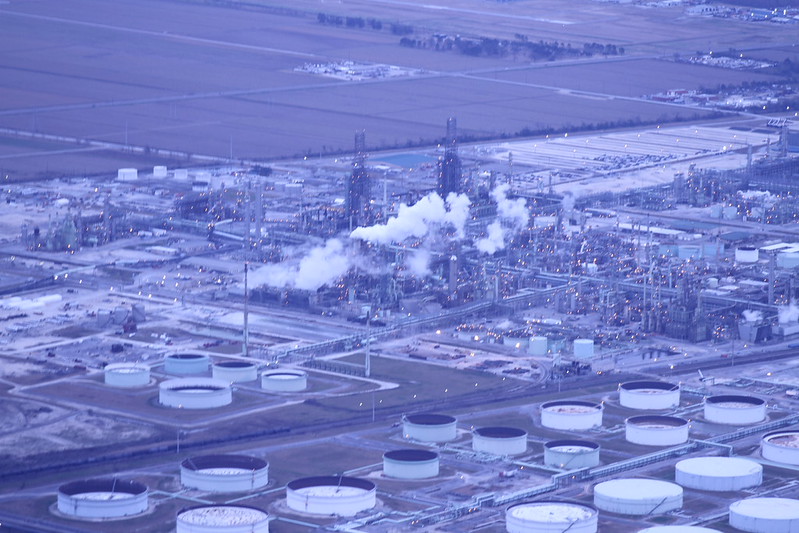
Marathon Refinery in St. John Parish. Third largest refinery in the United States. Credit: Healthy Gulf/Flickr
But internal company documents show that the oil giant knew its actions were destroying coastal lands, waters and habitats and would ultimately face legal action, but it worked to delay cleanup and accountability for as long as possible.
These documents were obtained during discovery in earlier landowner cases or during legal proceedings to gather evidence before trial, and many were first reported in the 2013 investigation. harpers magazine. As the Supreme Court prepares to release a decision that could help determine Louisiana’s future, it’s worth revisiting what the oil companies knew.
“Please don’t accept responsibility.”‘
The oil industry began issuing internal warnings about coastal operations about 100 years ago. In 1932, a report written by V.L. Martin of the Prairie Oil and Gas Company to a committee of the American Petroleum Institute warned of the dangers of salt water, sometimes carcinogenic oil production waste (or “brine”), leaking into the environment and the potential for subsequent litigation.
“It is only a matter of time before the opposition to waste spills becomes strong enough to force us to dispose of them in a way that does not cause offense to anyone,” Martin wrote, adding, “We cannot escape our moral responsibility for the impacts of such waste.”
He wrote that “field personnel are primarily interested in producing the maximum amount of oil at the lowest cost,” but that “costs of litigation” and “claim settlement” can change that calculation.
The companies continued dumping saltwater into open pits and coastal wetlands in Louisiana throughout the 1980s, even though they were acutely aware of the possibility of future lawsuits over their waste disposal practices, according to state legal records and internal documents.
In 1970, Humble Oil, which later became part of ExxonMobil, issued an internal memo explaining how to prevent harm to employees and the environment. The first instruction in the section titled “What to do if you are cited” reads, “Do not accept personal or company liability.”
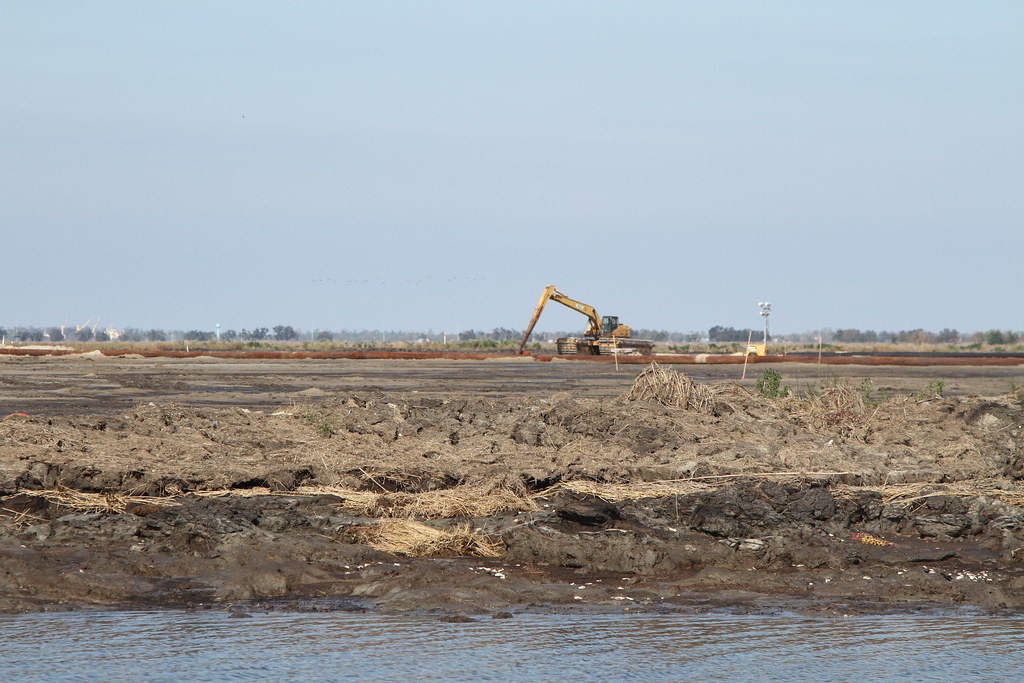
Remediation of oil field waste at Lake Hermitage in Plaquemines Parish, Louisiana. Credit: Healthy Gulf/Flickr
A 1980 report, marked “unpublished” by a Shell division’s safety and environmental protection manager, documented “obvious legal violations” at three of the four facilities investigated. The report details these violations, including intentional releases of liquids and leaks from the pit embankment leaking into nearby bodies of water. Oil that had accumulated in the surrounding wetland area remained unpurified. Petroleum byproducts from the compressor are discharged into wetlands.
In a memo four years later, the Shell subsidiary sounded the alarm again. “EPA is cleaning up some of these (oilfield waste) pits at high cost to taxpayers, and evidence shows that these pits are definitely contaminating soil and groundwater resources,” the memo said. “Operators must start properly designing and closing their pits, otherwise litigation will become a serious problem in the future.”
Despite recent statements by fossil fuel defendants facing lawsuits, the industry’s own research has pointed to its significant liability. For example, a 1989 study commissioned by the Louisiana Midcontinent Oil and Gas Association (LMOGA), a trade association for oil and gas companies operating in Louisiana and the Gulf of Mexico, found that the impacts of canal development for access to well sites and pipeline transportation “tend to be the overwhelming cause of wetland loss.”
keep away from the law
The documents show that rather than address the problems flagged, the companies promoted legislation to weaken regulations on coastal drilling operations and avoid liability for radioactive fallout.
In a 1986 memo, Unocal, which was later acquired by Chevron, discussed plans to avoid regulation and litigation “that would be expected in most cases where drinking water aquifers are contaminated” by leaks and spills.
“Our Environmental Legislation and Regulation Group, led by Pat O’Toole, has effectively suppressed proposed state bills and regulations that would increase cleanup and disposal costs,” the memo said. “Identified savings are approximately over $20 million. This effort continues and future savings are anticipated.”
Two years ago, an Amoco (now BP) memo suggested that rather than expensively backfilling old waste pits to comply with regulations that would take effect next year, they might be “donated” to landowners, some of whom wanted to use them as duck ponds or fish ponds.
“Complying with these new regulations is estimated to increase pit costs by 50%,” the memo states. “The donation of the drill pit saves Amoco the cost of backfilling and sampling, and these obligations are placed on the landowner.”
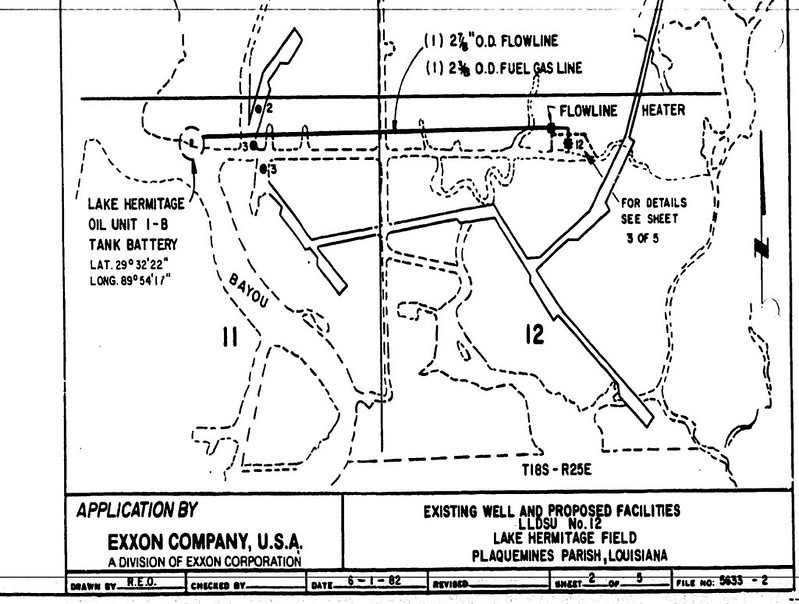
Map of Exxon’s isolated oil well near Hermitage Lake in Plaquemines Parish, Louisiana. Credit: Healthy Gulf/Flickr
As the industry began facing lawsuits it had anticipated decades ago, lobbyists began pressuring lawmakers to halt the lawsuits before they reached trial. LMOGA, the Louisiana Petroleum Industry Association, asked the governor to sign a bill that would effectively block a lawsuit brought by the Southeast Louisiana Flood Protection Authority against 97 oil and gas companies (the lawsuit was ultimately dismissed by a federal judge). According to the report, lensThe Louisiana Oil and Gas Association (LOGA), a New Orleans-based nonprofit news site, is the state’s other industry lobbying group, and lobbied heavily for the passage of Act 312. The law, a 2006 law that holds state regulators responsible for overseeing cleanups in hundreds of “heritage lawsuits” filed by landowners against oil companies for soil and groundwater contamination on their properties.
Advocates and local lawyers say the law sets up a bureaucratic labyrinth administered by the industry-friendly Louisiana Department of Natural Resources, which helps protect oil companies from lawsuits. Landlord lawsuits will be further restricted under the new law, which takes effect in September 2027.
“I’ve been lied to all my life about this (coastal damage),” Eustis said. “When industry doesn’t want to follow your laws, they buy your legislature.”
Exxon, Chevron, BP, API, and LMOGA did not respond to requests for comment. A Shell spokeswoman declined to comment.
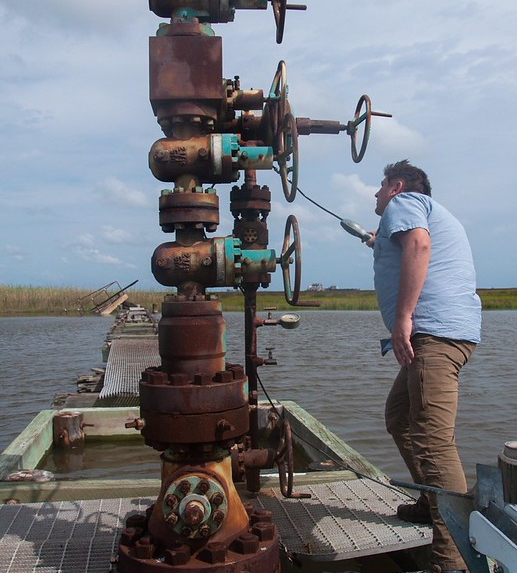
Scott Eustis investigates an abandoned well in Plaquemines Parish, Louisiana. Credit: Chris Bentley/Flickr/CC, written by NC-ND 2.0
‘Essential to any hope’ for Louisiana’s future
The change comes as the same oil companies and their allies in government launch a larger attack on lawsuits that could hold them accountable for climate damage, including Exxon’s Boulder climate lawsuit filed in the U.S. Supreme Court. The industry is also lobbying for legislation that would protect its members from such lawsuits. Earlier this month, a Louisiana lawmaker who received thousands of dollars from the oil and gas industry introduced a bill that would “limit liability for greenhouse gas emissions” and “protect energy producers and related industries.”
In a brief supporting the companies’ claims in the Plaquemines suit, seven Republican attorneys general told the Supreme Court that “whatever the theory, the remedies sought” in climate change and coastal damage cases “are largely the same: Plaintiffs want to punish energy producers with catastrophic damages for activities that were permissible and legal at the time (and in many cases federally approved).”
Louisianans may see things differently. The parish’s lawsuit has received unique support from Louisiana officials, who have favored an industry whose neglected infrastructure continues to cause damage along the coast. The state has a $50 billion coastal master plan for repairs, much of it provided by a settlement with BP after the 2010 Deepwater Horizon oil spill, but that funding is running dry.
“The industry has just cut all its investments and exited,” Eustis said. “They know they need to restore wetlands. It’s just money they don’t want to spend. But we’re seriously looking at the end of Louisiana, and restoring the land is essential to any hope of prosperity here.”
