


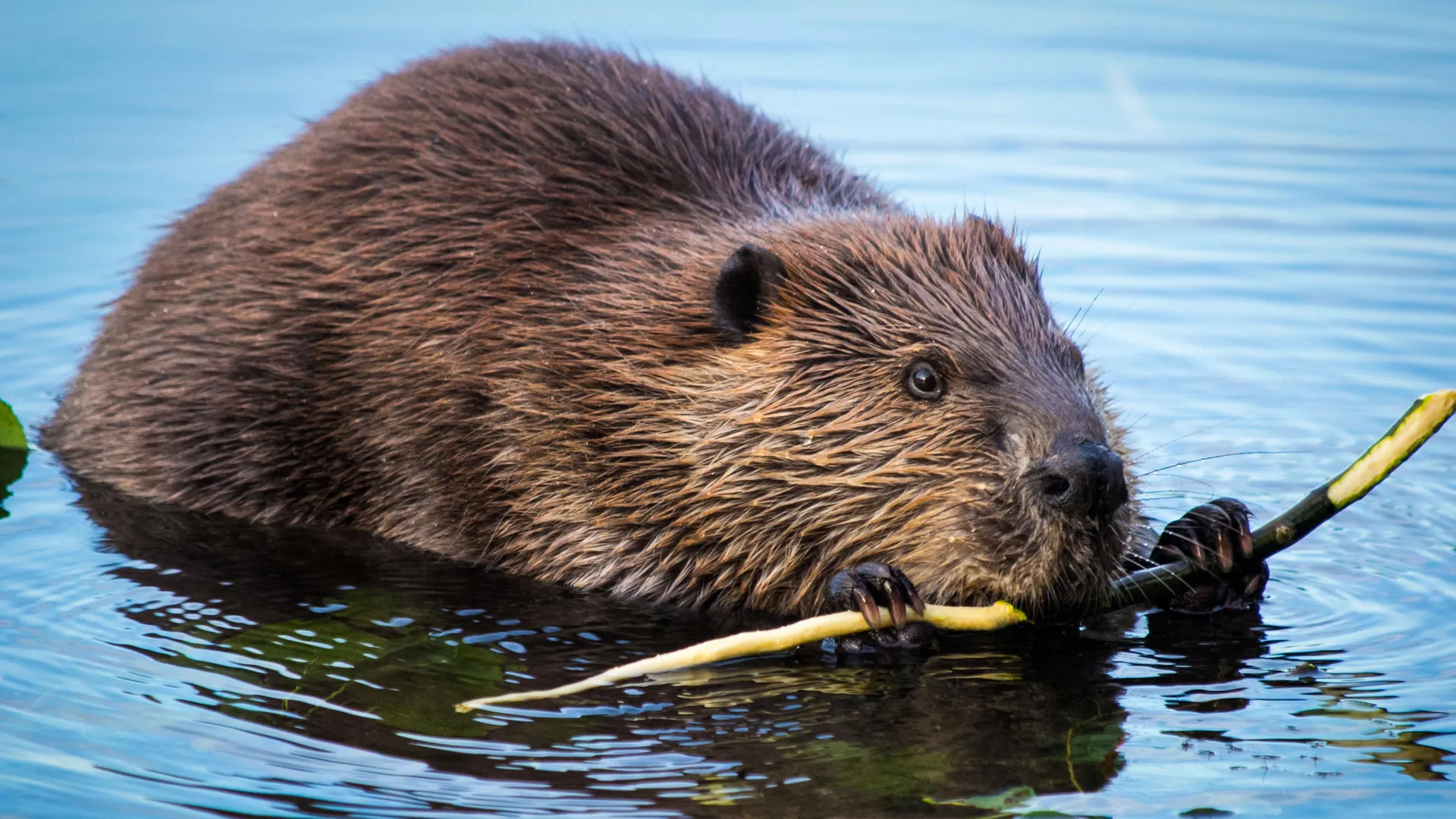
Beavers could play an unexpected role in tackling climate change by turning rivers into effective carbon sinks, according to a new international study led by researchers at the University of Birmingham.
Published in Communication Earth and EnvironmentThis study is the first to measure both carbon dioxide (CO2) released and captured as a result of beaver activity in a wetland environment. Researchers from the Universities of Birmingham, Wageningen and Bern, as well as several international collaborators, carried out the study in a stream corridor in northern Switzerland where beavers have been active for more than a decade.
The results showed that beaver-formed wetlands can store up to 10 times more carbon than similar areas without beavers. Over 13 years, the site accumulated approximately 1,194 tons of carbon. This equates to 10.1 tons of CO2 per hectare every year.
Dr Joshua Larsen, lead author of the study, from the University of Birmingham, said: “Our findings show that not only do beavers change landscapes, they fundamentally change the way carbon dioxide moves through them. By slowing water, trapping sediment and expanding wetlands, they turn streams into powerful carbon sinks. This first-of-its-kind study represents a significant opportunity and milestone for future nature-based climate solutions across Europe.”
Beaver dams reshape rivers and carbon storage
After years of conservation efforts, beavers are returning to rivers and natural habitats across Europe. This resurgence reveals how strongly they influence carbon movement, especially in the headwaters, the small section upstream where a river begins.
When beavers build dams, they flood nearby land, forming wetlands and redirecting groundwater flow, trapping both organic and inorganic materials, including CO2. These changes significantly alter the way carbon is stored and cycled in these ecosystems.
The findings suggest that expanding beaver populations in suitable wetland areas could have significant climate benefits by increasing carbon capture and storage while limiting carbon release into the atmosphere.
Beaver ecosystems act as long-term carbon sinks
To fully understand the impacts, researchers combined detailed hydrological measurements, chemical tests, sediment analysis, greenhouse gas (GHG) monitoring, and long-term modeling. This allowed us to develop the most complete carbon budget to date for European beaver-influenced landscapes.
The study found that wetlands act as net carbon sinks, storing an average of 98.3 ± 33.4 tons of carbon each year. This was mainly caused by the removal and retention of subsurface dissolved inorganic carbon.
We also saw seasonal changes. During the summer, as water levels fell and more sediment was exposed, carbon dioxide (CO2) emissions temporarily exceeded storage, turning the system into a short-term carbon source.
However, over the course of the year, the accumulation of sediment, vegetation, and dead leaves significantly increased net carbon storage. Methane (CH4) emissions, which are often a concern in wetlands, were minimal, accounting for less than 0.1% of the total carbon budget.
Lead author of the study, Dr Lucas Hallberg from the University of Birmingham, said: “In just over a decade, the systems we studied have already transformed into long-term carbon sinks, far exceeding what would be expected from unmanaged river corridors. This highlights the huge potential for beaver-led restoration and provides valuable insights into potential land use planning, rewilding strategies and climate policy.”
Long-term carbon storage and climate change benefits
Over time, as sediment accumulates and dead wood accumulates in the beaver-created wetlands, carbon becomes locked in place. The researchers found that these sediments contained up to 14 times more inorganic carbon and eight times more organic carbon than nearby forest soils. Dead wood from forests along riverbanks, streams, and wetlands (known as riparian forests) accounted for almost half of the long-term stored carbon.
These carbon reserves can remain in place for decades, indicating that beaver-modified wetlands can act as stable, long-term carbon sinks as long as the dams remain intact.
Dr. Annegret Larsen, assistant professor in Wageningen University’s Soil Geography and Landscape Group, said: “Our study shows that beavers are powerful agents of carbon capture and adsorption. By reshaping waterways and creating rich wetland habitats, beavers physically change the way carbon is stored across landscapes.”
When the researchers applied their findings to all floodplain areas in Switzerland suitable for beaver recolonization, they estimated that these wetlands could offset 1.2 to 1.8 percent of the country’s annual carbon dioxide emissions. Remarkably, this benefit is achieved without the need for direct human intervention or additional costs.
The study, led by the University of Birmingham, Wageningen University, University of Bern, and international partners, focused on stream corridors in Switzerland where beaver activity has been occurring for more than a decade.
As beaver populations continue to grow, further research is essential to better understand how these animals impact ecosystems and future carbon storage at scale.
