


Important points:
A major German manufacturer has sent lawyers and lobbyists in and around Washington, D.C., to seek protection for the herbicide Roundup.
The company’s actions clearly demonstrate its power and influence in protecting its best-selling pesticide.
The opposition retaliates in court, on social media and in street protests.
Let’s talk about America’s two-tier operating system and its impact on water and health.
At the top are corporate executives who deploy teams of lawyers and lobbyists to influence government decisions in their favor. At the root of this are citizens relying on social media, noisy protests, and courts to carry out public interest activities.
In other words, it’s a classic conflict between the “haves” and the “have-nots.”
At the moment, nothing better exemplifies the classic conflict than the battle between German chemical manufacturer Bayer and thousands of Americans concerned that exposure to Bayer’s best-selling herbicide, Roundup, causes serious illness.
The have-nots have been holding their ground ever since a San Francisco jury awarded a groundskeeper $289 million in 2018, alleging that exposure to glyphosate, the active ingredient in Roundup, caused terminal cancer. Aversion to glyphosate and other pesticides galvanized the influential “Make America Healthy Again” movement, helped elect President Trump in 2024, and established the MAHA program in Robert F. Kennedy Jr.’s Department of Health and Human Services.
Bayer also spent a total of $14 billion on judgments for 115,000 Americans who developed cancer, claiming they were not warned because federal labeling for glyphosate applications does not warn users about the chemical’s potential to cause cancer. By the way, Kennedy Jr. was the groundskeeper’s attorney in that 2018 case.
Examples from history books
Business school textbooks will include a chapter on the campaign Bayer has waged in response over the past two years. The campaign is an expensive, strategic program implemented in Washington and state capitals to penetrate and influence all levels of government. Its mission is to protect Roundup’s $2.8 billion annual market. The company, which had $51 billion in sales last year, is currently arguing cases in the Oval Office, Congress, the Environmental Protection Agency, the U.S. Attorney General’s Office, the U.S. Supreme Court, 11 state legislatures and hundreds of agricultural counties.
It is rare for industrial companies not connected to the Department of Defense to be present in so many spheres of influence. And never before have pesticides received such intense attention from lawmakers and agency leaders looking to 1) protect manufacturers and 2) prevent practices that reduce water pollution and risks to human health.
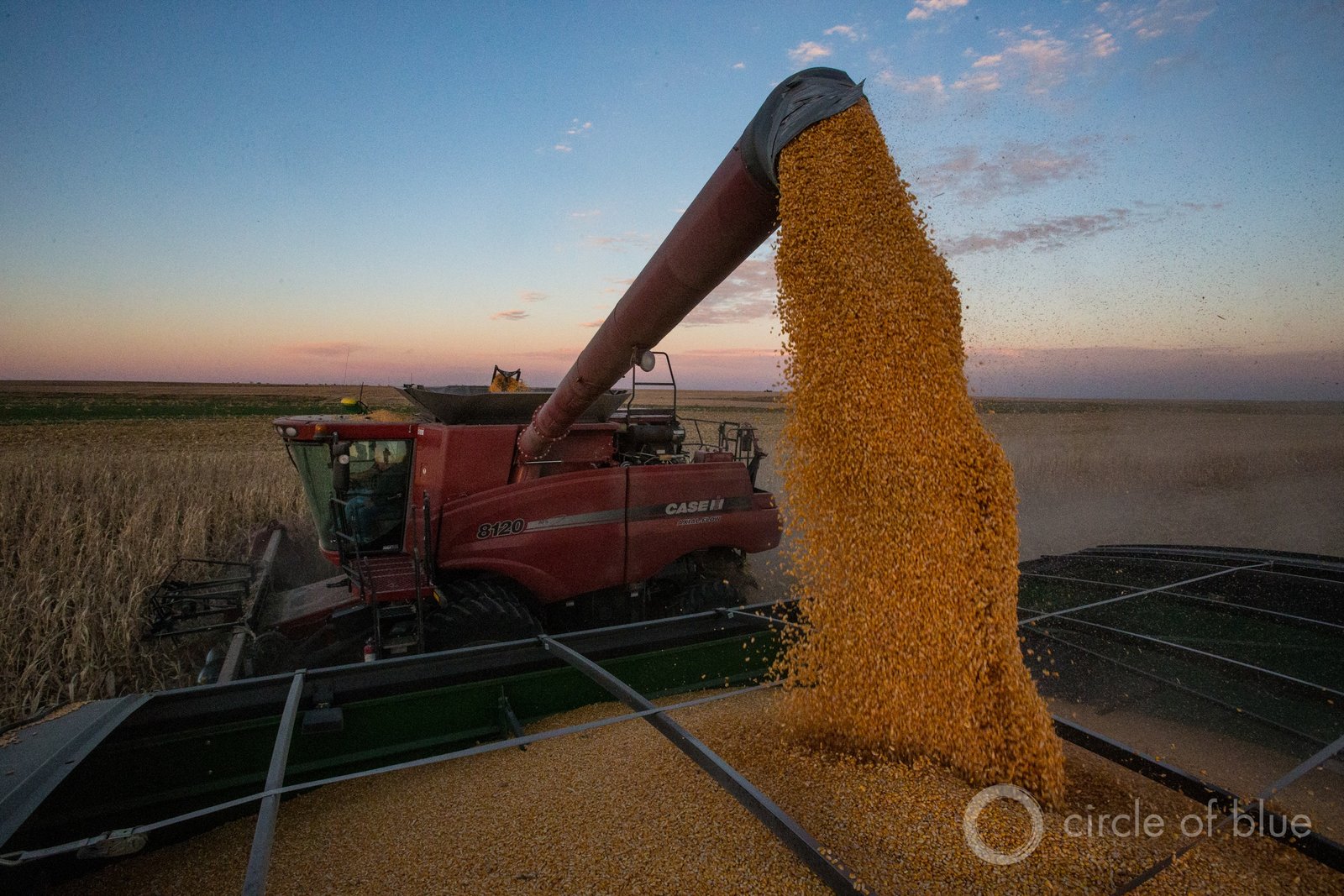
For those unfamiliar, Roundup is the most frequently used pesticide ever in the United States. Almost all of America’s corn and soybean acreage is sprayed to kill invasive weeds and grasses. Residues from glyphosate, introduced by Monsanto in 1974 and later acquired by Bayer for $63 billion in 2018, contaminate water in the places where glyphosate was used most heavily. The U.S. Geological Survey found traces of the chemical in 94% of the rivers it tested in the Great Lakes and Midwest states, as well as across the United States. A separate study by the U.S. Centers for Disease Control and Prevention found that 87 percent of 650 children tested and 80 percent of 1,600 adults tested had detectable levels of glyphosate in their urine.
This is a problem because, as mentioned above, glyphosate is a suspected carcinogen.
Bayer maintains that glyphosate is non-toxic when used according to federal label instructions. But juries in personal injury trials across the country have decided otherwise. Bayer CEO Bill Anderson said last year that the company had reached a “dead end” and could stop producing glyphosate in the United States if the company continues to suffer large losses in liability trials. Agricultural industry groups heeded Anderson’s threat and issued their own warnings that if Bayer stopped producing glyphosate, it would have a serious negative impact on U.S. corn and soybean production, threatening the nation’s food supply.
There is considerable debate about that last point. For example, about 40 percent of corn crops are not grown for human or animal food. It is refined into ethanol, which is a transportation fuel. And before President Trump imposed tariffs on soybeans, about 40% of the crop was exported.
President directly involved
Last month, the president stepped in to lead a campaign to absolve Bayer of legal responsibility for the health crisis. President Trump signed an executive order invoking the Defense Production Act, which declares domestic production of glyphosate to be a matter of national defense and a critical component of agricultural security. The order exempts Bayer from liability for manufacturing the chemicals.
The administration is also supporting Bayer in a case the U.S. Supreme Court is scheduled to hear next month. U.S. Attorney General D. John Sauer last year filed a brief reasserting Bayer’s argument that the Federal Insecticide, Fungicide, and Rodenticide Act preempts “failure to warn” tactics in lawsuits won by plaintiffs. The company and the government argue that because glyphosate is safe, there was no need for the federal label to include a threat that glyphosate use could cause cancer.
Later this year, the EPA will complete a reevaluation of its nearly 10-year determination that glyphosate is safe for humans and the environment. And as part of their legislative efforts to enact this year’s farm policy bill, Republicans in Congress are crafting a provision that protects chemical manufacturers from liability lawsuits.
Bayer is equally busy outside of Washington. Last year, North Dakota and Georgia approved legislation exempting them from liability for glyphosate. The company is lobbying nine other agricultural states to do the same.
counterattack
Bayer is certainly putting enough money in the right places to gain an edge in the trenches to secure Roundup sales in the United States. However, the enemy is very capable of counterattacking.
In Iowa, where more Roundup is used than any other state, residents are supporting a vote in Congress to absolve Bayer of liability in a protest to repeal what they call a “gun gag law.” And in Maine, Democratic organic farmer Rep. Cherry Pingree is preparing an amendment to the federal farm bill that would remove language exempting Bayer from liability.
In response to President Trump’s executive order last month, Congressman Pingree, along with Representative Thomas Massey, Republican of Kentucky, introduced the Glyphosate Immunity Act (HR 7601), which would remove the liability shield.
The pushback was supported by MAHA leaders, who said they felt betrayed by the president and Kennedy Jr., who once called glyphosate “poison,” and posted on Facebook in 2020, “If my life were a Superman comic, Monsanto would be my Lex Luthor. I have seen this company as the enemy of all good American values.”
After President Trump signed the executive order, Kennedy’s attitude changed. “Unfortunately, our agricultural systems are highly dependent on these chemicals,” he wrote in a social media statement.
“MAHA voters were promised health care reform, not chemical fortification,” Bani Hari, a MAHA leader and author who blogs as Food Babe, told reporters. She called the executive order a “direct attack on MAHA” and “a gift to the pesticide and chemical industry lobby at the expense of human health.” Hari also accused President Trump of abandoning his campaign promise to reduce the risks from exposure to pesticides.
She and other MAHA leaders noted that during a rally in Georgia, President Trump appeared to promise changes to government pesticide oversight. “I said to a great guy, RFK Jr., Bobby, I said, ‘Bobby, you’re working on women’s health. You’re working on health. You’re working on what we eat. You’re working on pesticides. You’re working on everything,'” Trump said.
“The president is making a mockery of the very voters who started his administration,” added Kelly Ryerson, another activist MAHA leader known as Glyphosate Girl. “The expansion of production of glyphosate, a pesticide derided by the MAHA movement, is a pledge to perpetuate a toxic, chemical food system that has produced a sick and infertile American population. It is ironic that this move is being made in the name of national security, when chemically destroying both human and soil health actually threatens our national security and our future as a producing nation.”
Ryerson’s argument is spot on. Bayer’s project to protect market share is a surprisingly transparent lesson in how power is exercised in America. Companies facing billions of dollars in liability are pulling government levers so strongly that chemicals found in children’s urine and Midwestern rivers have become national defense issues. The president, who came to office on a health care reform movement, is now protecting the very industry his supporters trusted to stand up for. And the MAHA movement, which thought it was resisting the “haves,” is watching as political forces and corporate money run amok over public health and government accountability.
Unless the “have-nots” succeed, the precedent set will extend beyond glyphosate. It will define how all future battles in this administration over water, food, and health are decided.
