

Close Menu

    Subscribe to Updates

    Get the latest creative news from FooBar about art, design and business.

    What's Hot

    Common chemicals found in car tires may destroy human brain cells and promote dementia

    July 8, 2026

    JAMA Study: Lung Transplant Shows Promise as a Treatment for Lung Cancer

    July 8, 2026

    Conflict, climate and no cash: why poverty persists

    July 8, 2026
    Facebook X (Twitter) Instagram
    Facebook X (Twitter) Instagram
    Health Magazine
    • Home
    • Environmental Health
    • Health Technology
    • Medical Research
    • Mental Health
    • Nutrition Science
    • Pharma
    • Public Health
    • Discover
      • Daily Health Tips
      • Financial Health & Stability
      • Holistic Health & Wellness
      • Mental Health
      • Nutrition & Dietary Trends
      • Professional & Personal Growth
    • Our Mission
    Health Magazine
    Home » News » AI can predict disaster, but it can’t save you » Yale Climate Connections
    Environmental Health

    AI can predict disaster, but it can’t save you » Yale Climate Connections

    healthadminBy healthadminJuly 7, 2026No Comments5 Mins Read
    AI can predict disaster, but it can’t save you » Yale Climate Connections
    Share
    Facebook Twitter Reddit Telegram Pinterest Email


    Written by Katherine Nakarebu, Yale University Climate Studies
    July 7, 2026

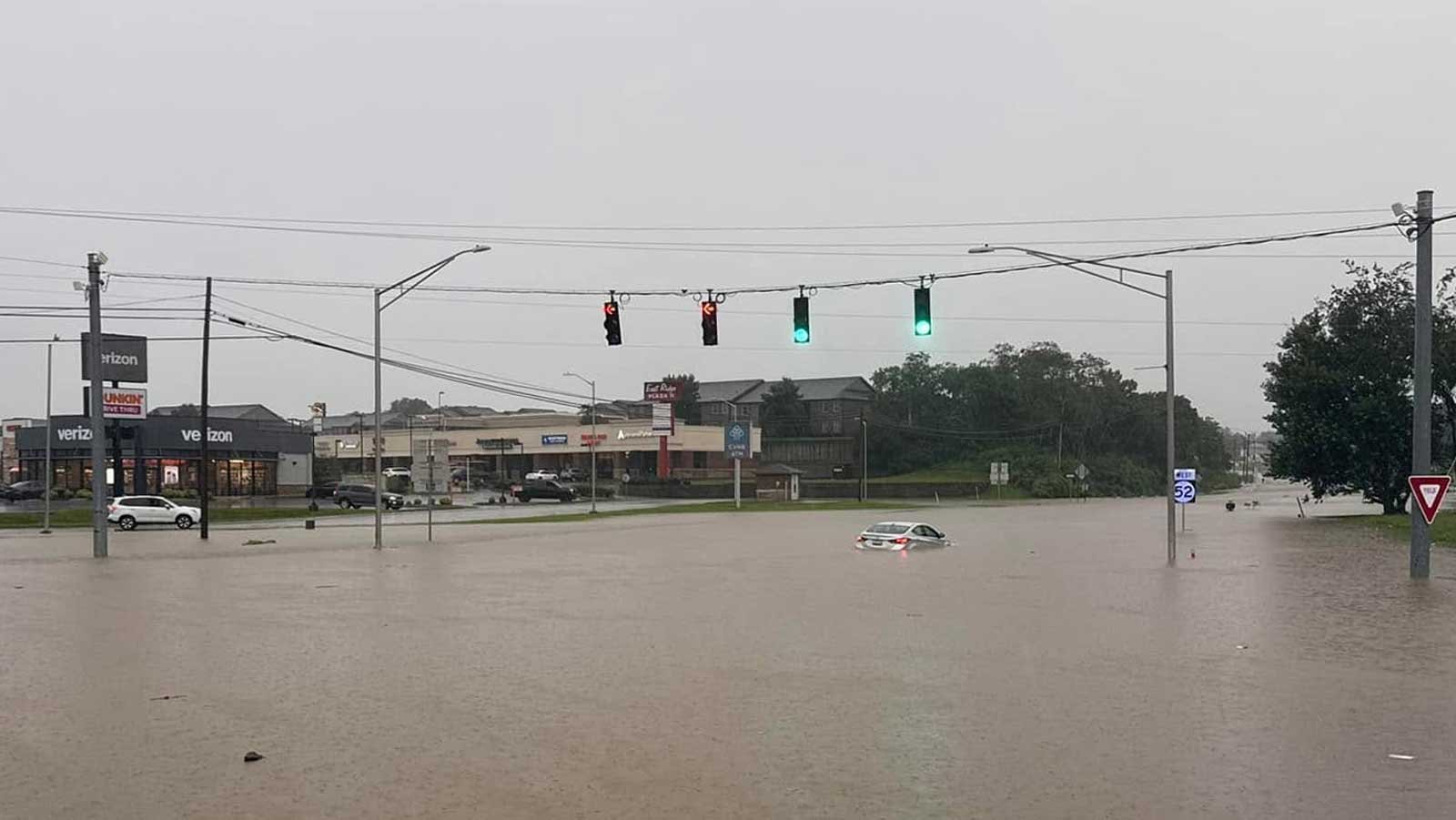
    From May to October each year, the United States enters what climate scientists and emergency managers now call the “danger season.” It’s been a six-month ordeal as hurricane season peaks, heat domes settle over cities for days, wildfires spread across millions of acres, and flash floods tear through communities with little warning.

    AI-powered predictions are constantly improving and can help keep some people safe by helping us understand when it’s time to stock up on food, get off the roads, and evacuate before a major storm. But whether in an uninsured mobile home park in America or a rural village in Madagascar or Nigeria, millions of people may receive the same warning, but with no safe haven to flee to or the financial means to protect their livelihoods.

    More than 15 years of experience developing models that use satellite data to predict droughts and assess the impact of floods has shown us that the barrier to saving lives is rarely the accuracy of the data, but rather the lack of the policy infrastructure needed to act on it. Billions of dollars are being poured into data centers, but physical infrastructure for resilience, such as sea walls and grain bins, is lagging behind. This AI-first bias also overlooks “ground truth” data and fact-based local validation from tools like rain gauges and soil sensors. Without this ground-level input, AI lacks the credibility local policymakers need to take life-saving actions.

    The funding gap reveals the most obvious mismatch. The main international relief mechanism, the Loss and Damage Response Fund, receives less than 0.1% of actual needs, leaving insufficient funding for interventions such as early warning and pre-planned disaster response.

    And in the United States, a systemic overhaul of FEMA could seriously undermine disaster response, including cuts to critical disaster mitigation programs, changes in leadership, and shifting financial burdens and responsibilities to states.

    Global funding disparities are enormous, but the growing movement around anticipatory action (the practice of deploying resources before, rather than after, disasters) and planned transfers (moving vulnerable communities out of harm’s way before disaster strikes) is a reminder of what is possible when better predictions, faster coordination, wiser resource deployment, and true local leadership show the world what is possible when the world chooses and acts before disasters strike. Although these approaches are still limited in scope and inconsistently implemented, they show that acting early, such as pre-positioning supplies, activating automatic financing, and moving populations before storms make landfall, is much more cost-effective than reactive aid.

    Federal Insurance Mitigation Administration data consistently shows that every $1 invested in disaster mitigation saves $6 in future recovery costs. In Europe, research has found that investments in coastal flood adaptation provide a return of €6 for every €1 invested. Even more impressive, every dollar invested in climate change adaptation around the world generates a return of more than $10.50 over 10 years, an average return of 27% per project.

    These are not abstract numbers. They represent real lives saved, livelihoods protected, and communities that remain intact rather than being displaced. But data alone is not enough.

    Without continued investment in local leadership and an integrated framework for delivering large-scale disaster interventions, their promises will remain undelivered. Bridging this gap is essential, especially given the clear and compelling return on investment that disaster prevention efforts continue to deliver.

    Addressing escalating climate risks requires combining physical capabilities with AI and data infrastructure. Crews will clear roads, the power grid will keep power flowing, and supplies will be pre-positioned before the storm hits. The goal is something like FEMA-level response capacity for each country, but that capacity varies widely. If it doesn’t exist, even the most sophisticated predictions will lengthen the wait for the inevitable. High-tech alarms save lives only if local actors have the financial wherewithal, legal authority, and trained personnel to act.

    The 2026 Danger Season should be the moment when funding priorities finally shift away from AI-first and AI-only strategies. While big tech companies are leading the way in AI and prediction, international financial institutions can’t take their eyes off the ball. Digital tools are only as effective as the physical infrastructure and field expertise they support. By prioritizing the brick-and-mortar and human capabilities of local organizations, investors can finally bridge the gap between intelligence and action.

    I believe that for every penny allocated to AI and digital infrastructure, approximately $10 should be devoted to the local technical capacity and physical infrastructure needed for response and action. Without this rebalancing, world-class forecasting will remain a digital blueprint with no people or means to build it.

    Katherine Nakarembe is a professor of translational geoAI at the University of Maryland, where she bridges geographic science and artificial intelligence to address real-world problems. He is also a Public Voices Fellow on Technology in the Public Interest for the OpEd project.

    thisarticleteeth,Yale Climate Connections First published inCreative Commons Attribution-NonCommercial-NoDerivatives 4.0 International License.


    Source link

    Visited 3 times, 1 visit(s) today
    Share. Facebook Twitter Pinterest LinkedIn Telegram Reddit Email
    Previous ArticleApproximately 50,000 homes in Tennessee may not have access to air conditioning • Tennessee Lookout
    Next Article Different forms of intelligence show unique genetic links to mental illness
    healthadmin

    Related Posts

    Conflict, climate and no cash: why poverty persists

    July 8, 2026

    Trump EPA Air Force Secretary Heads for the Exit

    July 7, 2026

    Average male testosterone levels have been cut in half over the past 50 years, scientists say Men’s Health

    July 7, 2026

    Study finds manure digesters are spurring California dairy farm expansion

    July 7, 2026

    Approximately 50,000 homes in Tennessee may not have access to air conditioning • Tennessee Lookout

    July 7, 2026

    An Alberta pipeline deal could allow Canadian oil to reach new countries. But would they want it?

    July 7, 2026
    Add A Comment
    Leave A Reply Cancel Reply

    Categories

    • Daily Health Tips
    • Discover
    • Environmental Health
    • Exercise & Fitness
    • Featured
    • Featured Videos
    • Financial Health & Stability
    • Fitness
    • Fitness Updates
    • Health
    • Health Technology
    • Healthy Aging
    • Healthy Living
    • Holistic Healing
    • Holistic Health & Wellness
    • Medical Research
    • Medical Research & Insights
    • Mental Health
    • Mental Wellness
    • Natural Remedies
    • New Workouts
    • Nutrition
    • Nutrition & Dietary Trends
    • Nutrition & Superfoods
    • Nutrition Science
    • Pharma
    • Preventive Healthcare
    • Professional & Personal Growth
    • Public Health
    • Public Health & Awareness
    • Selected
    • Sleep & Recovery
    • Top Programs
    • Weight Management
    • Workouts
    Popular Posts
    • 1773313737_bacteria_-_Sebastian_Kaulitzki_46826fb7971649bfaca04a9b4cef3309-620x480.jpgHow Sino Biological ProPure™ redefines ultra-low… March 12, 2026
    • pexels-david-bartus-442116The food industry needs to act now to cut greenhouse… January 2, 2022
    • 1773729862_TagImage-3347-458389964760995353448-620x480.jpgDespite safety concerns, parents underestimate the… March 17, 2026
    • 1773209206_futuristic_techno_design_on_background_of_supercomputer_data_center_-_Image_-_Timofeev_Vladimir_M1_4.jpegMulti-agent AI systems outperform single models… March 11, 2026
    • 1774403998_image_28620e4b6b0047f7ab9154b41d739db1-620x480.jpgGait pattern helps distinguish between Lewy body… March 24, 2026
    • Leukemia-620x480.jpgBiomimetic platform powers CAR T therapy for… March 9, 2026

    Demo
    Stay In Touch
    • Facebook
    • Twitter
    • Pinterest
    • Instagram
    • YouTube
    • Vimeo
    Don't Miss

    Common chemicals found in car tires may destroy human brain cells and promote dementia

    By healthadminJuly 8, 2026

    Recent research suggests that common chemical byproducts produced by car tire failure can interfere with…

    JAMA Study: Lung Transplant Shows Promise as a Treatment for Lung Cancer

    July 8, 2026

    Conflict, climate and no cash: why poverty persists

    July 8, 2026

    Study explains long-term eye symptoms after mild COVID-19 infection

    July 8, 2026

    Subscribe to Updates

    Get the latest creative news from SmartMag about art & design.

    HealthxMagazine
    HealthxMagazine

    At HealthX Magazine, we are dedicated to empowering entrepreneurs, doctors, chiropractors, healthcare professionals, personal trainers, executives, thought leaders, and anyone striving for optimal health.

    Our Picks

    Study explains long-term eye symptoms after mild COVID-19 infection

    July 8, 2026

    American Heart Association joins social network Roon

    July 8, 2026

    Neuroscience breakthrough uses AI to reveal the cellular components of human speech

    July 8, 2026
    New Comments
      Facebook X (Twitter) Instagram Pinterest
      • Home
      • Privacy Policy
      • Our Mission
      © 2026 ThemeSphere. Designed by ThemeSphere.

      Type above and press Enter to search. Press Esc to cancel.