


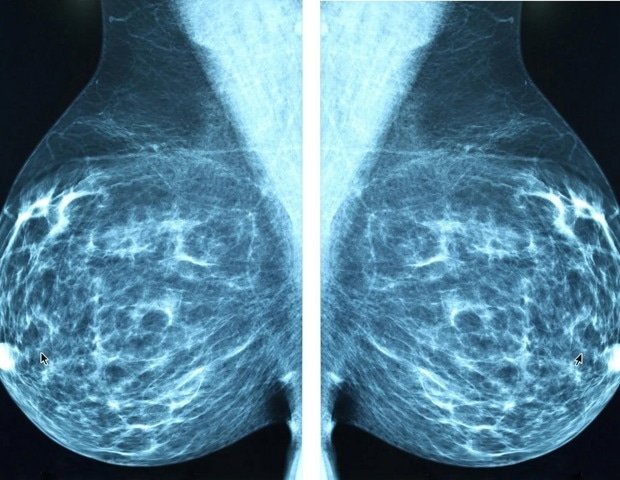
New guidance from the American College of Physicians (ACP) says all asymptomatic, average-risk women between the ages of 50 and 74 should undergo a mammogram every other year for breast cancer. Women ages 40 to 49 should discuss their breast cancer risks and the benefits and harms of screening with their doctors. This is because the harms of screening, such as false-positive results, resulting psychological distress, overdiagnosis, overtreatment, additional testing, and radiation exposure, may outweigh the uncertain benefits in this population. ACP’s advice, “Breast Cancer Screening in Asymptomatic Average-Risk Adult Women: Guidance Statement from the American Medical Association,” Annals of Internal Medicine.
The ACP also provides guidance on when to stop breast cancer screening and how to approach screening for women with dense breasts. ACP says women over 75 who are asymptomatic and at average risk or who have a limited life expectancy should talk to their doctors about stopping routine screenings. This is because the benefits of screening are diminished or uncertain beyond age 74, while potential harms such as overdiagnosis are more likely to occur with increasing age. ACP advises physicians to consider additional digital breast tomosynthesis (DBT) for asymptomatic average-risk women with dense breasts. Decision-making must consider potential benefits and harms, radiation exposure, availability, patient values and preferences, and cost. However, the ACP advises against using adjunctive MRI or ultrasound to screen this population.
The guidance statement, developed by the ACP Clinical Guidelines Committee, defined average risk as women without a personal history of breast cancer, high-risk breast lesions, genetic mutations known to increase risk such as BRCA 1 or 2, another familial breast cancer risk syndrome, or a history of high-dose radiation therapy to the breast at a young age.
“Breast cancer screening is essential and should be based on the best available evidence,” said ACP President Jason M. Goldman, M.D., MACP. “ACP developed this guidance to provide physicians and women with the information they need to make breast cancer screening decisions, including when to start and stop breast cancer screening, how often to screen, and the methods to use for screening.”
sauce:
American College of Physicians
Reference magazines:
DOI: 10.7326/ANNALS-25-05116
