


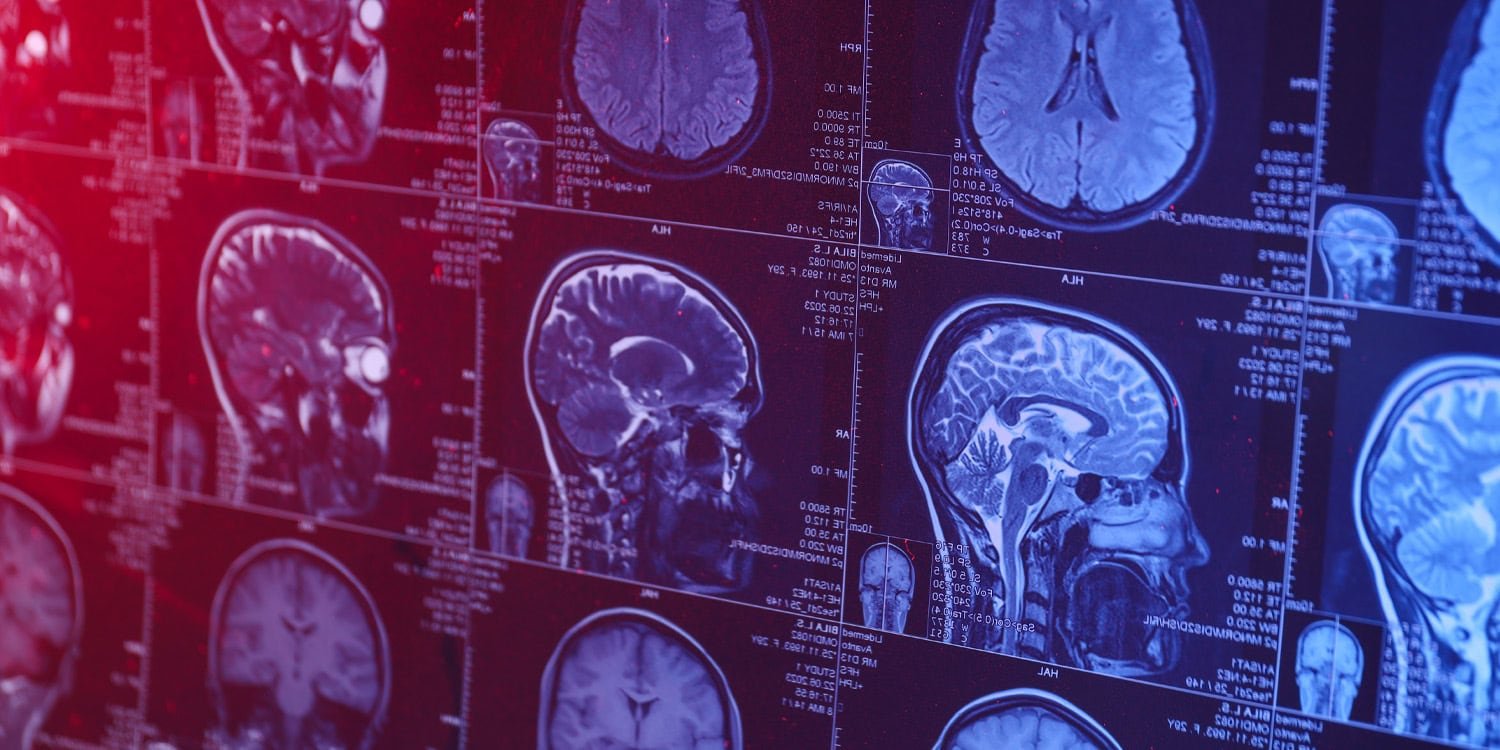
Recent research published in journals molecular psychiatry A combination of non-invasive brain scans and computer modeling provides evidence that we can successfully measure how dementia drugs interact with specific brain receptors in living patients. The study suggests that this approach could replace invasive procedures to see how effective new treatments are in the brain. These discoveries provide a practical way to speed up the testing and development of new treatments for Alzheimer’s disease.
“To advance new treatments for Alzheimer’s disease, we need tests (tools, assays) that allow us to ‘see’ changes in the living human brain with the same level of detail and insight that we take for granted in animal models,” explained study author James Rowe, professor of cognitive neurology at the University of Cambridge.
Traditionally, medical researchers have relied on animal models and postmortem tissue to understand how drugs affect brain cells. Direct examination of the living human brain is often impractical due to the blood-brain barrier and the rigid enclosure of the skull.
This anatomical reality creates significant hurdles when trying to prove that new experimental drugs actually reach their intended targets. Scientists conducted this study to test whether a drug’s exact mechanism of action could be measured outside the body, without the need for blood tests, biopsies, or injections. They focused on a well-known Alzheimer’s drug called memantine to see if they could accurately detect the drug’s effects in a non-invasive way.
Memantine is usually prescribed to treat moderate to severe Alzheimer’s disease. Scientists focused on N-methyl-D-aspartate receptors, a specific docking station on brain cells that helps manage memory and learning. In a healthy brain, these receptors are tightly controlled by magnesium, which acts like a biological blocker that prevents excess calcium from flooding out and damaging cells.
In Alzheimer’s disease, this natural blocking mechanism tends to fail. This failure causes calcium overload, disrupting brain function and contributing to progressive cognitive decline. The drug memantine helps repair this block and prevents cells from becoming overloaded with calcium.
To observe these microscopic movements, scientists used a technique called magnetoencephalography. This is a sensitive neuroimaging method that maps brain activity by recording tiny magnetic fields generated by natural electrical currents in the brain. The scientists combined this non-invasive scanning method with sophisticated computer models that mathematically simulate the complex electrical behavior of brain cell networks.
“We proposed that this could be achieved by combining magnetoencephalography with detailed computational models of individual patients’ brains. Much is known about the drug memantine and its clinical benefits in Alzheimer’s disease, so we used it as a test case for our method to study patients with dementia,” Dr. Lowe said.
The scientists conducted two separate experiments to test their approach. The first experiment recruited 19 neurologically healthy adults. Participants completed two brain scanning sessions two weeks apart, receiving 10 milligrams of memantine in one session and a placebo pill in the other session.
During scanning, participants passively listened to a series of repetitive audio tones that occasionally changed pitch. Tones were played at 0.5-s intervals over multiple 5-min blocks to establish a predictable rhythm. This repetitive auditory procedure triggers a specific brain response known as mismatch negativity.
Mismatch negativity is an automatic neurological response to unexpected sounds that disrupt established patterns. We rely heavily on healthy N-methyl-D-aspartate receptors to function properly and process new auditory information. Scientists discovered that memantine was successful in promoting blockade of N-methyl-D-aspartate receptors, exactly as the drug was designed to do.
A sophisticated computer model accurately detected this minute change simply by analyzing the magnetic fields generated during a speech task. This provided strong evidence that mathematical models can accurately track the effects of drugs in the brains of living humans. By combining safe brain scanning and customized computer modeling, researchers were able to confirm the drug’s mechanism without invasive procedures.
In the second experiment, scientists followed 42 patients diagnosed with mild cognitive impairment or Alzheimer’s disease. All of these patients tested positive for amyloid protein, the characteristic biological sign of the disease. The researchers measured the patients’ brain activity using the same audio task at the beginning of the study.
The researchers then conducted follow-up scans on 30 of these people about 16 months later to see how their brains had changed. Scientists observed that the brain’s automatic responses to unexpected sounds were significantly weaker in Alzheimer’s patients than in healthy adults. As the disease progressed naturally over 16 months, this electrical response became even weaker.
Patients with lower scores on the Mini-Mental Status Examination, a standard questionnaire used to measure cognitive impairment, also had weaker neurological responses. Lower scores on this standardized test indicate more severe dementia symptoms. Using a computer model, researchers found that the natural blockade of N-methyl-D-aspartate receptors is significantly reduced in Alzheimer’s patients.
This decrease in receptor blockade worsened as patients’ cognitive scores declined. It also worsened over time between the first and second scanning sessions. These findings confirm that Alzheimer’s disease and the drug memantine have opposing effects on the brain.
“By combining safe, non-invasive MEG scans with biophysical models of each patient’s brain, we were able to demonstrate the drug’s correct mechanism of action,” Lowe told PsyPost. “This opens the door to exploring the potential of new drugs. The importance of our research is that we can detect how new drugs work non-invasively, without blood, biopsies or injections, by simply scanning a living person’s brain from the ‘outside’.”
Scientists stress that dementia, like cancer and diabetes, is a treatable disease. Ongoing research will eventually lead to new and better treatments. Also, tools such as brain scans can help identify those treatments more quickly.
However, this study has some limitations that should be noted. Even though the brain’s response to sound involves a much larger network, the computer model focused only on two specific brain regions to keep the mathematics manageable. Including the entire network would make the computer simulation too complex to run efficiently.
For future studies, scientists plan to use this same method to test the effects of new experimental drug treatments. They hope their scanning technology can quickly show whether a new drug is successfully interacting with its intended target in the brain.
“Our method can be used to determine whether a new drug is worth investing more time and resources, or whether it can be set aside so researchers can focus on other options,” Lowe said. “This means we can reduce the time, risk and cost of testing new drugs. This is a team effort with patients, doctors and researchers all working together.”
The study, “The Effects of Alzheimer’s Disease and Memantine on NMDA Receptor Blockade: Noninvasive In Vivo Insights from Magnetoencephalography,” was authored by Juliette H. Lanskey, Amirhossein Jafarian, Laura E. Hughes, Melek Karadag, Ece Kocagoncu, Matthew A. Rouse, Natalie E. Adams, Michelle Naessens, and Vanessa. Raymond, Mark Ulrich, Krish D. Singh, Richard N. Henson, and James B. Rowe.
