

Close Menu

    Subscribe to Updates

    Get the latest creative news from FooBar about art, design and business.

    What's Hot

    Repairing tooth infections may improve blood sugar levels and heart health

    March 17, 2026

    DNA origami vaccines could be the next leap forward beyond mRNA

    March 17, 2026

    A rare supernova from 10 billion years ago may reveal the secrets of dark energy

    March 17, 2026
    Facebook X (Twitter) Instagram
    Facebook X (Twitter) Instagram
    Health Magazine
    • Home
    • Environmental Health
    • Health Technology
    • Medical Research
    • Mental Health
    • Nutrition Science
    • Pharma
    • Public Health
    • Discover
      • Daily Health Tips
      • Financial Health & Stability
      • Holistic Health & Wellness
      • Mental Health
      • Nutrition & Dietary Trends
      • Professional & Personal Growth
    • Our Mission
    Health Magazine
    Home » News » A rare supernova from 10 billion years ago may reveal the secrets of dark energy
    Nutrition Science

    A rare supernova from 10 billion years ago may reveal the secrets of dark energy

    healthadminBy healthadminMarch 17, 2026No Comments4 Mins Read
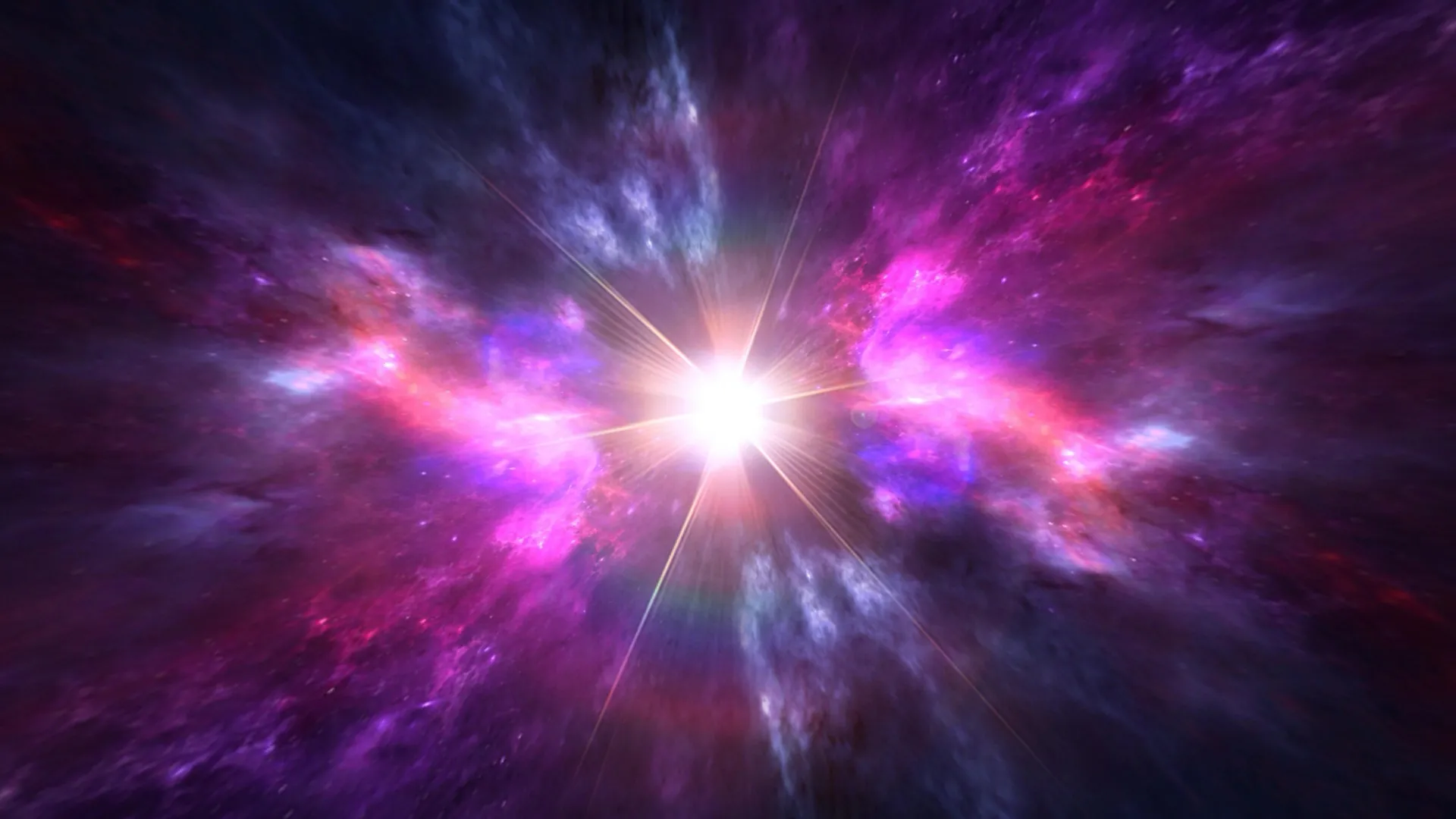
    A rare supernova from 10 billion years ago may reveal the secrets of dark energy
    Share
    Facebook Twitter Reddit Telegram Pinterest Email


    Astronomers may be getting closer to understanding one of the biggest mysteries in cosmology: dark energy, the unknown force thought to be driving the accelerating expansion of the universe.

    Dark energy is thought to make up about 68% of the universe. Despite its enormous impact, scientists still don’t know exactly what it is or how it affects the growth of the universe.

    Now, researchers have identified a rare supernova in the early universe that could provide valuable new clues. The light from this powerful explosion has been traveling toward Earth for over 10 billion years. The event was so bright that its light was further amplified by the gravity of galaxies along the line of sight, making the distant explosion appear even brighter.

    “No one has ever discovered a supernova like this before, and the properties of this system mean it could help solve some big questions in astrophysics, such as the nature of the forces driving the expansion of the universe,” explains Dr Daniel Parley, reader in astrophysics at Liverpool John Moores University.

    Gravity splits light into multiple images

    A galaxy located directly between Earth and a distant supernova plays a key role in this discovery. That gravity bends the light traveling toward us from the explosion.

    “We see the light from this distant supernova split into multiple images, which we call ‘gravitational lensing,'” explains Jacob Wise, a PhD student at the Astrophysics Institute who first recognized the significance of this event.

    Different paths of light to Earth

    “When light is ‘lensed’, the lengths of the different paths it takes to reach Earth are not all the same, so light traveling along different paths takes different amounts of time to reach us.”

    Because supernovae continue to shine for months, astronomers can observe multiple images of the same explosion at once. Each image represents the supernova at a slightly different moment in its evolution, as the light traveled along paths of different lengths.

    “What’s interesting is that the time difference between different images depends on the expansion rate of the universe,” Parley added.

    The research team will work with collaborators at the California Institute of Technology, Stockholm University, and other institutions around the world to measure these time delays with high precision. These measurements could reveal how fast the universe is expanding and provide insight into the force (dark energy) responsible for accelerating its expansion.

    Potential tiebreaker in the Hubble strain

    Astronomers are currently facing a big mystery about the rate of expansion of the universe. Different methods produce conflicting values ​​for the Hubble constant, which describes the rate of expansion of the universe.

    Parley believes observations of this unusual supernova could help resolve the disagreement.

    He said: “Studies of the Big Bang’s afterglow give us one number for the so-called Hubble constant (a measure of the rate of expansion of the universe), but studies of nearby galaxies give us another number, which astronomers call the Hubble tension. So studies of lensed supernovae may show us which of these two numbers we should really believe.”

    Observatories around the world participate in research

    The supernova’s brightness allowed astronomers to detect it from great distances using medium-sized ground-based telescopes. These include the Zwicky Temporary Facility in California and the Liverpool Telescope on La Palma Island.

    (The first telescope to detect a supernova was the Zwicky Temporary Facility in California, but it was unable to see multiple images. The Liverpool Telescope was the first to see multiple images, thereby proving that gravitational lensing was at work.)

    The object was later studied in more detail using some of the world’s most powerful observatories, including the Keck Telescope in Hawaii, the Hubble Space Telescope, and the James Webb Space Telescope.

    “Our colleagues in Stockholm first noticed the supernova, but we were the first to notice that the light was bent into multiple images,” Jacob said.

    “All the major observatories and space telescopes in the Northern Hemisphere have observed this phenomenon, but the Liverpool Telescope, operated by LJMU, was the first to get there,” Wise said with a smile.

    The study “Discovery of SN 2025wny: A strongly gravitational lensed superluminous supernova at z = 2.01” was published in the journal astrophysics characters The authors include Joel Johansson, Daniel A. Perley, Ariel Guber, Jacob L. Wise, Eugene Chin, Zoe McGrath, Steve Schultz, Cameron Lemon, Anjasha Gangopadhyay, Konstantinos Tsalapatas, and 24 other co-authors.


    Source link

    Visited 1 times, 1 visit(s) today
    Share. Facebook Twitter Pinterest LinkedIn Telegram Reddit Email
    Previous ArticleRefeyn launches MyMass instrument to simplify sample quality assessment in structural biology
    Next Article DNA origami vaccines could be the next leap forward beyond mRNA
    healthadmin

    Related Posts

    Repairing tooth infections may improve blood sugar levels and heart health

    March 17, 2026

    DNA origami vaccines could be the next leap forward beyond mRNA

    March 17, 2026

    A strange twist in the universe’s oldest light may be bigger than we thought

    March 17, 2026

    Scientists inject one tumor and watch cancer disappear throughout the body

    March 17, 2026

    Common pesticides may more than double Parkinson’s risk

    March 16, 2026

    Strange new quantum states emerge when atoms become ‘frustrated’

    March 16, 2026
    Add A Comment
    Leave A Reply Cancel Reply

    Categories

    • Daily Health Tips
    • Discover
    • Environmental Health
    • Exercise & Fitness
    • Featured
    • Featured Videos
    • Financial Health & Stability
    • Fitness
    • Fitness Updates
    • Health
    • Health Technology
    • Healthy Aging
    • Healthy Living
    • Holistic Healing
    • Holistic Health & Wellness
    • Medical Research
    • Medical Research & Insights
    • Mental Health
    • Mental Wellness
    • Natural Remedies
    • New Workouts
    • Nutrition
    • Nutrition & Dietary Trends
    • Nutrition & Superfoods
    • Nutrition Science
    • Pharma
    • Preventive Healthcare
    • Professional & Personal Growth
    • Public Health
    • Public Health & Awareness
    • Selected
    • Sleep & Recovery
    • Top Programs
    • Weight Management
    • Workouts
    Popular Posts
    • the-pros-and-cons-of-paleo-dietsThe Pros and Cons of Paleo Diets: What Science Really Says April 16, 2025
    • Improve Mental Health10 Science-Backed Practices to Improve Mental Health… March 11, 2025
    • How Healthy Living Is Transforming Modern Wellness TrendsHow Healthy Living Is Transforming Modern Wellness… December 3, 2025
    • "The Best Daily Health Apps to Track Your Wellness Goals"The Best Daily Health Apps to Track Your Wellness… August 15, 2025
    • daily vitamin D needsWhy Sunlight Is Crucial for Your Daily Vitamin D Needs June 12, 2025
    • Healthy Living: Expert Tips to Improve Your Health in 2026Healthy Living: Expert Tips to Improve Your Health in 2026 November 16, 2025

    Demo
    Stay In Touch
    • Facebook
    • Twitter
    • Pinterest
    • Instagram
    • YouTube
    • Vimeo
    Don't Miss

    Repairing tooth infections may improve blood sugar levels and heart health

    By healthadminMarch 17, 2026

    Successful root canal treatment may provide benefits beyond saving the tooth. New research suggests that…

    DNA origami vaccines could be the next leap forward beyond mRNA

    March 17, 2026

    A rare supernova from 10 billion years ago may reveal the secrets of dark energy

    March 17, 2026

    Refeyn launches MyMass instrument to simplify sample quality assessment in structural biology

    March 17, 2026

    Subscribe to Updates

    Get the latest creative news from SmartMag about art & design.

    HealthxMagazine
    HealthxMagazine

    At HealthX Magazine, we are dedicated to empowering entrepreneurs, doctors, chiropractors, healthcare professionals, personal trainers, executives, thought leaders, and anyone striving for optimal health.

    Our Picks

    Refeyn launches MyMass instrument to simplify sample quality assessment in structural biology

    March 17, 2026

    Biodegradable sanitary napkins made from water hyacinth pass safety and absorbency tests in new study

    March 17, 2026

    A strange twist in the universe’s oldest light may be bigger than we thought

    March 17, 2026
    New Comments
      Facebook X (Twitter) Instagram Pinterest
      • Home
      • Privacy Policy
      • Our Mission
      © 2026 ThemeSphere. Designed by ThemeSphere.

      Type above and press Enter to search. Press Esc to cancel.