


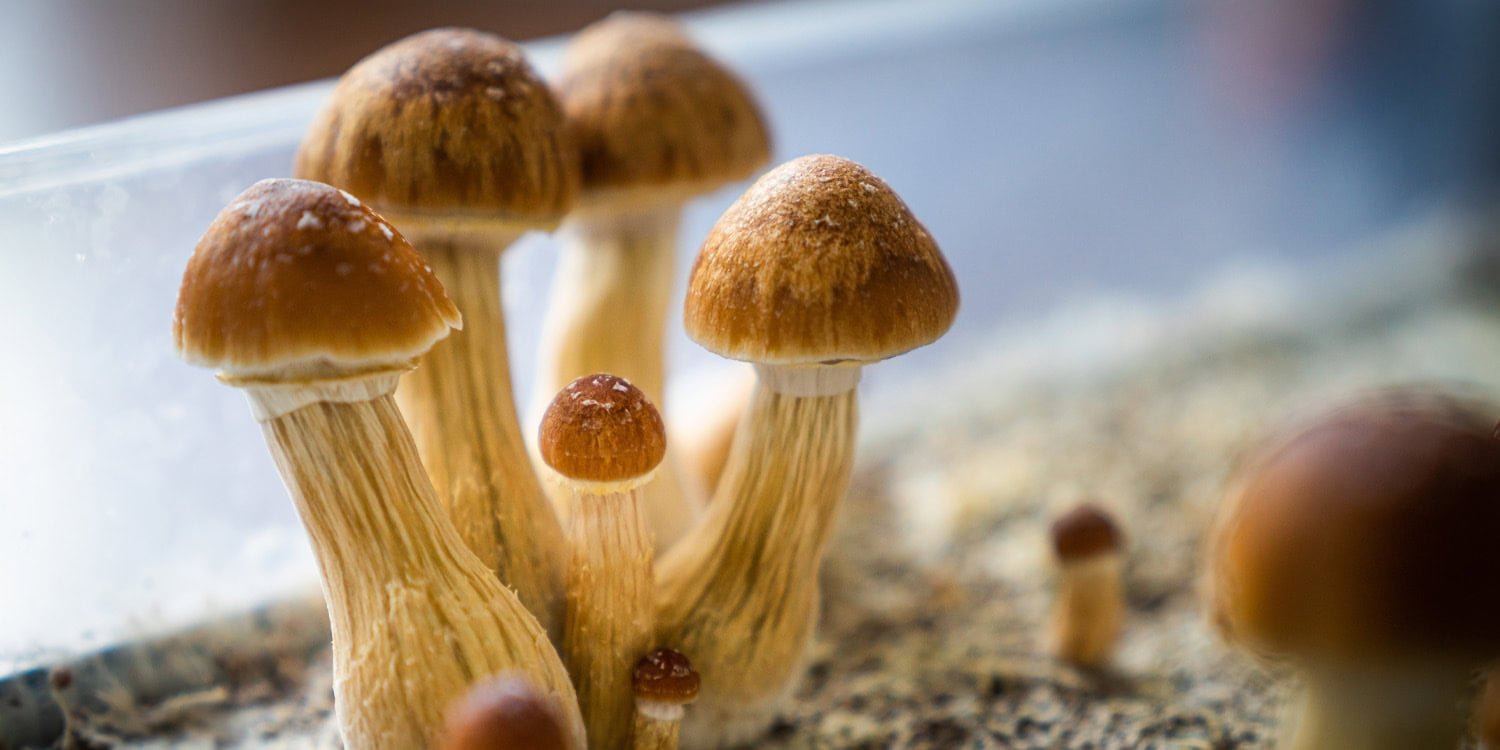
New research published in scientific report This suggests that the therapeutic effects of psychedelic mushrooms likely depend on complex interactions of multiple compounds, rather than just a single active ingredient. Scientists have found evidence that several trace compounds in these mushrooms work together to interact with receptors in the brain, potentially explaining why natural extracts often produce different effects than synthetic extracts.
Psychedelic mushrooms, often called magic mushrooms, belong to a group of fungi that naturally produce mind-altering chemicals. These fungi have been used in spiritual rituals for centuries and are now receiving mainstream medical attention. In clinical trials, these substances are frequently used as tools alongside psychotherapy to treat severe depression and anxiety.
Most modern clinical studies use lab-synthesized versions of psilocybin, the main psychoactive compound found in mushrooms. When a person ingests psilocybin, the body converts it to psilocin, which interacts with the brain to change perception and emotion. However, people who use whole mushroom extracts often report different or enhanced experiences compared to those who take synthetic psilocybin.
“Mental illness is on the rise globally, causing significant health and economic burdens, especially in countries like South Africa where access to health care remains unequal. At the same time, psychedelics such as psilocybin are gaining attention as potential treatments for conditions such as depression and anxiety,” said study author Abdul Rashid Isahak, a researcher at the University of the Free State.
“However, the biological mechanisms underlying their effects (particularly those of naturally occurring psilocybin-producing mushrooms) remain poorly understood. This study was motivated by the need to address this knowledge gap by investigating the molecular mechanisms and potential ‘entourage effects’ of these mushrooms on the brain.”
The entourage effect describes a scenario where multiple natural compounds interact synergistically. This means that their combined effect is greater than or different than the sum of their parts. Understanding the biological mechanisms of these natural compounds may help improve future psychiatric treatments.
To investigate this entourage effect, the scientists used a detailed computational framework. Instead of testing compounds on humans or animals, they used advanced computer modeling to simulate how these chemicals behave in the body. They started by identifying 15 different biologically active compounds known to be present in psilocybin-producing mushrooms, based on existing scientific literature.
The researchers first evaluated whether these 15 chemicals could pass through the human digestive system and reach the brain. They specifically looked for compounds that could cross the blood-brain barrier, a highly selective protective shield that prevents most substances in the bloodstream from entering brain tissue. The computer model predicted that 8 out of 15 compounds could be absorbed into the intestine and cross this barrier.
In addition to psilocin, these eight compounds also included lesser-known chemicals such as harman, harmol, and certain variants of tryptamine. The scientists then used a structural similarity database to predict which proteins in the human brain these eight chemicals would target. The software identified 44 specific brain proteins with which these compounds likely bind and interact.
The researchers then mapped out how these 44 protein targets were interconnected in the brain. They found that the target is deeply involved in the brain’s serotonin and dopamine systems. Serotonin and dopamine are chemical messengers that regulate mood, reward, and cognitive processes.
To see exactly how well the mushroom compounds attached to these brain targets, the scientists performed molecular docking. This is a computer simulation that tests the physical compatibility of chemical molecules and protein receptors, similar to testing different locks. Simulations showed that all eight compounds have strong matches to key neurological receptors.
The researchers observed that these compounds formed strong electrical connections known as salt bridges with specific parts of the serotonin primary receptor. This precisely mimics the way natural serotonin binds to the brain and provides further evidence of serotonin’s biological activity. Certain findings suggest that psilocybin may not even be the most active ingredient in mushrooms.
Computational models provided evidence that a compound called 4-hydroxy-N,N,N-trimethyltryptamine may bind to serotonin receptors even more strongly than psilocin. This particular chemical is a broken down form of aeruginacin, another natural compound found in fungi.
“One surprising finding is that psilocybin itself may not be the most biologically active compound in these mushrooms,” Issahak told PsyPost. “Our computational modeling suggested that another indole alkaloid, 4-hydroxy-N,N,N-trimethyltryptamine (the dephosphorylated form of aeruginacin), may bind even more strongly to serotonin receptors.”
The scientists also ran molecular dynamics simulations for 200 nanoseconds to test how stable these chemical bonds are over time. They focused their stability tests on key serotonin receptors and an enzyme called monoamine oxidase A (MOA), which is associated with hallucinations. This enzyme is normally responsible for removing excess serotonin and dopamine in the brain. Simulations revealed that certain mushroom compounds, particularly a group known as beta-carbolines, bind very well to this purifying enzyme.
These beta-carbolines bind to enzymes, blocking them from breaking down serotonin. This chemical blockade theoretically allows more serotonin and psilocin to remain active in the brain for longer periods of time. This interaction provides a clear mechanistic explanation for the entourage effect. The trace compounds found in mushrooms tend to amplify the effects of major psychedelic compounds by blocking cleanup enzymes while simultaneously stimulating serotonin receptors. ”
“We were also surprised by the presence of beta-carbolines such as harman, harmol, and harmaline, which can inhibit monoamine oxidase, an enzyme involved in the breakdown of serotonin and related compounds,” Issahak said. “This suggests that naturally occurring psilocybin-producing mushrooms may produce stronger or longer-lasting effects than synthetic psilocycin alone, perhaps through an ‘entourage effect’ involving multiple bioactive compounds.”
Although these findings provide an in-depth look into the chemistry of psychedelics, the researchers note that their approach has limitations. This study relies entirely on computer simulations and existing databases, so the results represent only theoretical predictions.
“Because the data come from previously published databases and computational modeling, the results suggest a potential mechanism rather than a definitive biological effect,” Issahak said. “Concentrations of these compounds vary widely depending on the mushroom strain, developmental stage, and environmental conditions that influence growth.”
“Additionally, other genera that produce psilocybin, Panaoros or Gymnopilusmay contain different bioactive compounds. Therefore, although the results of this study highlight the possibility of an “entourage effect,” further experimental studies are needed to determine its practical biological significance. ”
Based on these results, the researchers also cautioned against interpreting the study results to suggest that whole mushrooms are inherently safer or more effective than synthetic psilocybin. Some of the targeted brain receptors are also involved in regulating blood pressure and cardiovascular function. Scientists note that using whole mushroom extracts can pose distinct physical risks that require formal medical evaluation.
Future research will focus on testing these computational predictions in real biological environments. The researchers plan to use brain organoids, miniature models of human brain tissue grown in the lab, to compare how synthetic psilocin and whole mushroom extract alter gene expression.
“Apart from evaluating the mechanism of action of psychedelics, research also needs to focus on the individuals undergoing treatment,” Issahak said. “Different genetic profiles may correlate with the efficacy and/or risk of psychedelic treatments. Therefore, generalizations between populations should be avoided as population-specific differences may significantly contribute to treatment outcomes.”
This research was conducted by Zurika Murray, Angelique Lewis, Johannes Frederik Wentzel, Marietjie Schutte-Smith, Elizabeth Erasmus, Anwar Noreljaleel, Hendrik Visser, Anke Wilhelm, and Abdul Rashid Issahaku.
