


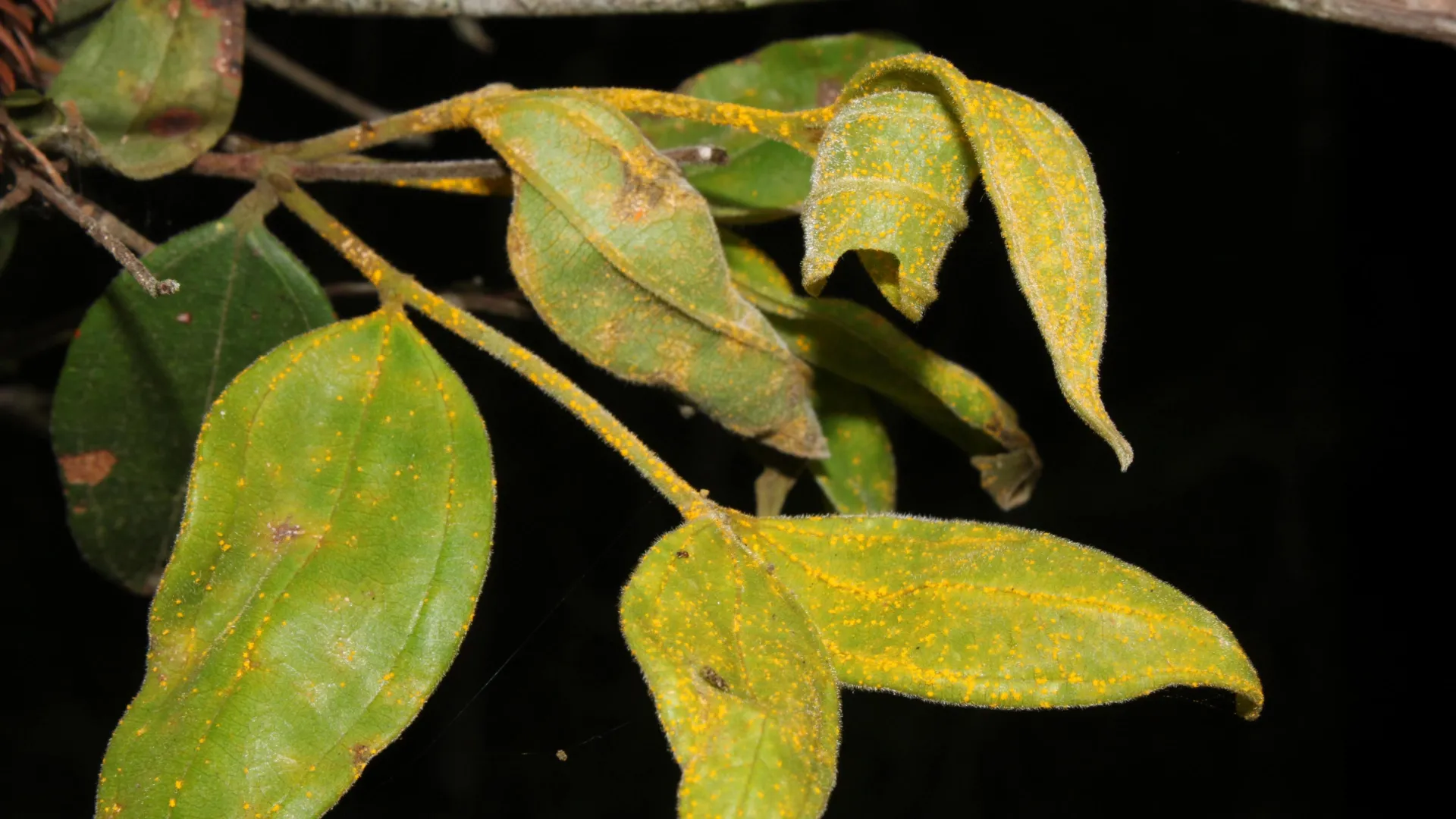
Researchers have given a newly identified Australian tree species an unusual nickname. Scientists call it a “zombie” tree. This is because, although some individuals are still alive, this species is unable to grow and reproduce normally without extensive intervention.
University of Queensland botanist Professor Rod Fensham said urgent action was needed to prevent this species. rodamnia zombie It is not wiped out by a fungal disease known as myrtle rust.
“When it was first assessed in 2020, this species had no name. Since then, myrtle rust has killed 10 per cent of the trees, and none of the remaining trees are producing flowers or fruit,” Professor Fensham said.
Myrtle rust stops the tree from growing and reproducing
rodamnia zombie It is described as a small to medium-sized tree with large dark green leaves, hairy bark, and fuzzy white flowers. It grows in tropical rainforest areas within the Barnet region of Queensland.
“This is a small to medium-sized tree with large dark green leaves, hairy bark, and hairy white flowers that grows in the rainforests of the Barnet region of Queensland.
“The bright yellow fungal pathogen attacks and kills young shoots over and over again, meaning infected trees are unable to grow or reproduce and eventually die.”
Myrtle rust, the fungal disease causing the damage, was first detected in Australia in 2010. Because of the threat this disease poses, rodamnia zombie is currently on the list of species considered potentially endangered.
“Without intervention, the 17 species on this Category X list will become extinct within a generation,” Professor Fensham said.
“None of them appear to be resistant to myrtle rust or to wild populations that have not yet been infected.”
Scientists hope future generations will develop resistance
Despite the dire outlook, researchers think progress may be possible. Professor Fensham, who works in UQ’s School of Environment, said closely related species within the broader Rodamnia group were showing resistance to myrtle rust. That genetic connection could give them a chance of survival.
“Survival strategies start by finding clean cuttings in the wild and propagating them to grow in a safe location before myrtle rust attacks,” he said.
“So far the seedlings have been grown by specialists in Lismore and Townsville and look promising, but we must always be cautious.
“Hopefully they will produce seeds and the next generation of seeds will be lurking.” rodamnia zombie Some resistance becomes apparent.
“This is a unique opportunity to study this evolutionary process that has occurred countless times in the wild over thousands of years.”
A big goal to save species
Ultimately, the researchers hope that if resistant trees emerge, they could eventually be replanted in forests and help reintroduce the species back into its natural ecosystem.
“This is long-term and ambitious, but the species needs time and space to develop some resistance to myrtle rust without being constantly plagued by it,” Professor Fensham said.
“If left unchecked, wild trees will become the living dead.”
The findings describing the species and its conservation prospects were published in the journal. Austral ecology.
