


Many tobacco researchers and policy experts believe that e-cigarettes have potential as a tool to help people quit smoking. But they also want to prevent teens from picking up the habit and becoming addicted to nicotine.
The tension between these two goals is at the heart of new draft guidance on flavored e-cigarettes from the Food and Drug Administration this week to e-cigarette manufacturers. The document suggests that e-cigarettes in flavors such as coffee, mint and cinnamon could be approved for sale.
Some public health experts, along with anti-tobacco advocates, worry that the change could set the U.S. back in its efforts to reduce the number of minors who use e-cigarettes. And their concerns about the potential health effects of authorizing more flavors of e-cigarettes don’t end there.
“As someone who focuses on flavor toxicity, what really concerns me is that they want to support spice flavors,” says Sven Hjort, a professor at Duke University School of Medicine who studies tobacco products. Cinnamon and cloves in particular “are among the most toxic flavor chemicals known to be in e-cigarettes,” he said.
The FDA’s draft guidance, first reported by the New York Times, is not yet official policy. We will accept comments for the next 60 days.
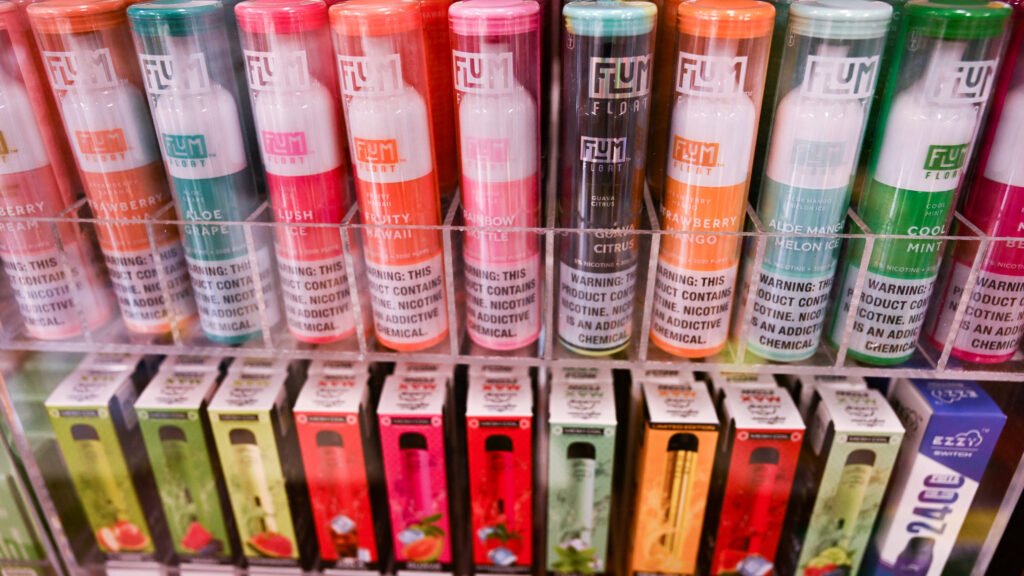
So far, the agency has only approved tobacco and menthol-flavored e-cigarettes to avoid the sugary options that fueled the youth e-cigarette crisis in the late 2010s. The document suggests that while e-cigarettes featuring fruit, candy, and dessert-themed flavors are unlikely to be approved by the FDA yet because they particularly appeal to young people, flavors that appeal to adults looking to quit smoking may be more acceptable.


Sign up for the morning round
Understand how science, health policy, and medicine shape the world every day
If manufacturers were to seek approval for these flavors, they would have to show regulators that these flavors are more likely to encourage adult smokers to switch to e-cigarettes than tobacco flavors and that the benefits to adults “outweigh the additional risks to youth.”
“If the FDA imposes a high bar for evidence, it may be difficult to thread the needle,” Benjamin Chaffee, a professor at the Center for Tobacco Control, Research and Education at the University of California, San Francisco, said in an email.
Independent manufacturers say so too. Jim McCarthy, a spokesman for the trade group American Vapor Manufacturers, said manufacturers must spend millions of dollars in long-term research before submitting applications for flavored products. He said the guidance is “more arbitrary, fanciful and unreliable duplicity from a government agency that has shamelessly misled the public about safer nicotine products for years.”
Meanwhile, Reynolds American spokesman Luis Pinto said in a statement that the FDA’s draft guidance “needs to go further.”
“We believe our greatest opportunity to reduce tobacco use is to provide adult smokers with attractive flavor options other than tobacco or menthol,” he said.
The FDA did not respond to requests for comment.
Although the majority of e-cigarettes sold in the United States are illegal, they can still be easily found at gas stations, smoke shops, and online retailers. So far, only 39 e-cigarettes have been approved for sale from the brands Juul, Logic (owned by Japan Tobacco International), NJOY (owned by Altria), and Vuse (owned by RJ Reynolds Vapor Company).
Dennis Hennigan, vice president of legal and regulatory affairs for the Campaign for Tobacco Free Kids, said his advocacy group is concerned that the FDA is bowing to pressure from the tobacco and e-cigarette industry with the new guidance.


STAT Plus: In California, you can easily buy flavored e-cigarettes, even in cities where they have been banned for years
“We see no good reason for FDA to deviate from how it evaluates flavored e-cigarettes,” Hennigan said. “We are perplexed and troubled by this apparent change in approach.”
(The Campaign for Tobacco-Free Kids is funded by Bloomberg Philanthropies, which also supports STAT’s coverage of chronic health issues. STAT is editorially independent.)
Hennigan added that the guidance is “particularly concerning” given the rapid growth of the nicotine pouch market and the FDA’s recent approval of Zyn pouches in flavors such as coffee, mint, and citrus. “The FDA seems to be more inclined to find ways to approve more flavorful products,” he says.
The tobacco industry, a major funder of President Trump’s campaign and White House banquet hall, has won a number of victories since taking office. The federal government withdrew a proposed FDA rule that would have banned menthol and lowered nicotine levels in cigarettes, but budget cuts effectively shut down the Centers for Disease Control and Prevention’s Division on Smoking and Health last year.
“It doesn’t seem like aggressively combating smoking is a priority at this point,” said UCSF’s Chaffee.
Who would benefit from more vape flavors?
One of the key questions raised by the new guidelines is the extent to which expanded flavor options will encourage smokers to quit smoking in exchange for e-cigarettes. Harm reduction advocates say that while e-cigarettes carry their own health risks, they are less dangerous than cigarettes and other combustible tobacco products.
Some studies suggest that e-cigarettes’ wide range of flavors may appeal to adult smokers. And industry advocates say it’s better for smokers trying to quit to break the link between nicotine and tobacco flavor. But “so far, the science doesn’t support the idea that having access to a variety of flavors is really effective at getting people to switch and[continue]smoking over the long term,” Jolt said.
Then there’s the question of whether flavors like mint or coffee are really too sophisticated to appeal to young tastes. Mint was the third most popular flavor choice among students who use e-cigarettes in the 2024 National Youth Tobacco Use Survey, behind fruit (63%) and candy (33%). “I think it’s a big mistake to list mint as a flavor,” Jolt said, adding that this could lead to even more consumption among young people. Many teenagers also flock to Starbucks to drink iced coffee and chew cinnamon gum.
The FDA guidance does not mention the potential toxicity of additional flavors, a concern raised by both Jyot and Suchitra Krishnan Sarin, a professor of psychiatry at Yale School of Medicine who co-authored a 2023 paper on the subject.

E-cigarettes popular among teenagers are up to 13,000 times sweeter than sugar, study finds
“Many e-cigarette products that have previously hit the market contain very high concentrations of cinnamon, and cinnamon is known to be a toxic substance when inhaled,” Krishnan-Sarin said.
Manufacturers at the time recommended using cinnamon vape liquid in glass tanks or pods because it would dissolve plastic — “obviously it would dissolve your lungs,” Jolt said.
Eugenol, which is used in the clove flavor, is a powerful local anesthetic that makes it easier to inhale more vapor from e-cigarettes, Jolt said. Vanilla, which is present in various flavored e-cigarettes, has also been shown in some studies to increase dopamine release in the brain, which could make e-cigarettes more addictive, he said.
Overall, the flavor is not only appealing and palatable, but it can also “counteract the unpleasant sensory effects typical of nicotine,” such as bitterness and respiratory tract irritation, said Adam Leventhal, director of the Institute of Addiction Science at the University of Southern California. That’s another reason why many experts prefer to be cautious when it comes to flavor.
Many illegal e-cigarettes are imported from China and already contain many fruity flavors and strong sweeteners. However, youth e-cigarette use rates are still declining significantly, dropping to 6% in 2024, compared to a high of 20% in 2019.
Given this change, experts said they understand why the FDA would consider opening the door to more flavors as another measure to combat smoking, a leading cause of preventable death and illness in the United States, but Leventhal noted that the crackdown on unlicensed flavored e-cigarettes is likely helping to lower rates of e-cigarette smoking among youth.
More flavors could start the cycle of underage vaping all over again, Krishnan-Sarin said. “Are we repeating history?”
Youth vaping rates are now a top concern for public health experts. In a surprise move, the FDA late last week released the raw data results from the 2025 National Youth Tobacco Use Survey without any analysis. Krishnan-Sarin and Jyot said they are working with colleagues to understand the findings. (In past years, the CDC’s Office on Smoking and Health conducted much of that analysis.) Meanwhile, Altria published its own analysis.
“I think they’re trying to make it available to the public,” Krishnan-Sarin said of the FDA’s move to release the results. “But this is a bit of an unusual method.”
STAT’s chronic health coverage is supported by a grant from. bloomberg philanthropy. our financial supporter It has no role in any of our journalism decisions.
