


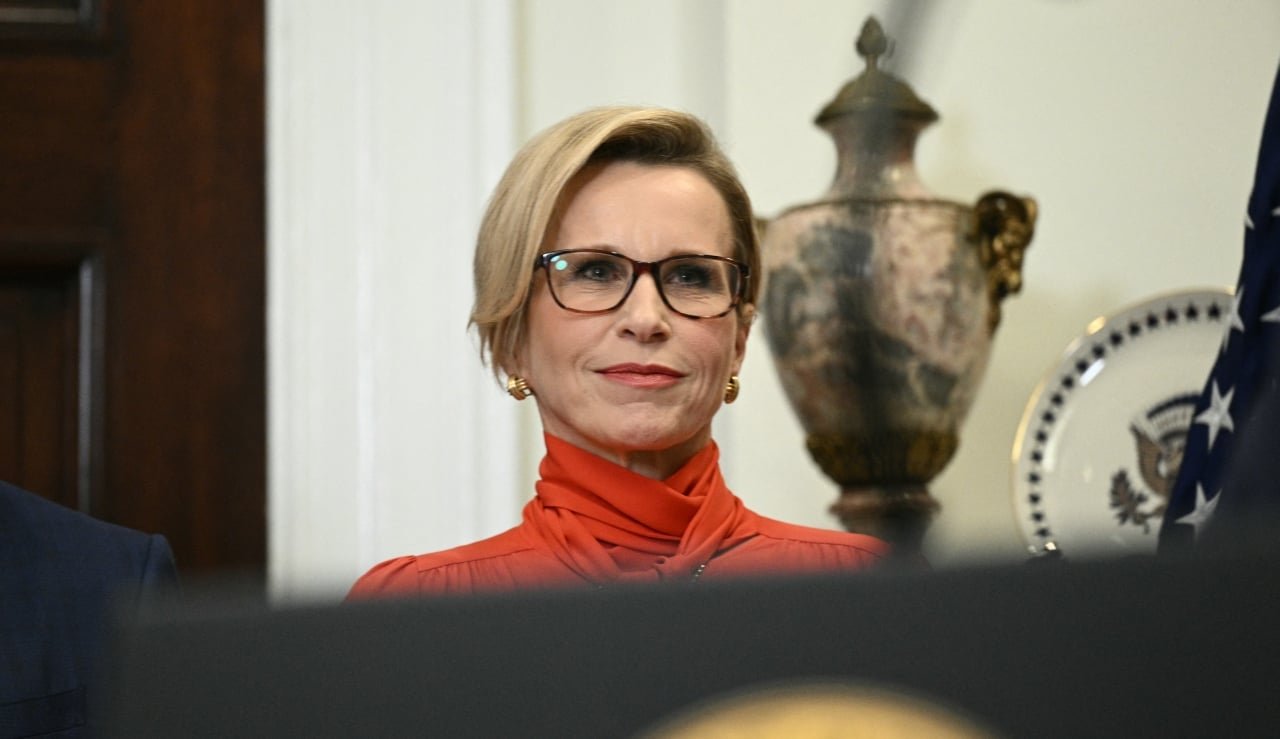
Emma Walmsley leaves on a high note after nearly nine years as GSK’s CEO, with her total remuneration increasing by nearly 50% to £15.7 million ($21 million) in 2025.
The swan song payment, detailed in the company’s latest annual report (PDF), reflects Walmsley’s “outstanding leadership” which, as GSK chairman Jonathan Symonds put it, transformed the British pharmaceutical company “in almost every way”.
More specifically, this surge was primarily driven by payments from GSK’s long-term incentive awards, whose value benefited from the company’s share price appreciation.
The vested amount of long-term compensation has increased to £10m in Mr Walmsley’s 2025 pay package, compared to £6.1m a year ago. This figure reflects the vesting of 82% of the total grants issued in 2023 and is calculated based on GSK’s share price of £21.65 per share on February 13, compared to £15.01 on the day before the original grant date three years ago. GSK’s stock price soared in early February following a better-than-expected earnings report.
Despite this, GSK’s total shareholder return, which ranked fifth in a comparable group of 10 companies, was the only item that did not lead to full vesting of Walmsley’s long-term compensation in 2023.
Notably, GSK’s board of directors has decided to pay the maximum dividend guaranteed over a three-year performance period, all based on the company’s sales, profits, pipeline progress, and responsible business practices.
Mr Walmsley’s annual bonus, which is specifically linked to GSK’s performance in 2025, was increased by 23% on the previous year to £3.5m, as the board recognized the outgoing chief executive had achieved “the full potential of the personal element of his bonus”.
In his final year as CEO, Walmsley “not only successfully achieved pre-agreed goals, but also mastered the complexities of (most-favored-nation) and other industry issues and fully supported the CEO transition,” the board wrote in its annual report.
GSK’s 2025 sales rose 7% to £32.7bn at constant exchange rates, when the target for board remuneration assessment purposes was around 5%.
The company’s core operating profit increased by 11% at constant currency, compared to the board’s target of around 8%.
Walmsley achieved approximately 87% of the highest points for pipeline performance, a new element introduced in the annual bonus scorecard last year.
Specifically, GSK achieved five of five major FDA approvals last year for Blenrep for multiple myeloma, Nucala for the treatment of chronic obstructive pulmonary disease (COPD), the antibiotic Blujepa, the 5-in-1 meningococcal vaccine Penmenvy, and the long-acting respiratory disease biologic Exdensur.
The board also counted progress on several clinical programs, including Exdensur in COPD and a pair of antibody drug conjugates licensed from Hansoh Pharma, as well as business development agreements delivering GSK assets in respiratory, immunology, inflammation and oncology.
Walmsley will officially step down as CEO at the beginning of 2026, but will remain a GSK employee until the end of September this year. Luke Miels, who served as GSK’s chief commercial officer under Walmsley, then took over the baton.
Mr Miels, in his first year in the top job, will earn a base salary of £1.375 million this year, 4% less than Mr Walmsley will earn in 2025, according to GSK’s annual report. Long-term incentive compensation from 2026 to 2028 will be awarded at 7.25 times the equivalent salary received by Mr. Walmsley. But the board plans to raise that rate next year to eight times salary, the cap under current policy.
