


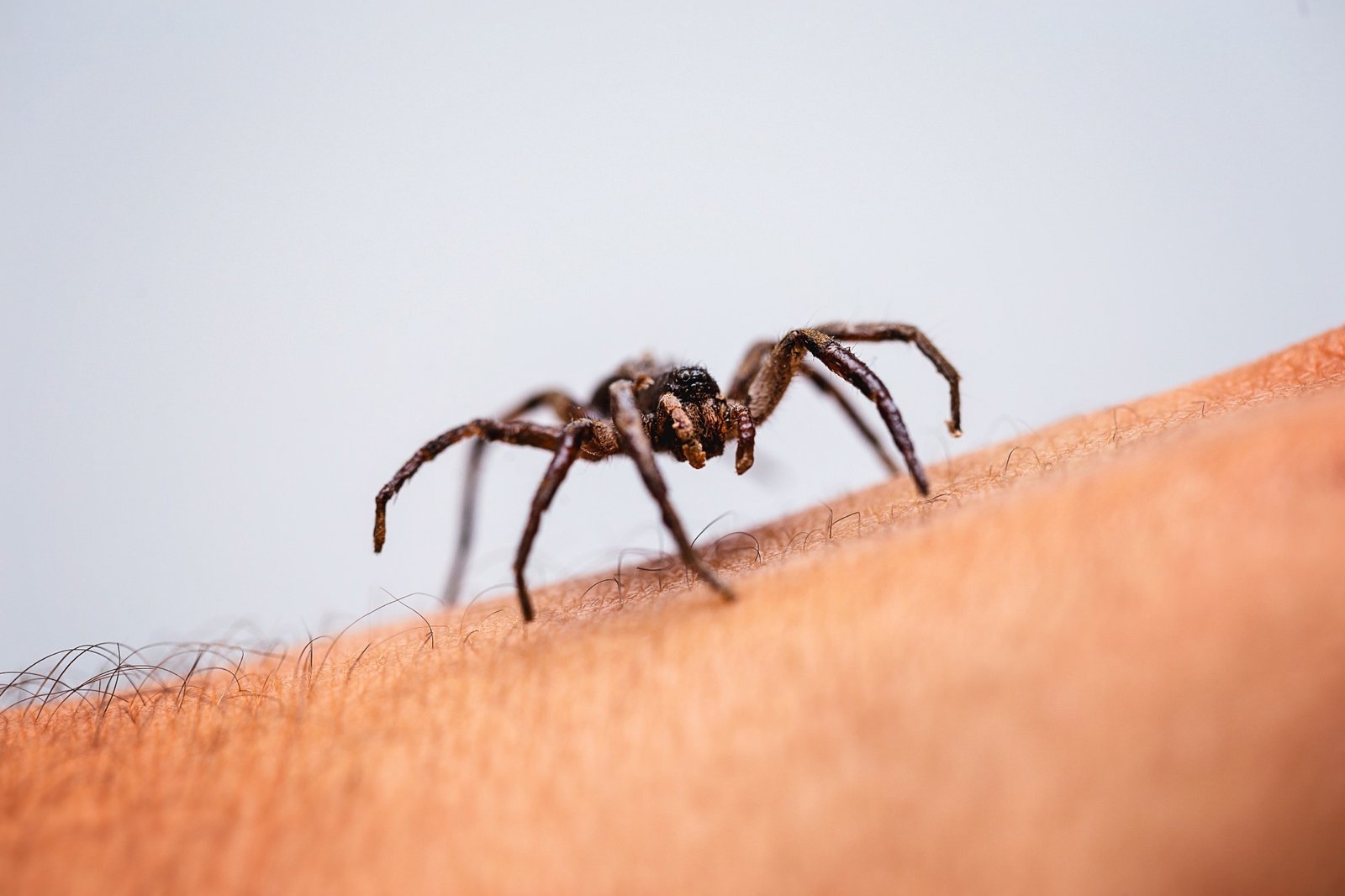
Eye-tracking experiments revealed a strange contradiction. Although people tend to avoid looking at spiders when other creatures are present, striking features such as large eyes, bright colors, and webs still draw the gaze back.
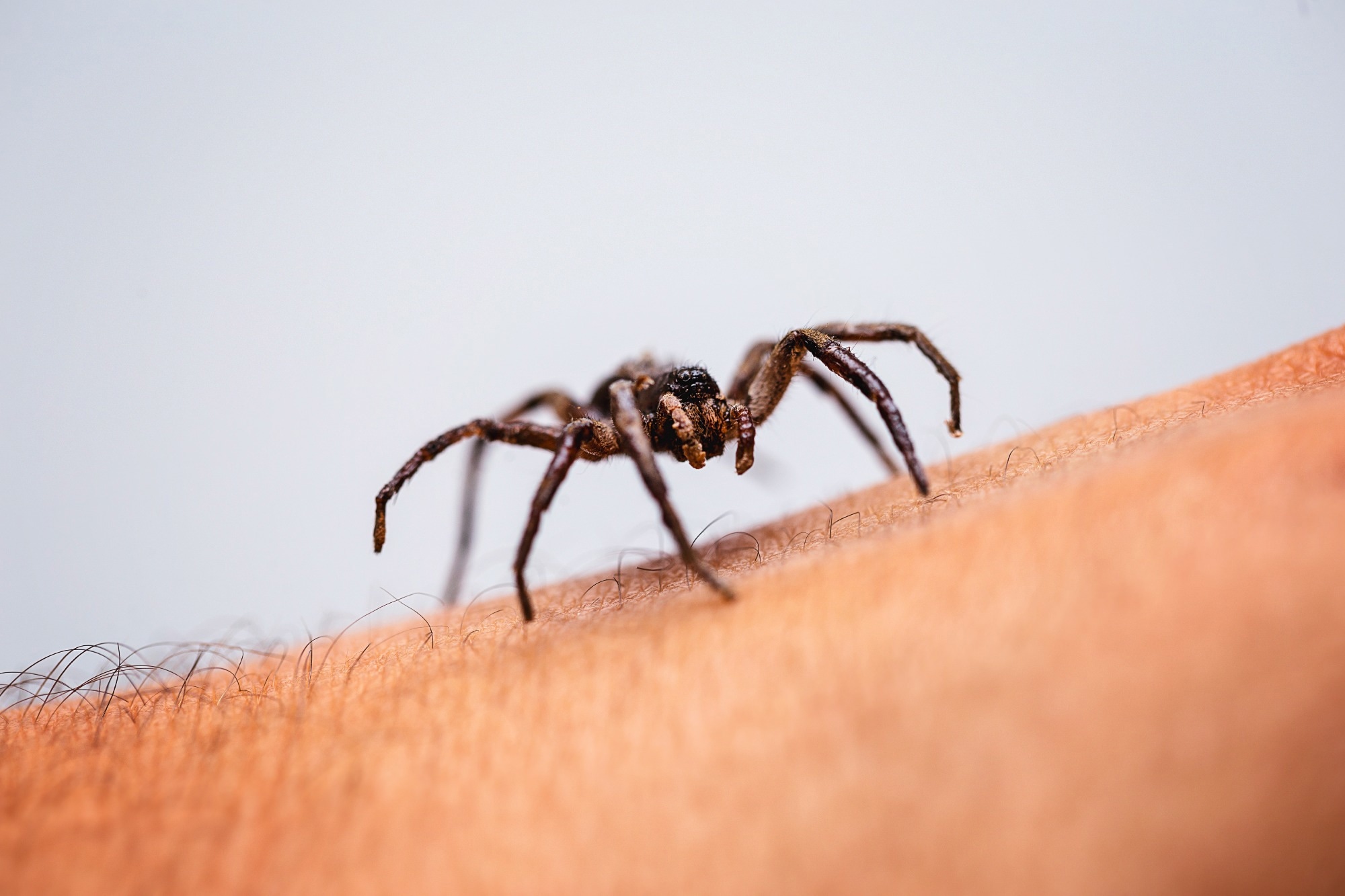 Research: Human eye-tracking reveals that images of spiders are generally avoided, but humans are biased towards spider-specific features. Image credit: RHJPhtotos/Shutterstock.com
Spiders are often viewed with fear or disgust. But what causes this reaction? Recent research published in journals Frontiers of arachnid science They investigated the visual characteristics that influence how people view images of spiders.
Why spiders cause fear, disgust and visual attention
Strong negative feelings toward spiders not only interfere with human-nature interactions but can also impede spider conservation efforts. One way to assess phobias is through attentional biases, the way certain stimuli attract and maintain attention.
A phobia is an anxiety disorder. According to the vigilance-avoidance hypothesis, anxious people often reflexively attend to visually threatening images, but then make a conscious effort to avoid paying attention to those images. An alternative view is that more anxious people tend to pay selective attention to threatening stimuli and return to them more often because they have difficulty disengaging from the perceived threat. Eye-tracking techniques may help test these hypotheses by directly assessing visual attention.
The order, number, duration, and timing of fixations on a single location (fixations) and the length of saccades (eye movements between fixation points) are strongly associated with visual attention and emotional states. Emotional arousal can cause changes in eye movements, such as looking more frequently, sometimes for shorter periods of time, or switching your gaze more often involuntarily.
Therefore, in this study, we used visual attention details to monitor the attentional patterns of young adults viewing images of spiders and other insects.
Previous research has shown that several spider characteristics cause fear and disgust, including: Hairy. Fast, jerky, unpredictable movements. dark color. fang. and the ability to bite. Interestingly, entomologists who hate spiders, and people with arachnophobia as a whole, share the same aversion that habitual contact with spiders and learning about spiders can’t seem to overcome.
Previous research suggests that people with arachnophobia are quick to fixate on images of spiders, but are unable to move away from them easily. In the current study, we used a freeview framework to assess how much attention participants paid to spiders compared to other arthropods, and which visual features of spiders captured their attention the most.
Eye-tracking experiments comparing spiders and other arthropods
The study involved 118 undergraduate students who viewed single or paired images of spiders and other arthropods (invertebrates with jointed legs) against natural backgrounds. Their eye movements were monitored during the observation.
They also provided data through a survey on arachnophobia and attitudes toward spiders. Markers of increased propensity to pay attention include:
- Total dwell time – total time spent on each type of image – a measure of attentional bias
- First Run Dwell Time – Time spent in the target area during the first visit
- First fixation time – time elapsed from initiation until the first image is fixed on the eye
- Number of runs – number of times participants returned to the same image – associated with attentional bias
Research results
spiders and other arthropods
When participants were shown paired images of a spider and a butterfly, they initially spent an equal amount of time examining both images, spent an equal amount of total time on both, and looked at both images the same number of times. However, the initial time spent looking at images of spiders was longer than that of other spiders.
When images of spiders were combined with images of non-butterfly insects, non-spider arachnids, and myriapods such as millipedes and centipedes, participants showed faster first fixations and longer viewing times for non-spider arthropods in several comparisons. They repeatedly observed images of other than spiders (excluding other arachnids).
Early efforts with scorpion images were shorter than spider images and had similar other characteristics.
Women looked at images of butterflies longer than images of spiders, while the opposite was true for men. Men also looked at non-spider arachnids longer than women, but the study reported a complex interaction between gender, image type, and phobia level in some comparisons.
Across all measures, people initially took longer to gaze at images of spiders, tended to spend less time looking at such images overall, and repeated their gaze fewer times. Jumping spiders and insects were observed much longer than other spiders and attracted attention sooner.
The results of this study suggest that humans generally avoid viewing images of spiders compared to images of other arthropods, preferring to view photos of other arthropods. Although participants continued to observe the spider during the trial, they were less likely to focus on the spider first. There has also been limited evidence of avoidance of images of scorpions when paired with other arachnids, indicating a possible aversion to both spiders and scorpions, although this study did not directly compare spiders and scorpions.
image of a pair of spiders
When both images of a presented pair depicted different types of spiders, viewers paid more attention to spider-specific features. These include the jumping spider’s color, large eyes, spiders on the web or with eggs, prominent fangs, and hairy rather than hairy spiders.
This was an interesting observation, as these features would be expected to enhance negative reactions rather than attracting attention to spider images.
The authors suggest that this may simply be due to the images’ greater ability to capture attention. Alternatively, some of these features (nests and eggs) suggested a stationary spider (and therefore less of a threat) rather than one that could move unpredictably at any time. The authors also suggest that cues associated with predictable behavior, such as spiders guarding eggs or sitting on a web, may make spiders feel less threatened than ground spiders, which can move unpredictably.
Non-spider insects with two prominent eyes showed increased attentional biases similar to jumping spiders. The authors hypothesize that this may be because they have a facial-like appearance, which is a powerful attentional signal. The researchers note that these traits can give rise to anthropomorphism, with animals with forward-facing or prominent eyes resembling human facial cues and thereby attracting attention.
Unlike previous studies, participants rapidly distinguished between spiders and non-arachnids, as well as other arthropods, suggesting that they were not influenced by the “arachnoid” category. On the other hand, knowing which characteristics of spiders evoke active attention or curiosity rather than avoidance could help convince people that spiders are necessary participants in the environment, rather than just unpleasant and dangerous insects.
Understanding spider perception could improve conservation messages
This study suggests a complex pattern of visual attention. That is, people avoid looking at spiders when images of alternative arthropods are available, but once they see a spider, they notice certain aspects.
This study contributes to a fundamental understanding of how threat, curiosity, anthropomorphism, and predictability interact to guide visual attention to spiders.
These findings may help reveal which visual elements contribute to arachnophobia and how to deal with it more effectively.
Click here to download your PDF copy.
