

Close Menu

    Subscribe to Updates

    Get the latest creative news from FooBar about art, design and business.

    What's Hot

    The Growing Challenge of Treatment-Resistant Depression for Clinicians and Policymakers

    August 12, 2026

    The Core Problem with 2025-2030 DGAs for Clinical Practice

    August 11, 2026

    The Urgent Health Risks from Climate Change and Pollution

    August 10, 2026
    Facebook X (Twitter) Instagram
    Facebook X (Twitter) Instagram
    Health Magazine
    • Home
    • Environmental Health
    • Health Technology
    • Medical Research
    • Mental Health
    • Nutrition Science
    • Pharma
    • Public Health
    • Discover
      • Daily Health Tips
      • Financial Health & Stability
      • Holistic Health & Wellness
      • Mental Health
      • Nutrition & Dietary Trends
      • Professional & Personal Growth
    • Our Mission
    Health Magazine
    Home » News » Scientists discover hidden species of Borneo’s fanged frog
    Nutrition Science

    Scientists discover hidden species of Borneo’s fanged frog

    healthadminBy healthadminMarch 9, 2026No Comments5 Mins Read
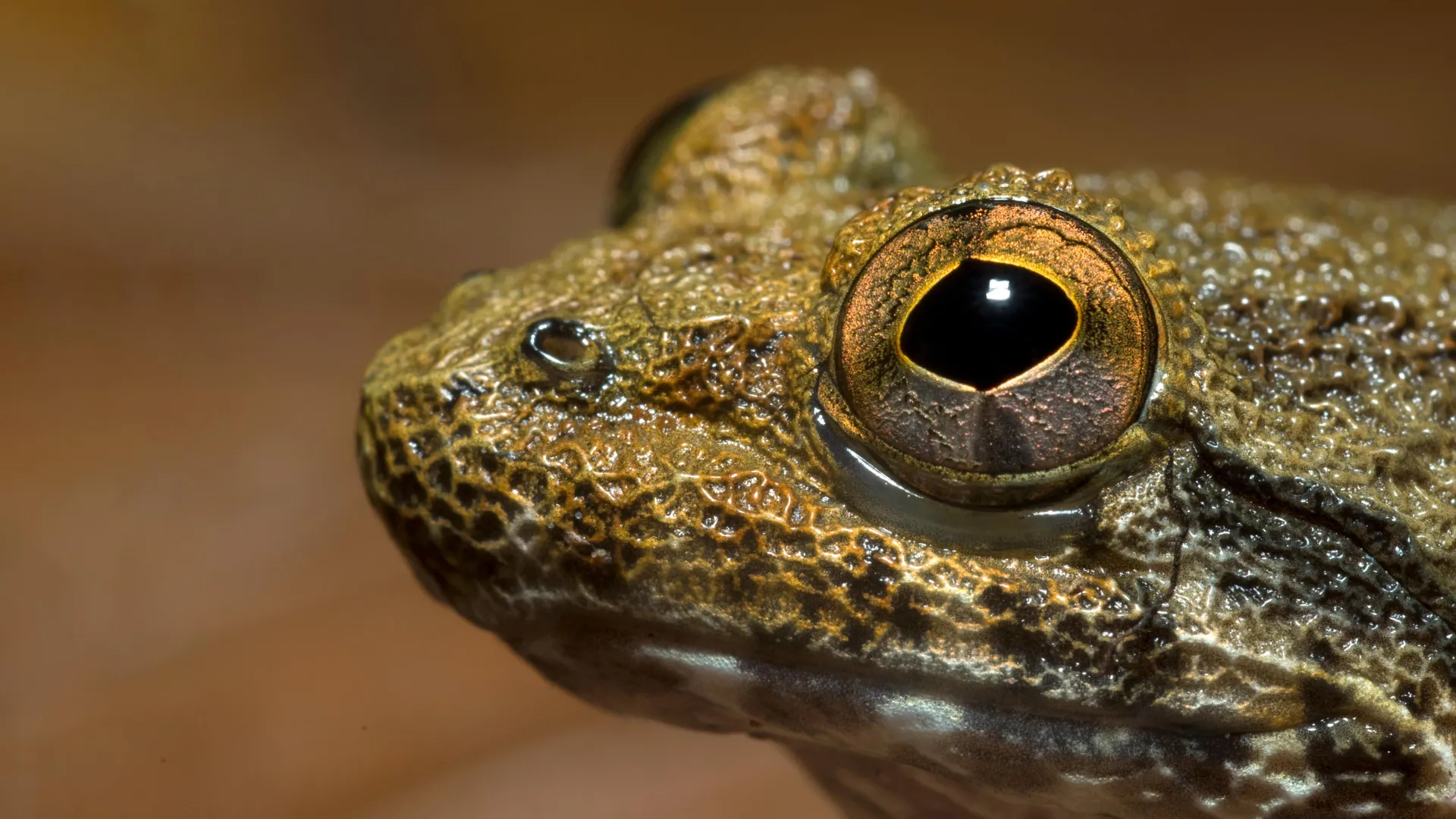
    Scientists discover hidden species of Borneo’s fanged frog
    Share
    Facebook Twitter Reddit Telegram Pinterest Email


    According to Michigan State University’s Chan Kin Ong, when people hear about the discovery of a new species, they often think of scenes from adventure stories.

    “Most people have images of intrepid explorers braving remote mountains and other remote locations and encountering creatures that no one has ever seen before,” Chan says.

    That scenario still happens from time to time. However, Chan pointed out that the reality is usually less dramatic. “But most of the time it’s not that appealing,” he added.

    Scientists often identify new vertebrate species by revisiting animals already known to science. With improved tools and newer data, researchers sometimes discover that populations once thought to be the same species are actually more different than previously realized.

    The mystery of the tree frog in Borneo

    Chan is a herpetologist who studies amphibians and reptiles, including frogs, turtles, lizards, and snakes. Scientists have identified more than 9,000 amphibian species around the world, and about 100 to 200 new amphibian species are added each year, he said.

    One example is a group of small brown frogs from Southeast Asia known as Borneo frogs. Their name comes from the tooth-like projections along their jaws. One member of this group, Limnonectes kuhlii, has been known to scientists since 1838. However, genetic research over the past two decades suggests that what appears to be a single species may actually represent as many as 18 species.

    “Animals that look similar but are genetically distinct are called cryptic species,” said Professor Chan, curator of the Vertebrate Collection and core faculty member in MSU’s Ecology, Evolution, and Behavior Program.

    Advances in gene sequencing have made uncovering these hidden lineages much easier. As Chan explains, “A large number of mysterious species are being discovered all over the place.”

    DNA analysis reveals fewer species than expected

    To determine whether these frogs had been significantly underrepresented, Chan and his colleagues collected DNA from specimens collected across a mountainous rainforest in Malaysian Borneo. The research team examined more than 13,000 genes across the frog’s genome.

    Their findings were published in the journal systematic biologyshowed that frogs can be divided into several genetic groups. However, the results did not support the idea that as many as 18 species existed. Instead, evidence suggests that about six or seven of these clusters qualify as distinct species.

    “It’s not just one species, but it’s not 18 species either,” Chan said.

    Why species numbers matter for conservation

    Determining exactly how many species exist is not just an academic debate. It has real implications for conservation.

    Amphibians currently face serious threats around the world. An analysis of approximately 8,000 amphibian species in 2023 found that two out of five species are at risk of extinction, making amphibians the most endangered group of vertebrates.

    Chan, who contributed to the study, emphasized that species recognition is essential for species conservation.

    “There are so many undiscovered species in the world that they may go extinct before we can name them,” Chan said.

    At the same time, dividing seeds too aggressively can have downsides.

    “But there is also a flip side to this coin,” he added.

    When scientists rapidly split a species into many smaller species, each newly defined species can appear to occupy a very narrow geographic range. This can make their protection situation appear more stringent than it actually is.

    “We can’t conserve everything, so we have to triage and decide how to allocate our limited resources to what we think are the highest priorities,” Chan said. “We may be naming things that shouldn’t be a priority.”

    Blurred boundaries between species

    The researchers also detected significant interbreeding among the frogs.

    “We found that there was a lot of gene flow going on,” Zhang said.

    This exchange of genetic material between groups can blur the boundaries scientists use to define species. For this reason, Chan noted that some of the growing number of cryptic species candidates may be due to the way scientists analyze data, rather than reflecting clear biological divisions.

    Borneo’s fanged frogs show that the formation of new species rarely occurs suddenly.

    “It’s not like there’s going to be a boom all of a sudden. It’s more of an ongoing thing,” Chan said.

    Seeds hidden in the tree of life

    The fanged frog is just one example of a broader pattern that scientists are uncovering. Over the past two decades, genetic studies of many animal groups, including insects, fish, birds, and mammals, have suggested that many species may be hiding in plain sight.

    Previous estimates put the total number of species on Earth at about 8.7 million. Recent models that take into account the cryptic species suggest that the actual number may be much higher, perhaps ranging from 7 to 250 times that number.

    So where does the actual total fall?

    “This study shows that there is a ‘gray zone’ in speciation that makes it difficult to draw the line,” said Professor Chan.

    This research was supported by grants from the National Science Foundation (GRFP 1540502, 1451148, 0907996 and 1654388).


    Source link

    Visited 19 times, 1 visit(s) today
    Share. Facebook Twitter Pinterest LinkedIn Telegram Reddit Email
    Previous ArticleNeuroscientists pinpoint underlying biological signs of mental illness
    Next Article Eppendorf launches SpinPro® centrifuge series to streamline life science research
    healthadmin

    Related Posts

    The Core Problem with 2025-2030 DGAs for Clinical Practice

    August 11, 2026

    Addressing Challenges in Applying 2025-2030 Dietary Guidelines for Metabolic Health

    August 3, 2026

    This 4,000-year-old city defied the rules of history

    July 30, 2026

    Rice Bran Compounds May Relieve Irritable Bowel Symptoms

    July 30, 2026

    What would happen if the brain did not generate consciousness?

    July 30, 2026

    Scientists discover that evolution repeats itself in the Galapagos Islands

    July 30, 2026
    Add A Comment

    Comments are closed.

    Categories

    • Daily Health Tips
    • Discover
    • Environmental Health
    • Exercise & Fitness
    • Featured
    • Featured Videos
    • Financial Health & Stability
    • Fitness
    • Fitness Updates
    • Health
    • Health Technology
    • Healthy Aging
    • Healthy Living
    • Holistic Healing
    • Holistic Health & Wellness
    • Medical Research
    • Medical Research & Insights
    • Mental Health
    • Mental Wellness
    • Natural Remedies
    • New Workouts
    • Nutrition
    • Nutrition & Dietary Trends
    • Nutrition & Superfoods
    • Nutrition Science
    • Pharma
    • Preventive Healthcare
    • Professional & Personal Growth
    • Public Health
    • Public Health & Awareness
    • Selected
    • Sleep & Recovery
    • Top Programs
    • Weight Management
    • Workouts
    Popular Posts
    • 1773313737_bacteria_-_Sebastian_Kaulitzki_46826fb7971649bfaca04a9b4cef3309-620x480.jpgHow Sino Biological ProPure™ redefines ultra-low… March 12, 2026
    • pexels-david-bartus-442116The food industry needs to act now to cut greenhouse… January 2, 2022
    • 1773729862_TagImage-3347-458389964760995353448-620x480.jpgDespite safety concerns, parents underestimate the… March 17, 2026
    • 1774403998_image_28620e4b6b0047f7ab9154b41d739db1-620x480.jpgGait pattern helps distinguish between Lewy body… March 24, 2026
    • 1773209206_futuristic_techno_design_on_background_of_supercomputer_data_center_-_Image_-_Timofeev_Vladimir_M1_4.jpegMulti-agent AI systems outperform single models… March 11, 2026
    • Leukemia-620x480.jpgBiomimetic platform powers CAR T therapy for… March 9, 2026

    Demo
    Stay In Touch
    • Facebook
    • Twitter
    • Pinterest
    • Instagram
    • YouTube
    • Vimeo
    Don't Miss

    The Growing Challenge of Treatment-Resistant Depression for Clinicians and Policymakers

    By healthadminAugust 12, 2026

    Evidence-based insights on treatment-resistant depression, neuromodulation therapies like accelerated TMS, ECT, ketamine, and policy reforms for equitable mental health access.

    The Core Problem with 2025-2030 DGAs for Clinical Practice

    August 11, 2026

    The Urgent Health Risks from Climate Change and Pollution

    August 10, 2026

    AI-Powered Wearables and Telemedicine Trends Driving Adoption

    August 9, 2026

    Subscribe to Updates

    Get the latest creative news from SmartMag about art & design.

    HealthxMagazine
    HealthxMagazine

    At HealthX Magazine, we are dedicated to empowering entrepreneurs, doctors, chiropractors, healthcare professionals, personal trainers, executives, thought leaders, and anyone striving for optimal health.

    Our Picks

    AI-Powered Wearables and Telemedicine Trends Driving Adoption

    August 9, 2026

    The Urgent Health Crisis from Pollution and Climate Change

    August 8, 2026

    Overcoming Drug Development Challenges: What Pharmacologists and Executives Will Gain in 2026

    August 7, 2026
    New Comments
      Facebook X (Twitter) Instagram Pinterest
      • Home
      • Privacy Policy
      • Our Mission
      © 2026 ThemeSphere. Designed by ThemeSphere.

      Type above and press Enter to search. Press Esc to cancel.