


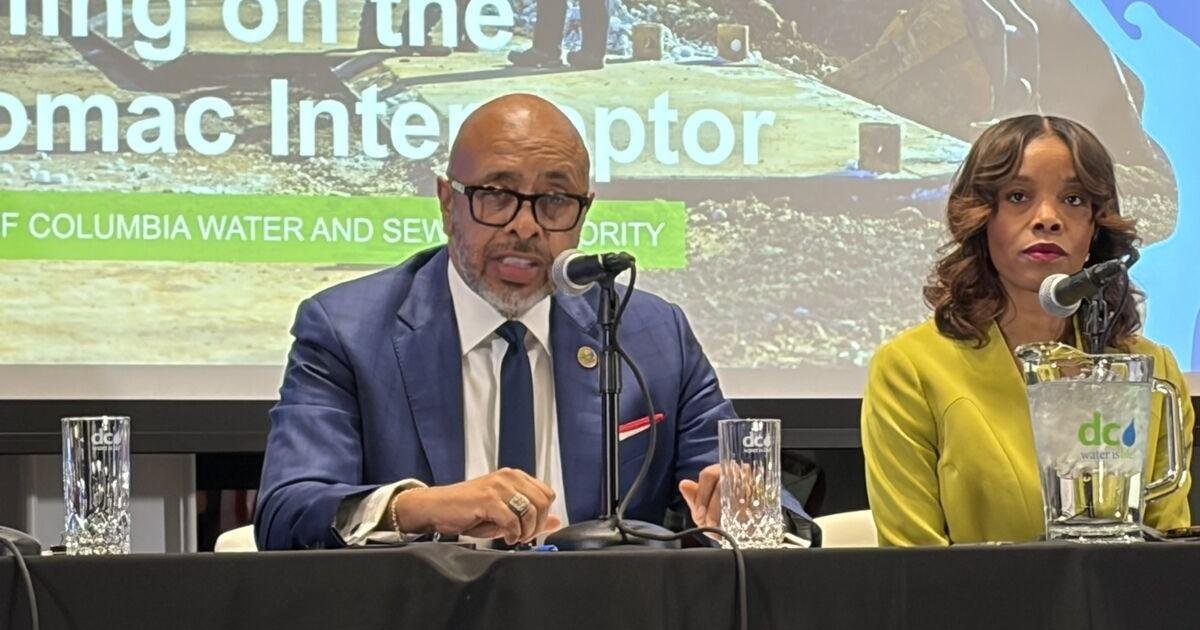

DC Water CEO David Gaddis speaks about the Potomac Interceptor sewage spill during a public meeting at the utility’s headquarters on February 25, 2026.
Cleaning up a massive sewage spill near the District of Columbia will need to be far more extensive than what the owners of the burst pipes have proposed, environmental groups say.
So far, DC Water, the utility company that owns and operates the sewer, has vowed to focus its efforts in the immediate vicinity of the spill site and dozens of yards offshore on the Potomac River. Some advocacy groups are calling for more action.
“Of course, this area is always subject to overflow from combined sewage,” said Evan Quinter, water quality coordinator for the Potomac Riverkeeper Network. But the destruction of the Potomac Interceptor, he added, “was something that we’ve never really seen before in this intensity and scale. So I think it warrants a response commensurate with the crisis.”
The pipe collapsed on January 19 in Montgomery County, Maryland, just east of Interstate 495 between the Potomac River and Clara Barton Parkway. Untreated sewage continued to gush out of control for nearly a week until workers installed an emergency diversion. In the end, 300 million gallons of waste spilled, according to the Maryland Department of the Environment.
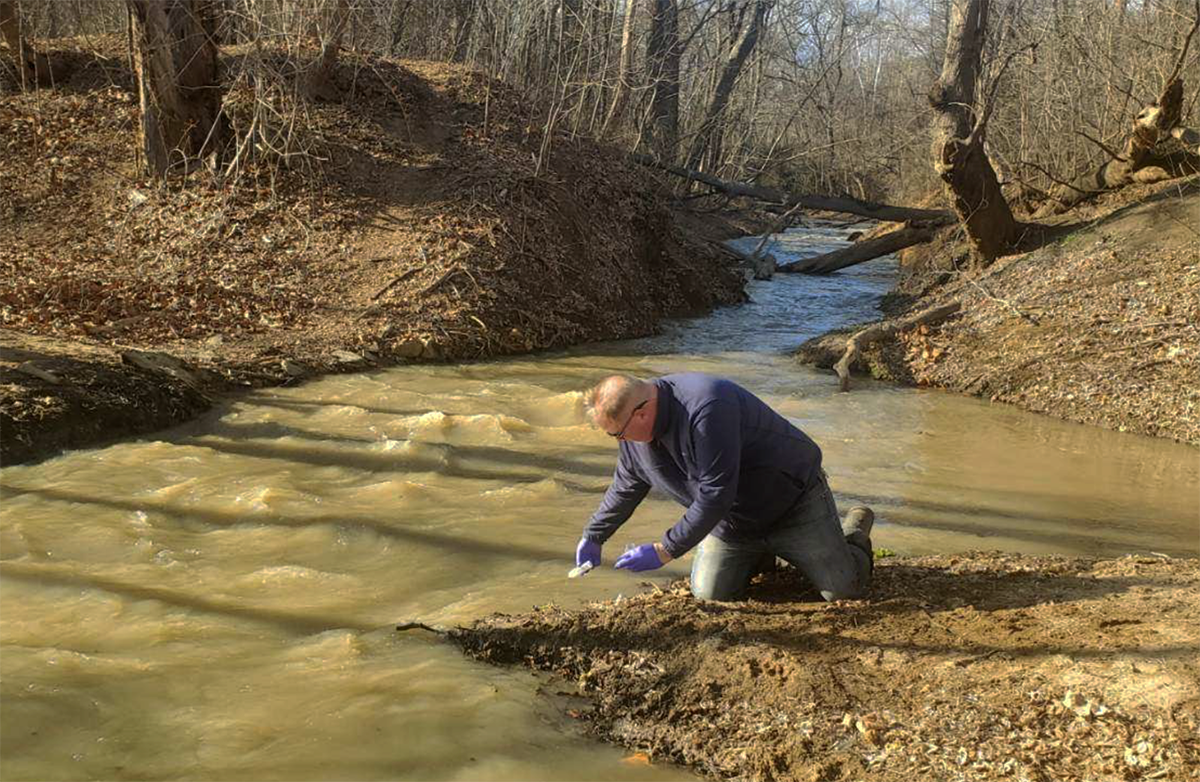
Potomac River Supervisor Dean Nauyokus took water samples after a pipe collapse near the District of Columbia sent a large amount of raw sewage into the river on January 19, 2026. (Courtesy of Potomac River Morito Network)
The crisis has prompted a flurry of posts on social media from President Trump accusing local leaders of undermining them and announcing federal intervention, even though federal authorities have been involved almost from the beginning.
Officials said the spill had no impact on drinking water. The area’s water intake is located in Great Falls upstream from the collapse site.
DC Water officials say further flooding is possible until a temporary solution is completed, possibly in mid-March. A permanent fix won’t be implemented until about nine months later, they say.
The Potomac Interceptor carries sewage 84 miles from the Dulles Airport area in northern Virginia to the Blue Plains Advanced Wastewater Treatment Facility in southeast D.C. The cause of the collapse is still under investigation, but DC Water officials say the disaster is a reminder that much of the region’s infrastructure is aging.
“The Potomac interceptor missile is more than 60 years old, and its failure highlights the need for sustained investment,” David Gaddis, the utility’s CEO, said at a Feb. 25 conference at the company’s D.C. headquarters.

More than four weeks after the January 2026 Potomac Interceptor spill, DC Water held its first public meeting on the issue. A committee of utility and District of Columbia government officials addressed the situation.
Gaddis noted that the utility was already planning a $625 million, 10-year, $625 million renovation of the section of track that contained the break to prevent accidents like this.
“Going forward, we are committed to examining every section of the Potomac Interception Base pipe and reevaluating its structure and integrity to ensure that an event like this never happens again.”
A group of 14 Democratic House members from the area signed a letter on February 24 urging the Republican-controlled Congress to approve funding for the Potomac Interceptor Missile Modernization Project.
President Trump approved a request for federal disaster assistance by Washington, D.C. Mayor Muriel Bowser, and began providing equipment and personnel from the Federal Emergency Management Agency.

Col. Francis Pera, commander of the U.S. Army Corps of Engineers, Baltimore District, speaks about the Potomac Interceptor sewage spill during a public meeting at DC Water headquarters on February 25, 2026.
The measure would also allow the federal government to pay up to 75% of repair costs. DC Water estimates it will cost $20 million to repair the pipes and clean up after the spill.
As of early March, DC Water had not yet finalized its cleanup plan. But at a Feb. 25 meeting, utility representatives said they were looking forward to completion soon. They hired an environmental consultant to assess conditions on the ground and were working with state and federal authorities on methodology and scope.
The first phase of rehabilitation will address what officials are calling “areas of uncontrolled flow.” That includes drainage channels adjacent to the breach site, small tributaries flowing into it, and a narrow section of the Potomac River between the shoreline and Swainson Island, said Amanda Zander, DC Water’s environmental monitoring manager.
The cleanup then moves to the C&O Canal. While emergency repair work is underway, the utility is diverting sewage around the broken section of the pipe by pumping it in and out of normally dry sections of the canal.
The canal is a historic park managed by the National Park Service. It is a popular destination for hiking, biking, and fishing.
“We understand how important this area is to everyone and how much people want to rebuild, especially once the warmer months come,” Zander said, adding that the restoration will also include restoring the site’s historic locks.

Crews prepare pipes to divert sewage-contaminated water from the Potomac River in January 2026. (Courtesy of DC Water)
The U.S. Army Corps of Engineers has installed a “diversion channel” around the rupture site to prevent further flooding from stormwater runoff. Workers are also installing pumps at the heads of Potomac River tributaries to stop sewage from entering the river, Zander said.
Meanwhile, environmental groups called on D.C. Water to include their input in the reconstruction plan. And they literally asked for a final version of the proposal to go further.
“I am surprised that the remediation plan does not extend beyond Swanson Island and areas where sewage flows directly into the Potomac River,” Quinter said after the meeting. “It doesn’t appear to address the impact on the Potomac River.”
He said DC Water needs to bring together experts to determine how far the cleanup should go, adding that the economic impact on the charter boat and seafood industries will likely be felt far downstream.
Katie Blackman, Potomac Conservancy’s vice president of strategic programs and partnerships, said the utility still hasn’t answered some basic questions about the restoration.
“It’s very difficult to comment because we know the beginnings of the plan, but we don’t see any concrete plans yet on how to deal with this long term,” she said. “What will happen to the soil cleanup along the C&O Canal? What will happen to the bacteria levels in the sediment? How will this affect fish populations?”
More than a month after the spill began, E. coli levels in the river have returned to normal range, officials said. On March 2, the Washington, D.C., Department of Health lifted an advisory that asked people to avoid recreational contact with water. A long-standing legal ban on swimming in the Potomac River remains in place.
