


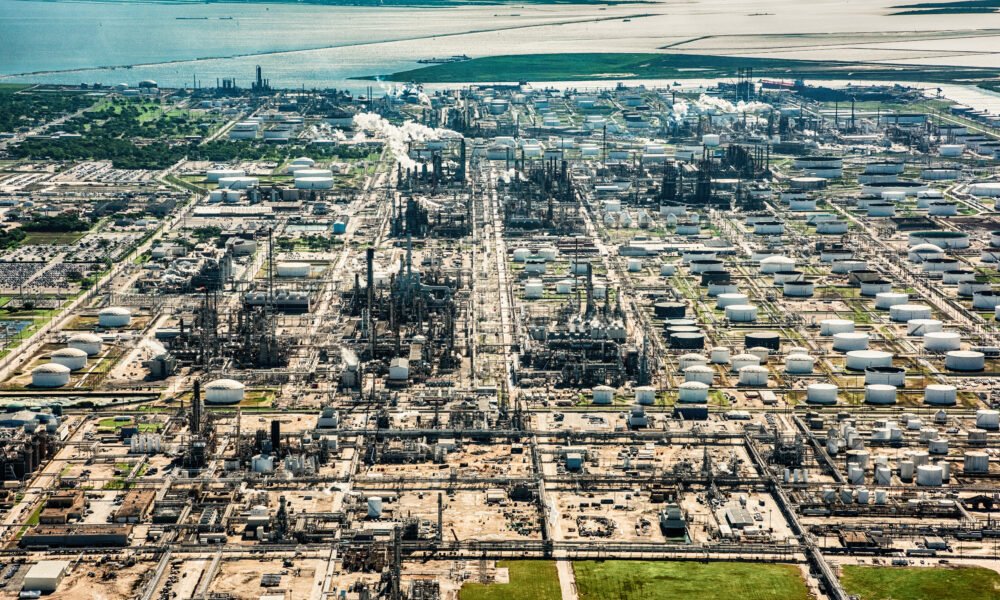
past 4 yearsJackie Medcalf tests groundwater in northwest Houston, where dry cleaning facilities decades ago dumped toxic chemicals used in the dry cleaning process over time into storm drains, gutters and alleys. The chemicals eventually seeped into groundwater and moved west into the Cyprus region, but Medcalf and her team at the Texas Health and Environmental Alliance are still finding contamination.
The Environmental Protection Agency placed the area, known as the Jones Road groundwater plume, on the Superfund National Priorities List for cleanup in 2003.
“These chemicals are not detectable by the population living above them. They are strongly associated with a variety of diseases, and the pollution can come up from the ground as vapors,” Medcalf says. “And we’re still finding it in the water.”
Join our email list and get the stories mainstream news is missing.
Sign up for Capital & Main’s Newsletter.
Groundwater contamination was the first thing that came to Medcalf’s mind when he heard about the new House bill in January. The bill would largely amend the Toxic Substances Control Act of 1976, a set of EPA regulations aimed at regulating the manufacture, processing and use of chemicals, including contaminants like those found at Jones Road.
In 2016, Congress, with bipartisan support, amended the law, commonly known as TSCA, to give the EPA the authority to review and regulate chemicals.
Ten years later, House conservatives are proposing to roll back many of the 2016 reforms, citing issues of efficiency, predictability and competitiveness, while promising that the changes would modernize the Toxic Substances Control Act. Health and environmental experts, advocates, and residents like Medcalf have expressed alarm at the proposed changes, pointing to the impact the bill would have on local communities and petrochemical workers in Texas by weakening the EPA’s authority to regulate existing and new hazardous chemicals.
The bill is just one of many setbacks in chemical regulation since President Donald Trump began his second term last January. Since the 2016 reforms, the EPA has re-evaluated and issued stricter rulings regarding high-risk chemicals, but in the past year the federal agency has reversed course and is reconsidering many of those rulings under legal pressure from the chemical industry. The chemicals include substances such as perchlorethylene, trichlorethylene and carbon tetrachloride, all of which have known health hazards and are used in the manufacturing of the chemicals at the Texas facility.
For environmental activists like Medcalf, learning about the EPA’s proposed changes and reviews was like whiplash. She grew up near the petrochemical industry and understands the effects of unregulated chemicals.
“In 2024, we felt like things were moving in the right direction with some of these chemicals,” Medcalf said. “And you know, we’re most definitely concerned that things are moving in a direction that’s not favorable for human exposure right now.”
Management of hazardous substances
When Congress passed the Toxic Substances Control Act in 1976, EPA administrators likened it to “preventive medicine” and meant placing far more emphasis on public health than on commercially produced and sold chemicals. At the time, this marked a major change for the country’s previously largely unregulated chemical industry.
Despite the changes, Suhani Chitalia, an attorney and senior manager of federal affairs at the Environmental Defense Fund, said the EPA still has less control over chemical regulation than originally intended.
“The way the laws were written in the ’70s was not very effective,” Citaglia said. “While it sounds good in theory, the actual practice and authority that the Environmental Protection Agency has to enforce this law was not as strong as it should have been. Part of the reason for that is that the EPA has not been able to fully consider new chemicals that are coming to market before they enter the market.”
Citaglia said hazardous chemicals such as methylene chloride, trichloroethylene, formaldehyde and asbestos were approved without a full review. In response, Congress passed the Frank Lautenberg Chemical Safety Amendment in 2016 on a bipartisan vote, giving the EPA the authority to prioritize and evaluate certain hazardous chemicals on the market.
A decade later, the chemical industry now contends that the amendment slowed the process, arguing that the EPA’s evaluation of new chemicals lasted longer than the allotted 90-day period, hindering innovation in the domestic market. In response, the Republican-led House Energy and Commerce Committee released a revised version of the Toxic Substances Control Act in mid-January.
The U.S. Chemicals Council, a key proponent of these changes, said in a statement to Capital & Main that the proposed bill focuses on permanent, practical fixes, improving timeliness, predictability, and scientific rigor.
The council also argued that the current Toxic Substances Control Act is “speculative and opaque” and that “more than 60% of new chemical reviews have been pending for more than a year.” A major concern for chemical companies is that pending reviews could lead to processing delays.
Katherine Calvert, a senior process safety engineer in the petrochemical industry in Houston, said she understands concerns about delays, but stressed that the evaluation is necessary no matter how long it takes. The EPA needs to be confident about a chemical before approving it, especially for worker safety, she said.
“Very complex problems are going to take longer than less complex problems, especially since the federal government gutted experts at all agencies, including the EPA, last year,” Calvert said. “And a big part of that, anyway, is that the industry doesn’t always provide all the information you need right away.”
Calvert said industry companies’ hasty approvals could depend on the EPA overlooking missing information on the documents after the chemicals have been submitted for review. Companies may initially submit only data on chemicals that pass review, omitting information that could harm their chances of approval.
This can lead to lengthy back-and-forths between EPA and companies.
Additionally, the Trump administration has reduced the EPA’s budget by 4% compared to fiscal 2025. Initially, the administration proposed cutting the EPA’s budget by more than 50%.
She also noted that these changes may result in EPA reporting only some aspects of certain new chemicals to facilities, which Calvert said is concerning. He said facility personnel need to be made aware that the substance is present, even in trace amounts, before handling it.
Citaglia, an attorney with the Environmental Defense Fund, agreed that the 90-day process is controversial and emphasized that as long as the Toxic Substances Control Act is in place, the EPA must prove that the chemicals do not pose an unreasonable risk. Instead, the EPA must prove that the chemical may pose an unreasonable risk.
“And the big problem with this draft is that it kind of overturns safety standards,” Citaglia said. “This bill requires industry data and industry input in the data review process, so it is no longer an independent review from a government agency. There are vested interests that can participate in this process.”
Rollback of other chemicals
The recent House bill is not the first challenge to the Toxic Substances Control Act.
After the Toxic Substances Control Act Amendments were passed in 2016, the EPA began reassessing the risks of chemicals that leaked when the 1976 version of the law took effect. This includes chemicals such as perchlorethylene, trichlorethylene, and carbon tetrachloride, all of which were detected in the groundwater at the Jones Road Superfund site.
These chemicals have historically been used in dry cleaning operations and as solvent mixtures in certain chemical equipment. These chemicals are harmful to human health. Trichlorethylene is a known carcinogen linked to several types of cancer, including kidney cancer and non-Hodgkin’s lymphoma.
EPA announced a final rule banning the commercial manufacture, processing, and distribution of trichlorethylene for all uses, with stricter protections for workers as it phases out trichlorethylene. The agency also banned certain uses of perchlorethylene and carbon tetrachloride.
Industry groups have responded with more than 20 lawsuits, and most have won. The group includes the American Chemistry Council, the Texas Chemistry Council, and Olin Corporation, a global manufacturer and distributor of chemical products. Olin operates a chemical facility in Freeport, Texas, about 90 miles west of Houston, that uses all three chemicals, according to data collected from the Environmental Defense Fund. The petitioners argued that this decision was an overreach by the EPA.
For Medcalf, the backlash from the industry is upsetting but not surprising. The latest regulations for the three chemicals are a good start for her and other environmental activists. For years, she oversaw changes and repeals of the Toxic Substances Control Act, particularly chemicals associated with the Jones Road groundwater plume. The chemicals have also been found at chemical facilities in the Houston area.
“As long as these compounds are manufactured and distributed in our country and communities, the risk of exposure will exist,” Medcalf said.
The trichlorethylene rule was originally scheduled to go into effect in January of this year, but due to legal pressure from chemical companies and industry groups, the EPA delayed the effective date for some of these regulations until mid-May. Additionally, EPA has indicated plans to reconsider portions of the rule.
EPA is also reviewing the final risk assessment to further regulate perchlorethylene. New rules are not expected to be announced until 2027, and until then, the industry will be subject to current, unrevised, and unupdated regulations for the chemical. EPA is also reconsidering its original rule on carbon tetrachloride, but no deadline has been scheduled yet.
The American Chemistry Council said in a statement to Capital & Maine that the new regulations for the three chemicals “risk imposing unenforceable requirements, creating unreasonable compliance burdens, or disrupting supply chains without commensurate public health benefits.”
Olin Corporation did not respond to a request for comment.
The Environmental Defense Fund recently submitted comments on EPA’s recent review of formaldehyde, a gas and compound with various health risks, after the agency announced a more stringent final assessment in 2024, which is yet another reversal by EPA.
Citalia predicts further reversals could occur.
“These priority chemicals are why the 2016 amendments were made,” Citaglia said. “They’re very important and very necessary because they really show what slips through the cracks in the law when the law doesn’t work.”
Copyright 2026 Capital & Main
