

Close Menu

    Subscribe to Updates

    Get the latest creative news from FooBar about art, design and business.

    What's Hot

    Viruses hidden in the gut may be linked to colon cancer

    April 22, 2026

    Psychologists identify conversational mechanisms that help humans and AI bond

    April 22, 2026

    Robert F. Kennedy Jr. Testifies Before the Senate Assistance Committee

    April 22, 2026
    Facebook X (Twitter) Instagram
    Facebook X (Twitter) Instagram
    Health Magazine
    • Home
    • Environmental Health
    • Health Technology
    • Medical Research
    • Mental Health
    • Nutrition Science
    • Pharma
    • Public Health
    • Discover
      • Daily Health Tips
      • Financial Health & Stability
      • Holistic Health & Wellness
      • Mental Health
      • Nutrition & Dietary Trends
      • Professional & Personal Growth
    • Our Mission
    Health Magazine
    Home » News » Climate models may be missing large amounts of carbon emissions from northern wildfires
    Nutrition Science

    Climate models may be missing large amounts of carbon emissions from northern wildfires

    healthadminBy healthadminMarch 4, 2026No Comments4 Mins Read
    Climate models may be missing large amounts of carbon emissions from northern wildfires
    Share
    Facebook Twitter Reddit Telegram Pinterest Email


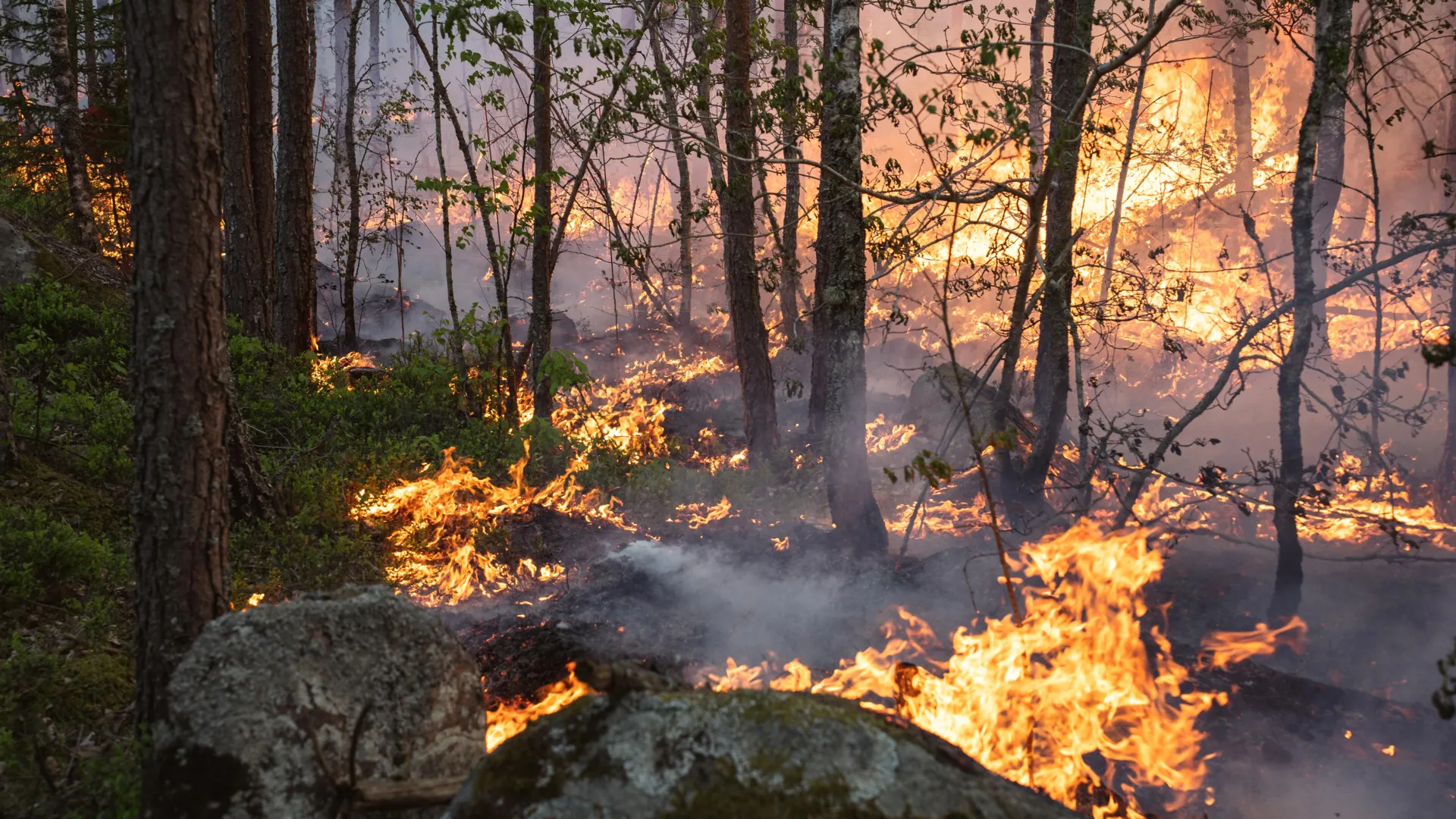
    Wildfires ravaging vast boreal forests in Alaska, Canada, Scandinavia and Russia may be having a bigger impact on the climate than scientists once thought. A new study led by researchers at the University of California, Berkeley suggests that these northern fires could release far more carbon into the atmosphere than current estimates.

    That’s because these fires don’t just burn wood. In many boreal regions, flames can spread downward into the thick layer of carbon-rich soil beneath the forest floor. These soils, known as peat, contain partially decomposed plant matter that has accumulated over hundreds or even thousands of years. The cold, wet conditions of the far north slow the decomposition of organic matter, so these landforms store vast amounts of carbon underground.

    Satellite data may miss underground peat fires

    Research shows that many of the models widely used to estimate the carbon footprint of wildfires do not fully capture these underground fires. Most of these models rely heavily on satellite observations of visible flames and are primarily based on fires that occur at low latitudes. As a result, slow, hard-to-see fires that smolder deep in peat and organic soils can be overlooked.

    “Many of the most climate-critical fires are not dramatically visible from space,” says study lead author Johan Ekdahl, a postdoctoral fellow in Berkeley’s Energy and Resources Group. “Peatlands and organic soils can smolder for weeks to years, releasing huge amounts of ancient carbon.”

    Reconstruction of Swedish wildfire emissions

    Research published in journals scientific progressanalyzed 324 wildfires that occurred across Sweden in 2018. Ekdahl and colleagues combined detailed national forest records with direct measurements in the field to reconstruct the amount of carbon released from each fire.

    Using these data, the team created a detailed map of wildfire emissions. Their analysis showed that local conditions such as climate, vegetation, and soil characteristics have a significant impact on the amount of carbon stored in forests and the amount of carbon released during wildfires.

    Key differences from the Global Fire model

    When the researchers compared their reconstructed emissions with six widely used global wildfire models, they found significant discrepancies. In some locations, the model overestimated carbon emissions. In other regions, especially where fires burned deep into the soil layer, emissions were significantly underestimated.

    For example, the model predicted an increase in emissions in Gävleborg County. There, intense fires burned through dry forests and were clearly visible from satellites.

    However, the situation was very different in neighboring Dalarna County. There, low-intensity fires burned quietly in a thick layer of organic soil and were less noticeable from space. In this region, the model underestimated carbon emissions by a factor of 14.

    “Sweden is a very large country, but it’s quite small compared to Siberia and Canada,” Ekdahl said. “We may be significantly underestimating the impact of recent extreme fire seasons in these regions.”

    Field measurements reveal soil carbon loss

    To measure how much carbon wildfires release from the soil, the researchers collected data from 50 locations affected by fires in 2018. There were 19 high-intensity fires and 31 low-intensity burns.

    The researchers measured the thickness of the organic-rich soil layer at each site (which varied from a few inches to several feet) and collected soil samples. The researchers calculated how much carbon was released by comparing carbon levels in the burnt soil to samples from nearby unburned forest.

    “Once you’re out there, it’s as simple as digging a hole, but the hard part is getting there,” Ekdahl said. “Sweden has a good network of forest roads, but I’ve heard that in Siberia it’s serious mountaineering, which is one reason why measurements for this region are sorely missing.”

    Expanding research to fire-prone forests in the United States

    Eckdahl is currently working with colleagues at the University of California, Berkeley and other institutions as part of the Western Fire and Forest Collaboration to apply similar research methods to forests across the western United States.

    Although forests in the western United States typically do not contain the thick peat soils found in northern boreal regions, several other factors still influence wildfire emissions. These include local climate patterns, the types of trees and vegetation present, and soil conditions. Ekdahl will study the role of soil microorganisms, such as bacteria and fungi, and how they contribute to forest recovery after wildfires.

    “The forests of the lower 48 Rivers and the forests of the far north may look very different, but they share a common currency: carbon,” Ekdahl said. “By improving our understanding of how this element flows between land and the atmosphere, we can better predict the impacts of future fire regimes in a warming world and develop smarter strategies to reduce climate risks to society.”

    Lars Nieradzik from Lund University and Louise Rütting from Brandenburg University of Technology are co-authors of the paper.


    Source link

    Visited 8 times, 1 visit(s) today
    Share. Facebook Twitter Pinterest LinkedIn Telegram Reddit Email
    Previous ArticleOne dose of cocoa flavanols improves cognitive performance during aerobic exercise
    Next Article Popular fruits and vegetables linked to elevated levels of pesticides
    healthadmin

    Related Posts

    Viruses hidden in the gut may be linked to colon cancer

    April 22, 2026

    DNA reveals species of pit viper hiding in China

    April 22, 2026

    Ancient DNA reveals lost inhabitants near Paris replaced by strangers

    April 22, 2026

    JWST discovers ice clouds on giant alien planet, leaving scientists stunned

    April 22, 2026

    A simple blood test could reveal Alzheimer’s risk years earlier

    April 22, 2026

    Study finds two common drugs may reverse fatty liver disease

    April 22, 2026
    Add A Comment

    Comments are closed.

    Categories

    • Daily Health Tips
    • Discover
    • Environmental Health
    • Exercise & Fitness
    • Featured
    • Featured Videos
    • Financial Health & Stability
    • Fitness
    • Fitness Updates
    • Health
    • Health Technology
    • Healthy Aging
    • Healthy Living
    • Holistic Healing
    • Holistic Health & Wellness
    • Medical Research
    • Medical Research & Insights
    • Mental Health
    • Mental Wellness
    • Natural Remedies
    • New Workouts
    • Nutrition
    • Nutrition & Dietary Trends
    • Nutrition & Superfoods
    • Nutrition Science
    • Pharma
    • Preventive Healthcare
    • Professional & Personal Growth
    • Public Health
    • Public Health & Awareness
    • Selected
    • Sleep & Recovery
    • Top Programs
    • Weight Management
    • Workouts
    Popular Posts
    • the-pros-and-cons-of-paleo-dietsThe Pros and Cons of Paleo Diets: What Science Really Says April 16, 2025
    • Improve Mental Health10 Science-Backed Practices to Improve Mental Health… March 11, 2025
    • How Healthy Living Is Transforming Modern Wellness TrendsHow Healthy Living Is Transforming Modern Wellness… December 3, 2025
    • Kankakee_expansion.jpgCSL releases details of $1.5 billion U.S.… March 10, 2026
    • urlhttps3A2F2Fcalifornia-times-brightspot.s3.amazonaws.com2Fc32Fcd2F988500d440f2a55515940909.jpegA ‘reckless’ scrapyard with a history of… October 24, 2025
    • Healthy Living: Expert Tips to Improve Your Health in 2026Healthy Living: Expert Tips to Improve Your Health in 2026 November 16, 2025

    Demo
    Stay In Touch
    • Facebook
    • Twitter
    • Pinterest
    • Instagram
    • YouTube
    • Vimeo
    Don't Miss

    Viruses hidden in the gut may be linked to colon cancer

    By healthadminApril 22, 2026

    Colorectal cancer is one of the most common cancers in Western countries and remains the…

    Psychologists identify conversational mechanisms that help humans and AI bond

    April 22, 2026

    Robert F. Kennedy Jr. Testifies Before the Senate Assistance Committee

    April 22, 2026

    Acupuncture modulates immune function through activation of specific neural circuits

    April 22, 2026

    Subscribe to Updates

    Get the latest creative news from SmartMag about art & design.

    HealthxMagazine
    HealthxMagazine

    At HealthX Magazine, we are dedicated to empowering entrepreneurs, doctors, chiropractors, healthcare professionals, personal trainers, executives, thought leaders, and anyone striving for optimal health.

    Our Picks

    Acupuncture modulates immune function through activation of specific neural circuits

    April 22, 2026

    Gut microbiota characteristics predict treatment response in IBS-D patients

    April 22, 2026

    Even after achieving clinical remission, patient outcomes vary by drug class

    April 22, 2026
    New Comments
      Facebook X (Twitter) Instagram Pinterest
      • Home
      • Privacy Policy
      • Our Mission
      © 2026 ThemeSphere. Designed by ThemeSphere.

      Type above and press Enter to search. Press Esc to cancel.