


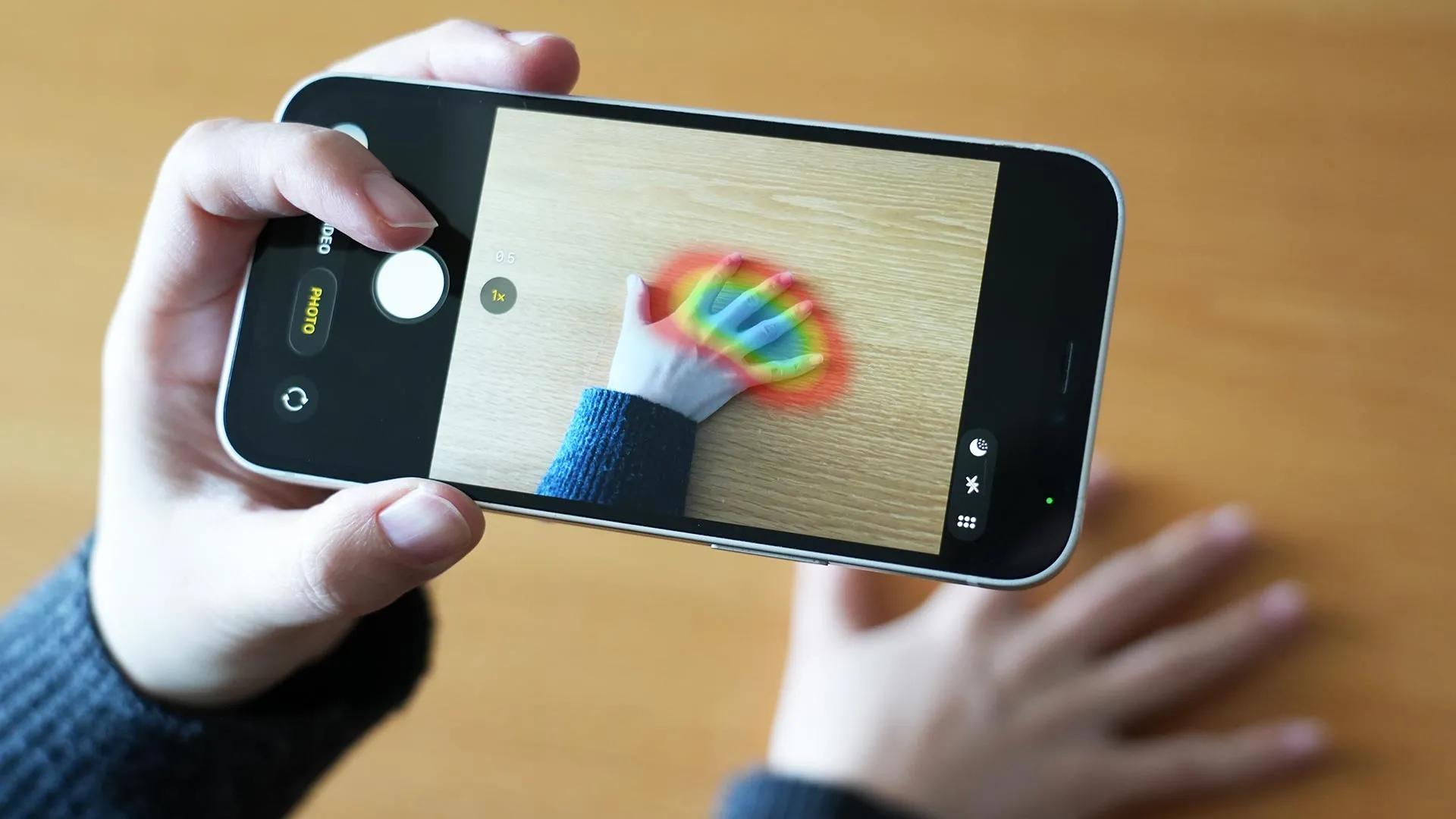
Researchers at Kobe University have developed an artificial intelligence system that can identify rare endocrine disorders simply by examining photos of the back of a hand or clenched fist. This approach avoids facial images and protects patient privacy while achieving high diagnostic accuracy. Scientists say the technology could ultimately allow doctors to refer patients to specialists more quickly and improve access to treatment in underserved areas.
The disease targeted by AI is acromegaly, a rare disease that usually occurs in middle age. It is caused by excessive secretion of growth hormone, which causes enlarged limbs, changes in facial appearance, and abnormal growth of bones and internal organs. This disorder develops gradually over many years, so it can be difficult to recognize it early.
If untreated, acromegaly can cause serious health problems and reduce life expectancy by about 10 years. “Since the symptoms progress very slowly and it is a rare disease, it is not uncommon for it to take up to 10 years before it is diagnosed,” says Hidenori Fukuoka, an endocrinologist at Kobe University. He added, “As AI tools advance, attempts are being made to use photographs for early detection, but this has not been implemented in clinical settings.”
Privacy-focused AI approach using hand images
The research team reviewed existing AI research and found that many systems rely on facial photos to identify illnesses. However, facial recognition can raise privacy concerns for patients. To deal with this problem, scientists chose a different strategy.
“To address this concern, we decided to focus on the hand, which is a body part that is routinely examined for diagnostic purposes in clinical settings, along with the face, especially since changes in the hands often appear in acromegaly,” explains Yuka Omachi, a graduate student at Kobe University.
To better protect privacy, the researchers limited the images to the back of the hand and clenched fist. They intentionally avoided images of palms because the line patterns on palms are very individual and could reveal their identity. This careful approach allowed us to attract a large number of participants. A total of 725 patients from 15 medical institutions across Japan provided more than 11,000 images used to train and test the AI model.
AI outperforms experienced specialists
The team will share the results Journal of Clinical Endocrinology and Metabolism. Their AI model showed very high sensitivity and specificity in identifying acromegaly from hand images. In a direct comparison, the system performed better than an experienced endocrinologist evaluating the same photos.
“I was honestly surprised that we were able to achieve such a high level of diagnostic accuracy using only photos of the back of the hand and clenched fist. What I felt was particularly important was that we achieved this level of performance without using facial features, making this approach very practical for disease screening,” says Omachi.
Extending medical AI to other conditions
The researchers now hope to adapt the system to detect additional medical conditions that cause visible changes to the hands. Possible targets include rheumatoid arthritis, anemia, clubbing, etc. Omachi says, “This result may be the gateway to expanding the possibilities of medical AI.”
Improving physician support and access to treatment
In real-world clinical settings, doctors rely on far more information than hand images when diagnosing patients. Medical history, laboratory tests, and physical exam all play important roles. Kobe University researchers believe their AI tools can support doctors, not replace them. They describe the technology in their study as a way to “complement clinical expertise, reduce missed diagnoses, and enable early intervention.”
Mr. Fukuoka, the principal investigator, said, “Further development of this technology may lead to the construction of a medical infrastructure that connects patients suspected of having hand-related diseases during medical checkups with specialists.We also believe that it can support non-specialist doctors at local medical sites and contribute to reducing medical disparities.”
This research was supported by the Hyogo Science and Technology Foundation. The project also included collaborators from Fukuoka University, Hyogo College of Medicine, Nagoya University, Hiroshima University, Toranomon Hospital, Nippon Medical School, Kagoshima University, Tottori University, Yamagata University, Okayama University, Hyogo Prefectural Kakogawa Medical Center, Hokkaido University, International University of Health and Welfare, Moriyama Memorial Hospital, and Konan Women’s University.
