


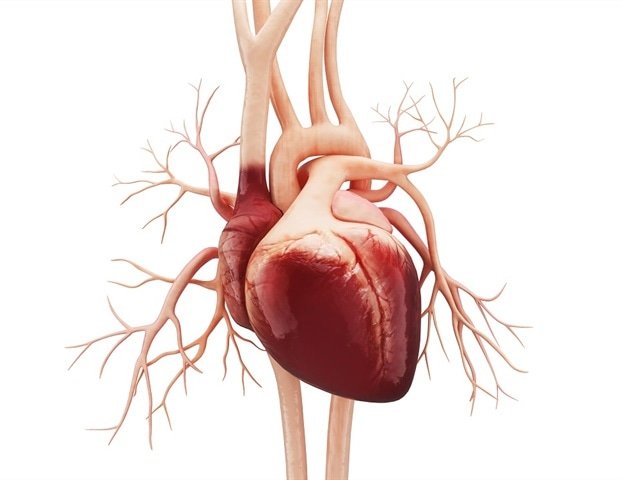
Researchers at Washington State University have developed a 3D-printed model of the left side of a contracting, beating heart, giving surgeons and medical students the opportunity to rehearse important heart surgeries with a model that behaves like the real thing.
In fact, WSU researchers performed a valve repair in a heart model using ultrasound imaging and a customized sensor attached to the model and showed that the repair was successful. They report on their research in the academic journal Advanced Materials Technologies.
It is very helpful for doctors and surgeons to practice while the heart is still beating, especially for minimally invasive surgery. In our case, this model is the first fully synthetic model that fully mimics the left side of the heart without the help of animal models. We were able to incorporate both anatomical features and dynamic features. ”
Kaiyan Qiu, Berry Family Assistant Professor in the Department of Mechanical and Materials Engineering, corresponding author of the paper
Heart disease is the leading cause of death in the United States, and approximately 800,000 people undergo heart surgery each year. In addition to major surgery, doctors often perform minimally invasive surgeries such as valve repair to treat heart disease. Training for this procedure often requires practice on animals or cadavers, which are neither patient-specific nor reusable. You can also practice while watching the steps on your computer.
“There have been synthetic models in the past, mostly made in molds, but one of their main limitations is their inability to create some of the more complex curvatures found in the heart,” said first author Alejandro Guillén Obando, a doctoral candidate in the Department of Mechanical and Materials Engineering.
In the study, researchers used scans of real hearts to 3D print a replica of the left side of the heart. The left side of the heart receives the highest pressure and performs the heart’s most important function, pumping oxygenated blood throughout the body. As we age, the mitral valve between the left ventricles often leaks, causing blood to flow backwards or backwards, reducing the heart’s efficiency.
The heart model the researchers created includes atria, ventricles, and mitral valves, and has a soft texture similar to a real heart. It also has multiple small pneumatic actuators that pump the model and a string-like material that resembles a real heart that manages the movement of the mitral valve. When simulated blood is sent to the model, sensors on the model can monitor “blood pressure.”
“The layer-by-layer approach in 3D printing allows us to add more curvature and simulate a real heart in the ventricles,” said Guillen Obando.
After creating the model, the researchers printed the defective mitral valve and repaired it. They created a repair device similar to a commercially available device and inserted it into the mitral valve. Sensors in the model showed an increase in blood pressure in the left ventricle, indicating that the valve was fully closed. Additionally, ultrasound imaging confirmed that pseudo-blood did not flow back into the heart chambers.
The researchers have applied for a provisional patent with the Department of Innovation and Entrepreneurship and are currently working on developing a complete heart model with all four chambers and four valves. In the future, we also plan to collaborate with medical professionals and students to conduct more patient-specific pre-surgical rehearsals using models of various valvular diseases.
The research received funding from the National Science Foundation as well as WSU’s Cougar Cage Fund and Commercialization Special Projects Fund.
sauce:
washington state university
Reference magazines:
A.G., Obando; others. (2026) 3D Printed Dynamic Heart Model with Left Side Anatomy and Integrated Sensors for End-to-End Repair and Regurgitation Mitigation. advanced material technology. DOI: 10.1002/admt.70885. https://advanced.onlinelibrary.wiley.com/doi/10.1002/admt.70885
