


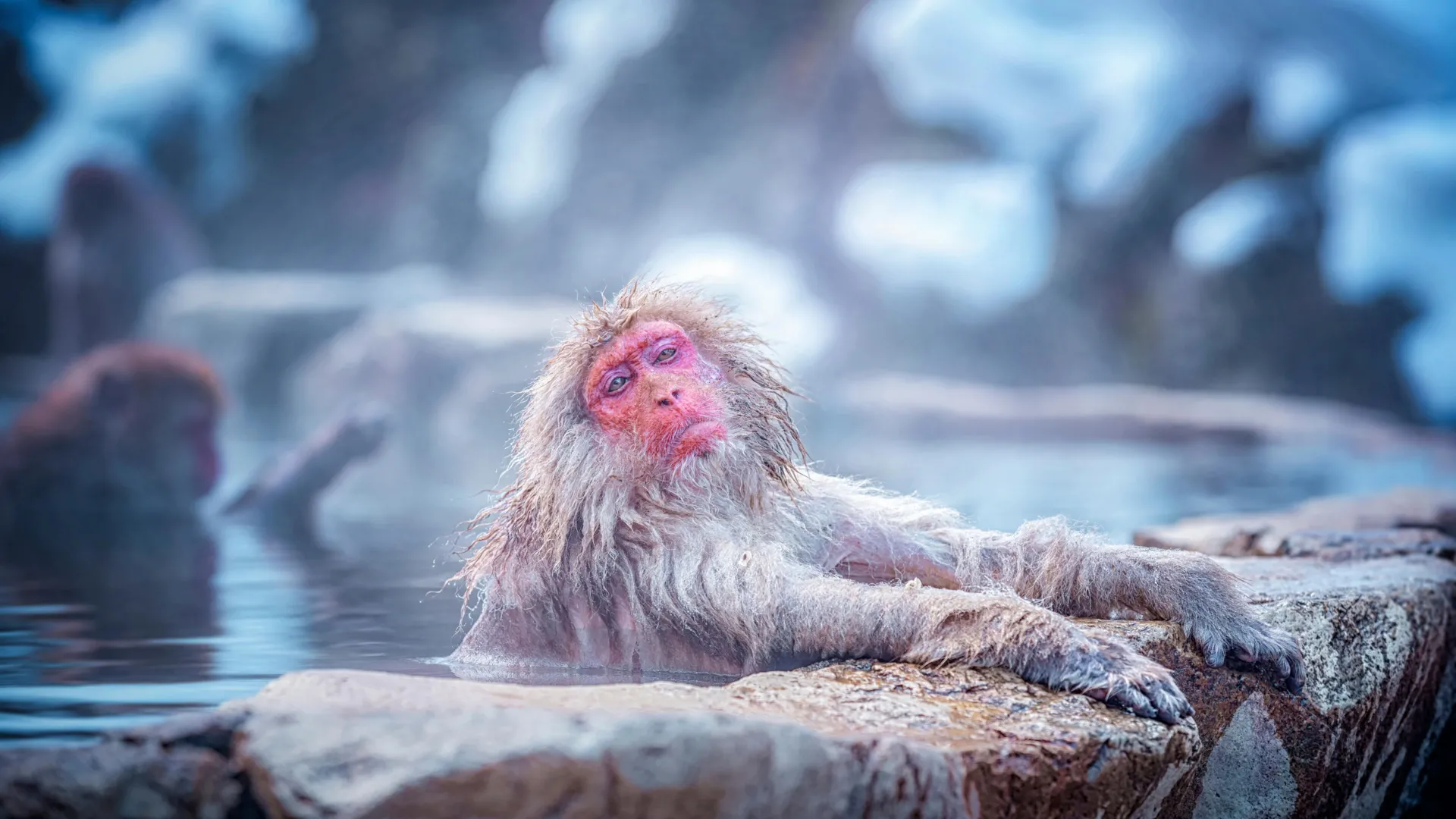
Japanese macaques, better known as snow monkeys, are famous for sitting in steaming hot springs when the temperature drops. It’s clear that warm water can help you cope with the winter cold, but researchers at Kyoto University have discovered that these baths do more than just keep you warm.
“Hot spring bathing is one of the most unusual behaviors seen in non-human primates,” said lead author Abdullah Langen. His team wondered if regular soaking in hot springs might also affect the parasites and microorganisms that live on and inside the monkeys.
Research on parasites and intestinal microbiota
To find out, researchers visited Jigokudani Monkey Park in Nagano Prefecture. Over two winters, the researchers tracked groups of female monkeys and compared those who frequently bathed in hot springs with those who rarely or never bathed. The scientists combined direct behavioral observations with parasite checks and gut microbiome sequencing. Their goal was to determine whether bathing affects the macaque holobiont, a complex biological system made up of the animal and its associated microorganisms and parasites.
The findings showed that time spent in hot springs subtly changes how the monkeys interact with parasites and gut microbes. The monkeys soaked in warm water had different patterns of lice on their bodies, as well as differences in specific gut bacteria. This suggests that soaking in hot water may disturb lice activity and spawning sites.
Achieving subtle changes in microorganisms without increasing the risk of infection
The researchers also detected subtle differences in the gut microbiome. The overall diversity of gut bacteria was similar between the bathed and unbathed monkeys. However, some bacterial genera were more common in people who did not bathe in hot springs. Importantly, sharing a pool did not appear to increase the risk of intestinal parasites. No increase in parasite infection rate or severity was observed in bathing macaques.
Taken together, these results indicate that behavior influences the animal holobiont and may play a meaningful role in health. This study highlights how complex the relationship between wildlife behavior and health is. Bathing changed some interactions between the monkeys and their symbiotic organisms, but did not affect others.
“Behavior is often treated as a response to the environment, but our findings show that this behavior not only affects thermoregulation and stress, but also how macaques interact with the parasites and microorganisms that live on and inside their bodies,” Langen said.
What this means for animal and human health
This study is one of the first to link natural behavior in wild primates to changes in both ectoparasites and the gut microbiome. By demonstrating that behavior can selectively shape the components of the holobiont, the results of this study provide insight into how health-related behaviors have evolved and how the microbiome changes in social animals.
The study also suggests similarities with humans. Human habits such as bathing can influence exposure to microorganisms, and this result challenges the idea that shared water sources automatically increase the risk of disease, at least under natural conditions.
