

Close Menu

    Subscribe to Updates

    Get the latest creative news from FooBar about art, design and business.

    What's Hot

    Study finds that release into the wild could be fatal to rescued slow lorises

    March 4, 2026

    Danish agency NoA Health appoints new CEO to drive global expansion

    March 4, 2026

    Sanofi signs $1.5 billion worldwide license agreement for Sino Biopharm’s first-in-class JAK/ROCK assets

    March 4, 2026
    Facebook X (Twitter) Instagram
    Facebook X (Twitter) Instagram
    Health Magazine
    • Home
    • Environmental Health
    • Health Technology
    • Medical Research
    • Mental Health
    • Nutrition Science
    • Pharma
    • Public Health
    • Discover
      • Daily Health Tips
      • Financial Health & Stability
      • Holistic Health & Wellness
      • Mental Health
      • Nutrition & Dietary Trends
      • Professional & Personal Growth
    • Our Mission
    Health Magazine
    Home » News » For every known vertebrate species, two more may be hiding in plain sight
    Nutrition Science

    For every known vertebrate species, two more may be hiding in plain sight

    healthadminBy healthadminMarch 4, 2026No Comments4 Mins Read
    Share
    Facebook Twitter Reddit Telegram Pinterest Email


    A new study led by researchers at the University of Arizona suggests that for every recognized vertebrate species, there are, on average, two more overlooked species. These overlooked creatures, known as “cryptic” species, look nearly identical to known species, but are genetically distinct. The findings indicate that the world’s vertebrate biodiversity may be much greater than current estimates, raising important questions about how many species remain undocumented and unprotected.

    “Each species that you or I see and perceive as distinct may actually be hiding, on average, two different species,” said lead author John Wiens, a professor in the Department of Ecology and Evolutionary Biology in the College of Science at the University of Arizona. “This means there may be twice as many species across vertebrates as previously thought, and many hidden species may already be at risk of extinction.”

    DNA reveals mysterious species hidden in plain sight

    Traditionally, scientists have identified and classified animals based on their visible physical characteristics, also called morphological characteristics. Differences in color patterns, scale arrangement, and body shape often distinguish one species from another. For example, snake species may be distinguished by differences in their markings or body size.

    Mysterious seeds complicate the process. Although they look nearly identical, genetic analysis shows that they belong to separate evolutionary lineages. In other words, their DNA reveals differences that cannot be seen with the naked eye.

    “Many of these mysterious species have likely evolved separately over a million years or more,” Wiens said. “So their DNA shows that even though they look the same, they have been distinct for a long time.”

    Consistent patterns across fish, birds, mammals, etc.

    Advances in molecular sequencing have made comparing DNA between populations faster and more affordable. As genetic data has accumulated, researchers have repeatedly discovered previously unrecognized species.

    What surprised the researchers most was how widespread this pattern was. According to Wiens, this trend is true across all major vertebrate groups. “On average, morphologically based fish, birds, mammals, reptiles, amphibians, and other vertebrate groups all seem to be hiding around the two cryptic species.”

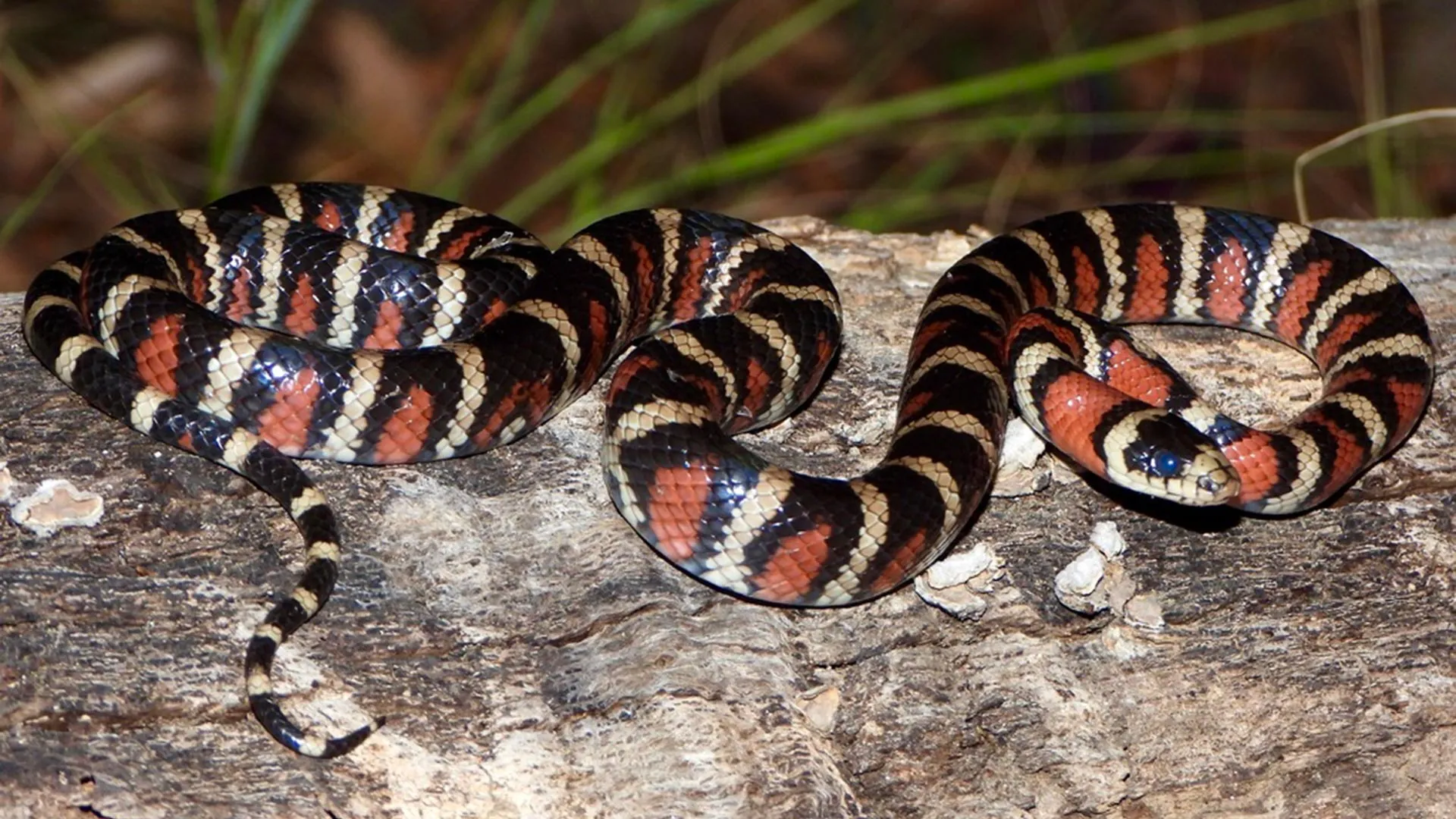
    A notable example is in Arizona. For many years, the Arizona mountain kingsnake was thought to be a single species throughout the state due to the similar appearance of individuals. However, a 2011 molecular study found that snakes in northern Arizona are genetically distinct from their southern counterparts. As a result, the southern population was elevated to full species status as Lampropeltis noblochi, while the northern snake retained the name Lampropeltis pyromelana.

    “If you compare these two kingsnakes, they all look almost the same, with red, black, yellow and white stripes,” said Inpeng Zhang, a graduate student in the Department of Ecology and Evolutionary Biology and lead author of the paper. “However, molecular data show that there are distinct but cryptic northern and southern species.”

    Analyzing hundreds of studies from around the world

    Zhang started exploring the idea several years ago after noticing that many taxonomic studies revealed genetically distinct species that were visually indistinguishable. He realized that no one had systematically examined how common this phenomenon was across vertebrates.

    To answer this question, the research team compiled and analyzed results from more than 300 studies published around the world.

    “There aren’t many research groups that focus purely on unidentified species,” Chan says. “Most people discover them as a byproduct of other biodiversity or taxonomic research, rather than as a primary objective.”

    The researchers also evaluated different approaches used to estimate the number of unidentified species and provided guidance for future research in this area.

    Conservation risks for newly recognized species

    Its influence extends beyond classification. When what was once thought to be a single widespread species splits into several different cryptic species, each newly identified species occupies a narrower geographic range. This can significantly increase vulnerability.

    “People generally realize that the smaller a species’ range size, the more likely it is to become extinct,” Wiens said.

    Wiens argues that formally describing and naming these species is an important first step to protecting them.

    “Hundreds of molecular studies have revealed hundreds of cryptic species, yet very few have been formally described or named,” Wiens said. “Thus, these species remain without official recognition or legal protection.”

    There are also practical implications. Chan said conservation programs aimed at increasing population numbers may accidentally breed individuals of the wrong species if unidentified species are not properly identified.

    “Hidden diversity is an important factor to consider in our conservation efforts,” Zhang said.

    For researchers, the conclusion is simple.

    “If you don’t know a species exists, you can’t protect it,” Wiens said.


    Source link

    Visited 1 times, 1 visit(s) today
    Share. Facebook Twitter Pinterest LinkedIn Telegram Reddit Email
    Previous ArticleA flash of laser light flips a magnet, a major advance in light control
    Next Article Sanofi signs $1.5 billion worldwide license agreement for Sino Biopharm’s first-in-class JAK/ROCK assets
    healthadmin

    Related Posts

    Study finds that release into the wild could be fatal to rescued slow lorises

    March 4, 2026

    A flash of laser light flips a magnet, a major advance in light control

    March 4, 2026

    Still alive after being blown away from Mars

    March 4, 2026

    Scientists discover gene switch that makes pancreatic cancer resistant to chemotherapy

    March 4, 2026

    Wolves are stealing prey from cougars in Yellowstone, study finds

    March 4, 2026

    Teeth smaller than a fingertip reveal first primate ancestors

    March 4, 2026
    Add A Comment
    Leave A Reply Cancel Reply

    Categories

    • Daily Health Tips
    • Discover
    • Environmental Health
    • Exercise & Fitness
    • Featured
    • Featured Videos
    • Financial Health & Stability
    • Fitness
    • Fitness Updates
    • Health
    • Health Technology
    • Healthy Aging
    • Healthy Living
    • Holistic Healing
    • Holistic Health & Wellness
    • Medical Research & Insights
    • Mental Health
    • Mental Wellness
    • Natural Remedies
    • New Workouts
    • Nutrition
    • Nutrition & Dietary Trends
    • Nutrition & Superfoods
    • Nutrition Science
    • Pharma
    • Preventive Healthcare
    • Professional & Personal Growth
    • Public Health
    • Public Health & Awareness
    • Selected
    • Sleep & Recovery
    • Top Programs
    • Weight Management
    • Workouts
    Popular Posts
    • the-pros-and-cons-of-paleo-dietsThe Pros and Cons of Paleo Diets: What Science Really Says April 16, 2025
    • Improve Mental Health10 Science-Backed Practices to Improve Mental Health… March 11, 2025
    • How Healthy Living Is Transforming Modern Wellness TrendsHow Healthy Living Is Transforming Modern Wellness… December 3, 2025
    • daily vitamin D needsWhy Sunlight Is Crucial for Your Daily Vitamin D Needs June 12, 2025
    • The Science Behind Keto Diets: Is It Right for You?The Science Behind Keto Diets: Is It Right for You? April 11, 2025
    • Healthy Living: Expert Tips to Improve Your Health in 2026Healthy Living: Expert Tips to Improve Your Health in 2026 November 16, 2025

    Demo
    Stay In Touch
    • Facebook
    • Twitter
    • Pinterest
    • Instagram
    • YouTube
    • Vimeo
    Don't Miss

    Study finds that release into the wild could be fatal to rescued slow lorises

    By healthadminMarch 4, 2026

    New scientific research suggests that returning protected wild animals to their natural habitats is not…

    Danish agency NoA Health appoints new CEO to drive global expansion

    March 4, 2026

    Sanofi signs $1.5 billion worldwide license agreement for Sino Biopharm’s first-in-class JAK/ROCK assets

    March 4, 2026

    For every known vertebrate species, two more may be hiding in plain sight

    March 4, 2026

    Subscribe to Updates

    Get the latest creative news from SmartMag about art & design.

    HealthxMagazine
    HealthxMagazine

    At HealthX Magazine, we are dedicated to empowering entrepreneurs, doctors, chiropractors, healthcare professionals, personal trainers, executives, thought leaders, and anyone striving for optimal health.

    Our Picks

    For every known vertebrate species, two more may be hiding in plain sight

    March 4, 2026

    A flash of laser light flips a magnet, a major advance in light control

    March 4, 2026

    Still alive after being blown away from Mars

    March 4, 2026
    New Comments
      Facebook X (Twitter) Instagram Pinterest
      • Home
      • Privacy Policy
      • Our Mission
      © 2026 ThemeSphere. Designed by ThemeSphere.

      Type above and press Enter to search. Press Esc to cancel.