


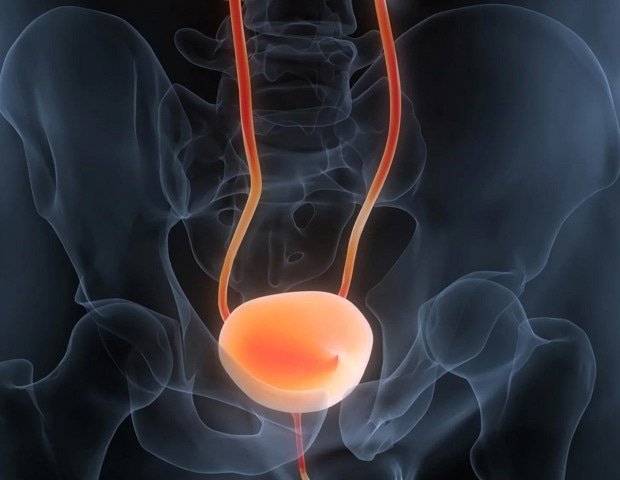
Ten years ago, discussions in Milan set a difficult project in motion. At the meeting with biologists and urologists, questions kept coming up. Why do so many bladder cancer patients face recurrence even after undergoing surgery that follows all guidelines?
This initiative focuses on successful projects funded by the European Innovation Council (EIC). Featured on DeepSync, part of the EIC Community Project, these stories offer a unique opportunity to connect with fellow members and innovators. By showcasing the challenges and successes along each project’s journey, these stories highlight key moments and insights, increasing visibility, fostering deeper understanding, and fostering collective knowledge exchange across the community.
Dr. Massimo Alfano, group leader of the Department of Urology at San Raffaele Hospital, trained at the University of Milan (Italy) and coordinator of the PHIRE project, has built his career around translational medicine.
His work begins with patients and clinicians, not just a hypothesis in the laboratory.
The focus of my research is to give patients some answers. We start with an unmet clinical need and strive to give something back. ”
Dr. Massimo Alfano, Group Leader, Urology, San Rafael Hospital
In bladder cancer, the unmet need is clear. Surgeons remove what they can see. However, cancer cells smaller than 1 millimeter often remain. These tiny traces, invisible during surgery, can resist treatment and lead to disease recurrence. “Urologists follow the guidelines, but there’s always some residual disease,” Massimo says. This gap between what is visible and what is left was the driving force behind two European projects: EDIT and PHIRE.
The first big step happened in 2018 when Massimo coordinated the EIC Pathfinder project EDIT. The current EIC migration project, PHIRE, builds directly on these results. Both specialize in bladder cancer and share the same goal of helping surgeons detect what is currently invisible.
The scientific path was neither immediate nor obvious. Around 2016, Massimo began investigating how tumors smaller than 1 millimeter could be detected. He reviewed the literature and spoke to researchers across Europe. Eventually, he focused on photoacoustic imaging.
Photoacoustic imaging is a hybrid technology that converts light into ultrasound waves. When certain molecules absorb laser light, rapid thermoelastic expansion occurs, producing detectable ultrasound waves. This approach combines the contrast advantages of optical imaging with the depth penetration of ultrasound, allowing high-resolution visualization down to a tenth of a millimeter, making it suitable for the detection of very small lesions.
However, tumor tissue inherently does not produce strong photoacoustic signals for reliable detection. To address this, PHIRE has developed engineered gold nanorods designed with precise shapes to selectively bind to molecular markers expressed by bladder cancer cells. Due to their optical properties, these nanostructures strongly absorb near-infrared light and convert it into ultrasound signals during laser irradiation, increasing contrast and allowing detection of small residual tumor areas. This combination of high-resolution imaging and customized contrast agents defines the uniqueness of PHIRE.
Identifying the right partner was one of the most difficult stages. Massimo spent six months contacting researchers and companies across Europe. Many did not fit. “Building a consortium to address medical needs was not easy,” he recalls. A difficult decision had to be made.
The final consortium will include doctors, biologists, chemists, mathematicians, and imaging experts. Their different backgrounds make the project powerful, but also complex. “All of our partners speak different scientific languages,” Massimo says. Mathematicians cannot automatically understand medical priorities, and clinicians may not follow complex modeling discussions. The coordinator’s role is to keep everyone aligned and focused on the same goal.
Communication became as important as the experiment itself. The team learned to avoid jargon and explain medical issues in clear terms. This was especially important when submitting proposals and facing external reviewers who may not share the same expertise. The initial application was not immediately funded. Reviewer comments were sometimes frustrating and sometimes revealed misunderstandings. But persistence and clearer communication made the difference. The Pathfinder grant arrived only on the third application, and the transition grant arrived on the second application.
PHIRE’s innovation is based on two core elements. i) Urinary stable targeted gold nanorods by a group led by Mauro Comes Franchini at the University of Bologna (Italy) that act against bladder tumor markers, and ii) a novel molecular imaging device by a group led by Jithin Jose (Netherlands, Fujifilm Visualsonics) and Viktor Popov (Ascend Technologies, UK). Preclinical imaging platform. Both components were independently assessed by the European Commission’s Joint Research Center using the Market Creation Potential Framework. Imaging devices were evaluated as having “very high potential for market creation,” and gold nanorods were evaluated as having “high potential for market creation.”
In May 2025, PHIRE was highlighted as a pioneering initiative during European Cancer Week. The technology has been documented in an influential scientific journal (PNAS, Advanced Healthcare Materials) and has been featured in Italian media, including a television report by TGCOM. These milestones highlight not only PHIRE’s originality but also its relevance beyond the laboratory.
This technique works effectively in animal models and detects tumors much smaller than 1 millimeter. This contrast agent is patented and its potential is supported by evaluations by the European Innovation Agency.
The short-term goal is to successfully complete the PHIRE project and ensure that all partners contribute on time. “Even if it’s a negative result, it’s still a result,” Massimo emphasizes. Learning from failed experiments is also part of the process.
The long-term goal is more ambitious, moving from laboratory validation to clinical application. The team is raising investment, planning future clinical trials and preparing a spinoff company. This stage requires skills that are not part of traditional scientific training.
“When I was told I had to become an entrepreneur, I asked what an entrepreneur is,” Massimo admits with a smile. Business models and market strategies are new territory. Partners with exploitation and communication expertise play a key role, including Francesca Natali, Marco Franchin and Elizaveta Kuzmina from META Group, as well as colleagues Michela Cristofolini and Maria Girelli from Ospedale San Raffaele, with whom we work closely on the business side. We found that innovation rarely follows a straight line, with business models evolving as new outcomes emerge during a project.
Coordinating PHIRE had a direct impact on Massimo’s daily life. “I spend my weekends working,” he says frankly. In addition to research in his own lab, he reviews work, organizes conferences, and supports partners across disciplines. The responsibilities are significant and the workload is constant.
Still, he remains enthusiastic. He believes that large projects in Europe can address complex problems from multiple angles. Smaller grants often limit research to a single laboratory perspective. “Only a consortium can provide the right answers,” he says. Tackling bladder cancer requires expertise in biology, chemistry, imaging, mathematics, and clinical practice to work together.
PHIRE is more than just technology development. It reflects a way of working that combines scientific curiosity with patient needs. The journey was filled with rejection, misunderstandings, long nights, and new responsibilities. It also brought patents, recognition, and the potential for real clinical efficacy.
For others considering a similar trip, the message is clear. Research is demanding and often uncertain. It requires patience, cooperation, and a willingness to learn beyond your area of expertise. But when the goal is to improve patient care, the effort has implications far beyond the lab.
The next step is to apply this technology to clinical practice. This will require not only scientific efforts, but also entrepreneurial partners and investment. Collaboration with industry and innovation stakeholders will be essential for PHIRE to move from promising test results to real benefits for patients.
