


The Galapagos Islands have long been one of the most important sites for the study of evolution. Charles Darwin visited the island in 1835 aboard HMS beaglehe collected various birds and returned to England. Initially, he thought the specimens included sparrows, woodpeckers, finches, and a great tit. Scientists later discovered that these birds were all closely related finches, with different beak shapes that evolved for different foods.
Finches ultimately provided powerful evidence for Darwin’s theory of evolution by natural selection. This theory explains how populations change over time, as individuals with traits suited to the environment are more likely to survive and reproduce.
Birds also exhibit a process known as parallel evolution. In this process, organisms independently develop similar solutions to environmental problems, even if the underlying genetic changes differ.
Darwin’s islands continue to reveal evolution
“More than 150 years after Darwin’s work on the Galapagos Islands changed our understanding of life on Earth, these islands continue to reveal new biology,” said Professor Michael D. Martin of the University Museum at the Norwegian University of Science and Technology (NTNU).
Martin is part of a large international research team including scientists from the Royal Botanic Gardens, Kew. University of California, Davis. University of Copenhagen. Charles Darwin Foundation, Galapagos. University of Georgia, Athens. University of British Columbia. and several other institutions.
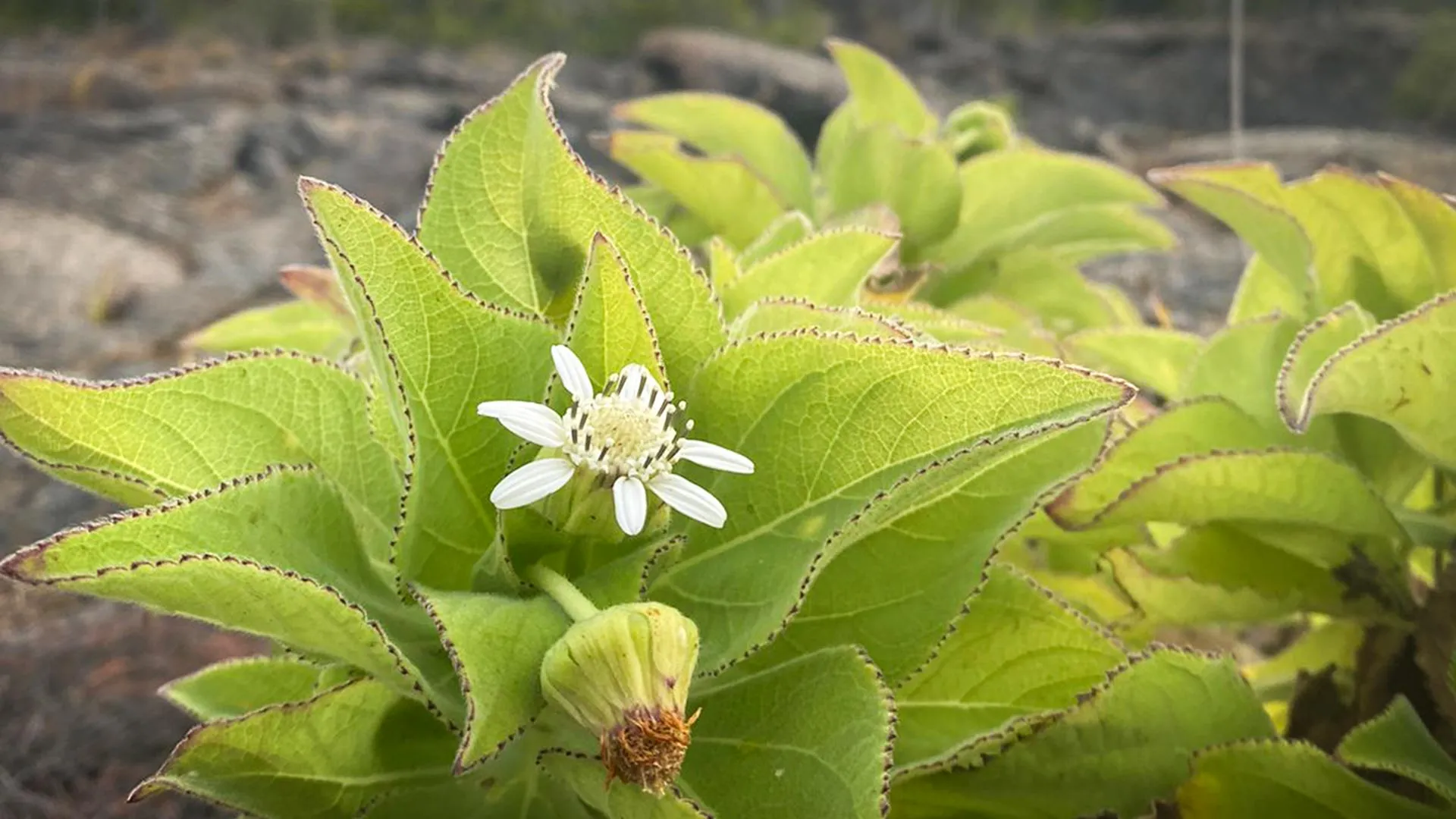
The research team investigated the evolution Scalesiaa group of plants commonly referred to as Galapagos giant daisies. Their discovery recently nature communications.
Giant daisies in the Galapagos evolved rapidly
“Like Darwin’s famous finches, these plants evolved rapidly after arriving in the Galapagos from mainland South America,” explains Vanessa Beaker, a researcher at the Royal Botanic Gardens, Kew and lead author of the new book.
Scalesia It is a relatively young genus of plants. All species that exist today arose within the past million years. Despite its short evolutionary history, the plant has adapted to markedly different habitats across the island, including humid upland forests and hot, dry lowlands.
“From shrubs to trees, the species vary greatly in appearance, with the most striking feature being the leaves, which can range from large and whole to small and deeply lobed,” says Martin.
The leaves of these leaves often have intricately serrated edges. Scientists think this shape may help plants survive in dry, hot conditions by reducing water loss and dissipating heat more effectively. However, until now, the genetic changes behind this adaptation remained unknown.
Different genes produced the same leaf shape
Researchers have analyzed the complete genomes of all known organisms. Scalesia seed. Their results showed that deeply lobed leaves evolved several times independently on separate branches. Scalesia Family tree.
This discovery also suggests that new species may now be emerging. numerous Scalesia The populations may represent separate evolutionary lineages that scientists have not yet formally recognized.
“What’s even more surprising is that each time this trait evolved, it evolved through different genes, even though they all belong to the same biological system that controls leaf development,” Beaker says.
“This provides a clear example of parallel evolution. Nature arrives at the same solution over and over again through different genetic pathways. Rather than being controlled by a single ‘master gene,’ evolution appears to utilize entire networks of interacting genes, fine-tuning different components to produce similar outcomes.”
Rather than relying on one gene to determine leaf shape, evolution appears to modify different parts of a larger gene network. These individual genetic changes can ultimately produce similar physical characteristics.
This discovery has given scientists a clearer understanding of how complex traits appear repeatedly in unrelated populations and in different lineages of the same evolutionary family.
Evolution may still be producing new species
genetic evidence is Scalesia It’s not over yet.
“Populations within the same species have large genetic differences and have been isolated from each other for long periods of time, meaning new species may be in the process of forming. Scalesia “The populations may represent different evolutionary lineages that have not yet been formally described,” Martin said.
Because these isolated populations may have followed separate evolutionary paths, researchers argue that each should be managed as a separate conservation unit. This approach could change the way conservationists protect the Galapagos’ distinctive plants and ecosystems.
The study also provides an unusually detailed view of adaptive radiation, the process by which one ancestral species rapidly gives rise to many forms suited to different habitats.
“Our findings highlight the flexibility and creativity of evolution,” Beaker says.
The famous collection of birds was not the only important discovery on Darwin’s island. He also collected many plants during his visit. Seventy-eight of these specimens were later used to identify a species completely new to science. Scalesia.
