


Bayer and Monsanto, the biotech giant it acquired, have long faced allegations that glyphosate, the active ingredient in the popular herbicide Roundup, causes cancer. The uproar led to more than 100,000 lawsuits, billions of dollars in settlements, a Supreme Court case and several actions by the Trump administration. But amidst all the legal activity, few people stop to ask fundamental questions. “Why are we spraying so much glyphosate in the first place?”
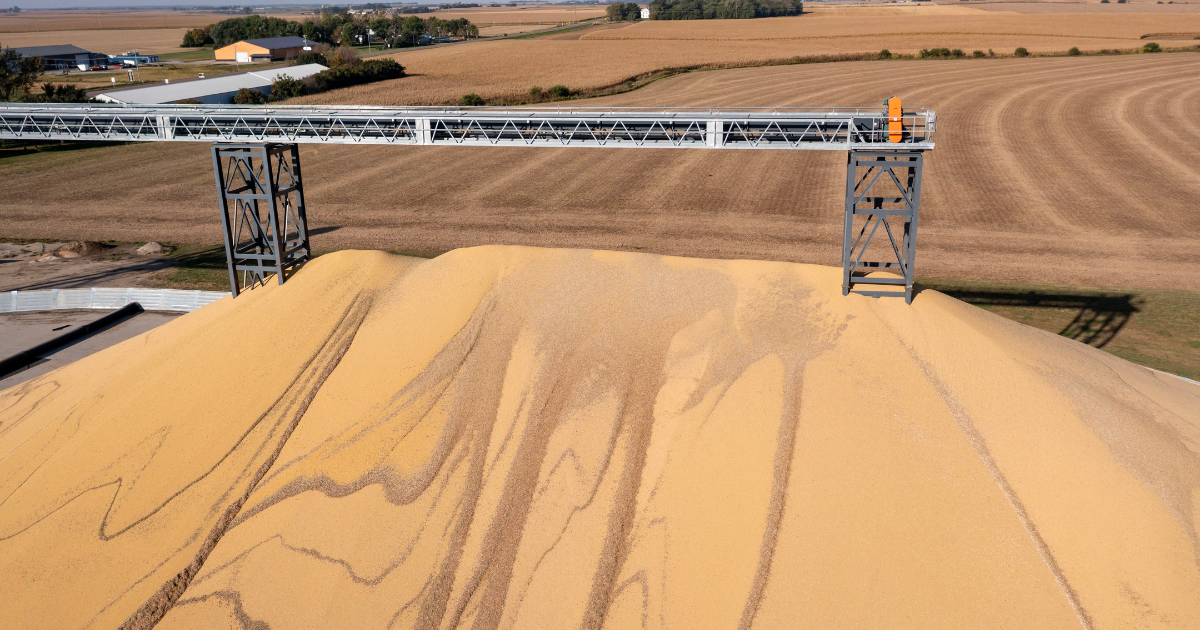
Often the answer is animal husbandry. In the United States, the majority of glyphosate applied is used to grow crops that feed livestock, not humans. President Trump has defended glyphosate as essential to maintaining food security, but that is too broad a characterization. In fact, glyphosate has made meat production much cheaper, as fewer weeds lower the cost of producing feed for livestock. Some studies have also found that glyphosate reduces greenhouse gas emissions from forage crops by reducing tillage, but quantification can be influenced by many factors.
In June, the Supreme Court issued a major ruling in Monsanto’s favor regarding glyphosate. A Missouri gardener who had been using Roundup for about 20 years developed non-Hodgkin’s lymphoma and sued Monsanto for failing to put a cancer risk warning label on Roundup products, alleging the company violated the state’s failure to warn law. A lower court ordered the company to pay more than $1 million in damages, but the Supreme Court overturned that decision, citing the Federal Insecticide, Fungicide, and Rodenticide Act (FIFRA).
The court found that under FIFRA, the EPA has final authority on behalf of the states regarding what appears on the labels of pesticide products. The Supreme Court reversed a state court’s ruling that Monsanto erred in not including such a warning on Roundup sold in Missouri, since the EPA had previously ruled that glyphosate was not a carcinogen and therefore did not require a cancer warning.
glyphosate controversy
Glyphosate is the most widely used herbicide in the world. It works by inhibiting the ability of plants to produce certain amino acids needed to grow. It is a non-selective herbicide, meaning it is lethal to most plant species it comes into contact with. However, some important feed crops, namely corn and soybeans, have been genetically modified to be resistant to glyphosate. This allows farmers of these crops to spray their fields with glyphosate and kill weeds while leaving the forage crops intact. With fewer weeds, crops will flourish and farmers will be able to reap higher yields.
Additionally, glyphosate is also used as a desiccant to accelerate the drying process of some crops such as wheat. This allows the crop to dry evenly and makes it easier to harvest with a combine.
Although glyphosate does not accumulate in the food chain, whether direct exposure to glyphosate can cause cancer in humans is a topic of intense debate. The EPA concluded more than 50 years ago that the answer is no. Trace amounts of glyphosate may remain in crops that have been sprayed with glyphosate, but the EPA states that such amounts are not toxic to humans and has set a maximum allowable amount in food.
The agency endorsed these findings during its 1993 reassessment of the chemical. The agency is required to implement these every 15 years under federal law. This decision by the EPA was the centerpiece of the Supreme Court’s June decision.
However, in 2015, the International Agency for Research on Cancer (also known as IARC) reclassified glyphosate to category 2A, the category of “probably carcinogenic to humans.” A 2019 meta-analysis study also found that exposure to glyphosate increased the likelihood of developing cancer, specifically non-Hodgkin’s lymphoma, by 41%, and California regulators classified glyphosate as a carcinogen in 2017.
In the Glyphosate decision, the Supreme Court affirmed IARC’s conclusion that glyphosate is probably carcinogenic. However, it still ultimately falls to the EPA, which noted that it had commissioned several studies of glyphosate’s potential carcinogenicity following the IARC ruling and still reached the same conclusion.
There are several possible reasons why the two organizations reached different conclusions. They used different datasets, with EPA relying primarily on unpublished regulatory studies and IARC relying primarily on peer-reviewed studies. While EPA focused on the risks glyphosate poses to the general public, IARC also focused on the risks faced by professionals who have higher-than-average exposure to this compound.
It is worth noting that IARC does not assess how carcinogenic a compound is or how much cancer risk it carries. Rather, they only look at how much evidence there is that it is carcinogenic, even if the actual risk level is low. It is also worth noting that in 2025, a highly cited study that showed no link between glyphosate and cancer was retracted after it was discovered that Monsanto employees had ghostwritten portions of the study.
Nevertheless, Bayer has been hit with more than 100,000 lawsuits alleging that the glyphosate in Roundup caused cancer in people exposed to glyphosate. In 2020, the company paid $10 billion to settle some of those lawsuits, and in February it offered an additional $7.25 billion in settlements against pending and future lawsuits alleging that glyphosate causes cancer. The latter settlement is not final and is still pending in court.
The role of livestock in glyphosate growth
However, one element that has received little attention in the glyphosate debate is the large role that animal agriculture plays in glyphosate’s use and popularity.
This may sound counterintuitive. After all, glyphosate is a compound applied to plants, not animals. In reality, however, most of the crops treated with glyphosate in the United States are grown to feed animals in livestock farms. For example, of the 172 million pounds of glyphosate sprayed each year on corn and soybean crops grown in the United States, 101 million pounds are used on feed crops.
Although there is still debate as to whether glyphosate causes cancer, it is undeniable that the controversial herbicide has significantly promoted animal agriculture.
There is another link between glyphosate and animals that is rarely mentioned in conversations about this chemical. In 2020, the EPA determined that glyphosate is a significant hazard to wildlife and can harm or kill 93% of plants and animals covered by the Endangered Species Act.
Trump administration supports glyphosate
The EPA’s decades-long ruling that glyphosate does not pose a cancer risk to humans has played a central role in the public debate surrounding the herbicide. But so has President Trump himself, who came out strongly pro-glyphosate in his second term and made several moves to support glyphosate production.
The Trump administration last year filed briefs with the Supreme Court urging it to take up the case, which was decided in June of this year. When the high court obliged, the government sent lawyers to argue alongside Bayer’s legal team.
In February, President Trump signed an executive order aimed at expanding production of glyphosate, declaring the herbicide “central to America’s economy and national security.” The order tasked the Secretary of Agriculture with “ensuring a continuous and adequate supply of elemental phosphorus and glyphosate-based herbicides” and granted glyphosate producers legal immunity as long as they acted in accordance with the order.
The actions have infuriated members of the Make America Healthy Again (MAHA) movement, many of whom were hoping that Secretary of Health and Human Services Robert F. Kennedy Jr., a longtime opponent of synthetic pesticides, would crack down on their use. He hasn’t.
conclusion
The glyphosate story is not over. Bayer’s proposed $7.25 billion settlement is still being considered in court, and recent developments will make it more difficult to hold Bayer accountable, but experts say there may be other legal arguments for those hoping to sue the company. Additionally, the EPA’s latest reassessment of glyphosate’s potential carcinogenic properties is still underway after a federal court ruled in 2022 that a previous review of glyphosate’s health effects was insufficient.
But regardless of what the future holds for glyphosate, it’s important to remember what is driving its use. Like screwworm outbreaks, climate change, deforestation, and bird flu, the spread of glyphosate in the United States and abroad is fueled by industrialized livestock production and our incessant appetite for meat and dairy products.
Clarification: This post has been updated to clarify several points, including the last re-evaluation of glyphosate by the EPA.
