

Close Menu

    Subscribe to Updates

    Get the latest creative news from FooBar about art, design and business.

    What's Hot

    Scientists discover hidden brain switch that assigns tasks to bees

    July 23, 2026

    Tiny vesicles in breast milk transmit stress signals to infants’ brains

    July 23, 2026

    Scientists discover how strengthening protective proteins can stop the spread of toxic tau in the brain

    July 22, 2026
    Facebook X (Twitter) Instagram
    Facebook X (Twitter) Instagram
    Health Magazine
    • Home
    • Environmental Health
    • Health Technology
    • Medical Research
    • Mental Health
    • Nutrition Science
    • Pharma
    • Public Health
    • Discover
      • Daily Health Tips
      • Financial Health & Stability
      • Holistic Health & Wellness
      • Mental Health
      • Nutrition & Dietary Trends
      • Professional & Personal Growth
    • Our Mission
    Health Magazine
    Home » News » Scientists discover hidden brain switch that assigns tasks to bees
    Nutrition Science

    Scientists discover hidden brain switch that assigns tasks to bees

    healthadminBy healthadminJuly 23, 2026No Comments4 Mins Read
    Scientists discover hidden brain switch that assigns tasks to bees
    Share
    Facebook Twitter Reddit Telegram Pinterest Email


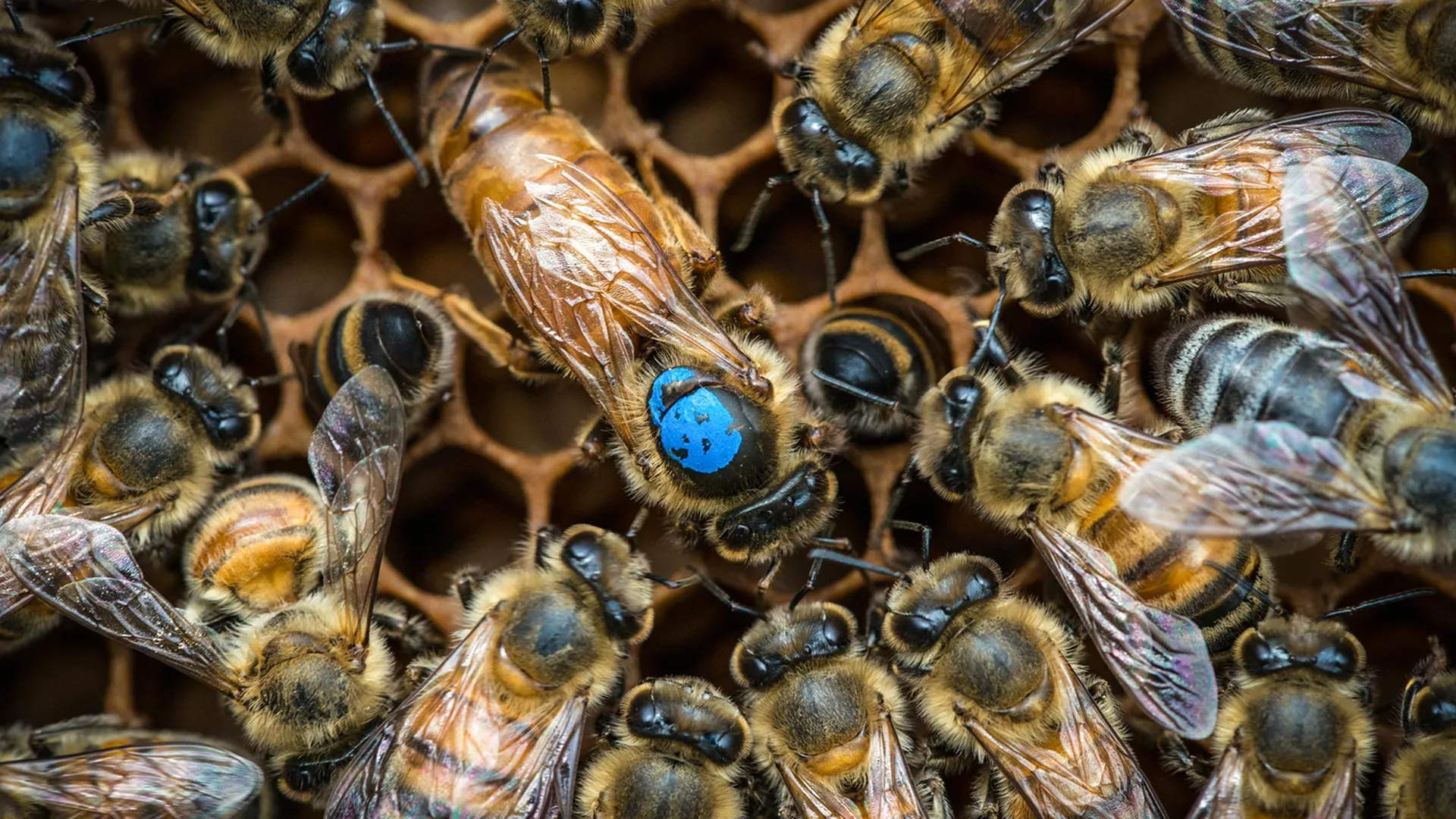
    Scientists have identified brain circuits that help worker bees decide what tasks to perform within the colony. Biologists from the Heinrich-Heine University (HHU) in Düsseldorf and the universities in Cologne and Frankfurt/Main have discovered that they can change the behavior of honeybees by manipulating specific genes and selectively reducing the activity of specific neural circuits.

    Research results published in scientific journals Proceedings of the National Academy of Sciences (PNAS), provides new insights into how colonies organize their workforces without leaders assigning tasks.

    How do bees divide work without a leader?

    The success of a community depends on its members completing the right tasks at the right time. Humans can discuss and purposefully allocate responsibilities, but bee colonies have no central planner. Even so, bees (Western honey bee) Divide the work with amazing efficiency.

    A worker bee’s responsibilities usually change as it grows. Young worker bees take care of the queen and the developing larvae. They then help build and maintain the nest and protect it from threats. Only in the final stage of life do they leave the colony in search of food.

    These behavioral changes are directed by interactions between about 1 million neurons in the honey bee’s brain. But until now, scientists didn’t understand how the nervous system shifts from one task to another as we age.

    Genes related to worker bee behavior

    Important clues emerged from early research by a team at HHU led by Professor Martin Bay of the Institute of Evolutionary Genetics. Scientists were studying a gene known as double sex when they observed an unusual behavioral change.

    Once the genes in the older workers died down, the bees began caring for the queen again. This responsibility is usually reserved for young bees, suggesting that double sex plays an important role in controlling age-related labor behavior.

    Because the double-sex gene only functions within specific neural circuits, the discovery gives Bay’s team, along with researchers from the University of Cologne and the University of Frankfurt/Main, a way to investigate how specific parts of the honeybee’s brain influence social behavior.

    Scientists switch off specific neural circuits

    Researchers selectively silenced neurons associated with double sex. To accomplish this, they used the gene to produce a protein that suppresses neural activity. Next, by feeding bees with a specific substance, they were able to activate the protein and reduce the activity of only the targeted circuit.

    When these circuits were disrupted, older workers stopped performing the duties expected of them at their age and returned to caring for the queen.

    Dr. Jana Thaler, lead author PNAS The researchers said: “The older workers then resumed caring for the queen, something that would otherwise only be done by young bees. If the circuit was not disturbed, the bees displayed normal age-appropriate behavior. In this way, we were able to control which tasks the workers performed.”

    Neural communication may organize nests

    This result indicates that there is a neural basis for the working organization within honey bee colonies. When activity in certain areas of the brain decreases, other neural circuits become activated, which can lead to different courses of behavior.

    The discovery provides early evidence that communication between neural circuits helps worker bees decide whether to nurse the queen, build or defend a nest, or forage for food.

    Professor Bey concludes: “The ability to control social behavior in bees offers us new opportunities to explore the innate behavioral diversity and basis of social cooperation. The solution to the secrets of how bees and other animals successfully cooperate without a blueprint for their work is likely hidden in the brain’s neural circuits.”


    Source link

    Visited 2 times, 2 visit(s) today
    Share. Facebook Twitter Pinterest LinkedIn Telegram Reddit Email
    Previous ArticleTiny vesicles in breast milk transmit stress signals to infants’ brains
    healthadmin

    Related Posts

    Strange quantum effect dramatically increases energy transfer

    July 22, 2026

    Colorectal cancer warning signs young people should never ignore

    July 22, 2026

    Lab-grown mini-brains could predict which Alzheimer’s treatments will work

    July 22, 2026

    Ancient ferns turned Triassic Europe into a wildfire hell

    July 22, 2026

    Scientists bring back powerful antibiotics defeated by superbugs

    July 22, 2026

    MIT’s new LiDAR chip could give self-driving cars a wider field of view

    July 22, 2026
    Add A Comment
    Leave A Reply Cancel Reply

    Categories

    • Daily Health Tips
    • Discover
    • Environmental Health
    • Exercise & Fitness
    • Featured
    • Featured Videos
    • Financial Health & Stability
    • Fitness
    • Fitness Updates
    • Health
    • Health Technology
    • Healthy Aging
    • Healthy Living
    • Holistic Healing
    • Holistic Health & Wellness
    • Medical Research
    • Medical Research & Insights
    • Mental Health
    • Mental Wellness
    • Natural Remedies
    • New Workouts
    • Nutrition
    • Nutrition & Dietary Trends
    • Nutrition & Superfoods
    • Nutrition Science
    • Pharma
    • Preventive Healthcare
    • Professional & Personal Growth
    • Public Health
    • Public Health & Awareness
    • Selected
    • Sleep & Recovery
    • Top Programs
    • Weight Management
    • Workouts
    Popular Posts
    • 1773313737_bacteria_-_Sebastian_Kaulitzki_46826fb7971649bfaca04a9b4cef3309-620x480.jpgHow Sino Biological ProPure™ redefines ultra-low… March 12, 2026
    • pexels-david-bartus-442116The food industry needs to act now to cut greenhouse… January 2, 2022
    • 1773729862_TagImage-3347-458389964760995353448-620x480.jpgDespite safety concerns, parents underestimate the… March 17, 2026
    • 1773209206_futuristic_techno_design_on_background_of_supercomputer_data_center_-_Image_-_Timofeev_Vladimir_M1_4.jpegMulti-agent AI systems outperform single models… March 11, 2026
    • 1774403998_image_28620e4b6b0047f7ab9154b41d739db1-620x480.jpgGait pattern helps distinguish between Lewy body… March 24, 2026
    • Leukemia-620x480.jpgBiomimetic platform powers CAR T therapy for… March 9, 2026

    Demo
    Stay In Touch
    • Facebook
    • Twitter
    • Pinterest
    • Instagram
    • YouTube
    • Vimeo
    Don't Miss

    Scientists discover hidden brain switch that assigns tasks to bees

    By healthadminJuly 23, 2026

    Scientists have identified brain circuits that help worker bees decide what tasks to perform within…

    Tiny vesicles in breast milk transmit stress signals to infants’ brains

    July 23, 2026

    Scientists discover how strengthening protective proteins can stop the spread of toxic tau in the brain

    July 22, 2026

    Study supports trial of Merck’s Ebola vaccine ‘Elvevo’ in Congo outbreak

    July 22, 2026

    Subscribe to Updates

    Get the latest creative news from SmartMag about art & design.

    HealthxMagazine
    HealthxMagazine

    At HealthX Magazine, we are dedicated to empowering entrepreneurs, doctors, chiropractors, healthcare professionals, personal trainers, executives, thought leaders, and anyone striving for optimal health.

    Our Picks

    Study supports trial of Merck’s Ebola vaccine ‘Elvevo’ in Congo outbreak

    July 22, 2026

    How narcissists view social media success is driven by internal expectations, not actual posts.

    July 22, 2026

    Survey finds widespread uncertainty around pregnancy vaccine recommendations

    July 22, 2026
    New Comments
      Facebook X (Twitter) Instagram Pinterest
      • Home
      • Privacy Policy
      • Our Mission
      © 2026 ThemeSphere. Designed by ThemeSphere.

      Type above and press Enter to search. Press Esc to cancel.