

Close Menu

    Subscribe to Updates

    Get the latest creative news from FooBar about art, design and business.

    What's Hot

    Magnetic brain stimulation slows and reduces depression in older adults

    July 21, 2026

    Are AI chatbots a threat to democracy? New study examines their persuasive power

    July 20, 2026

    FDA continues to search for source of Cyclospora outbreak, fast food traffic declines | Status

    July 20, 2026
    Facebook X (Twitter) Instagram
    Facebook X (Twitter) Instagram
    Health Magazine
    • Home
    • Environmental Health
    • Health Technology
    • Medical Research
    • Mental Health
    • Nutrition Science
    • Pharma
    • Public Health
    • Discover
      • Daily Health Tips
      • Financial Health & Stability
      • Holistic Health & Wellness
      • Mental Health
      • Nutrition & Dietary Trends
      • Professional & Personal Growth
    • Our Mission
    Health Magazine
    Home » News » New AI blood test predicts heart disease 15 years early
    Nutrition Science

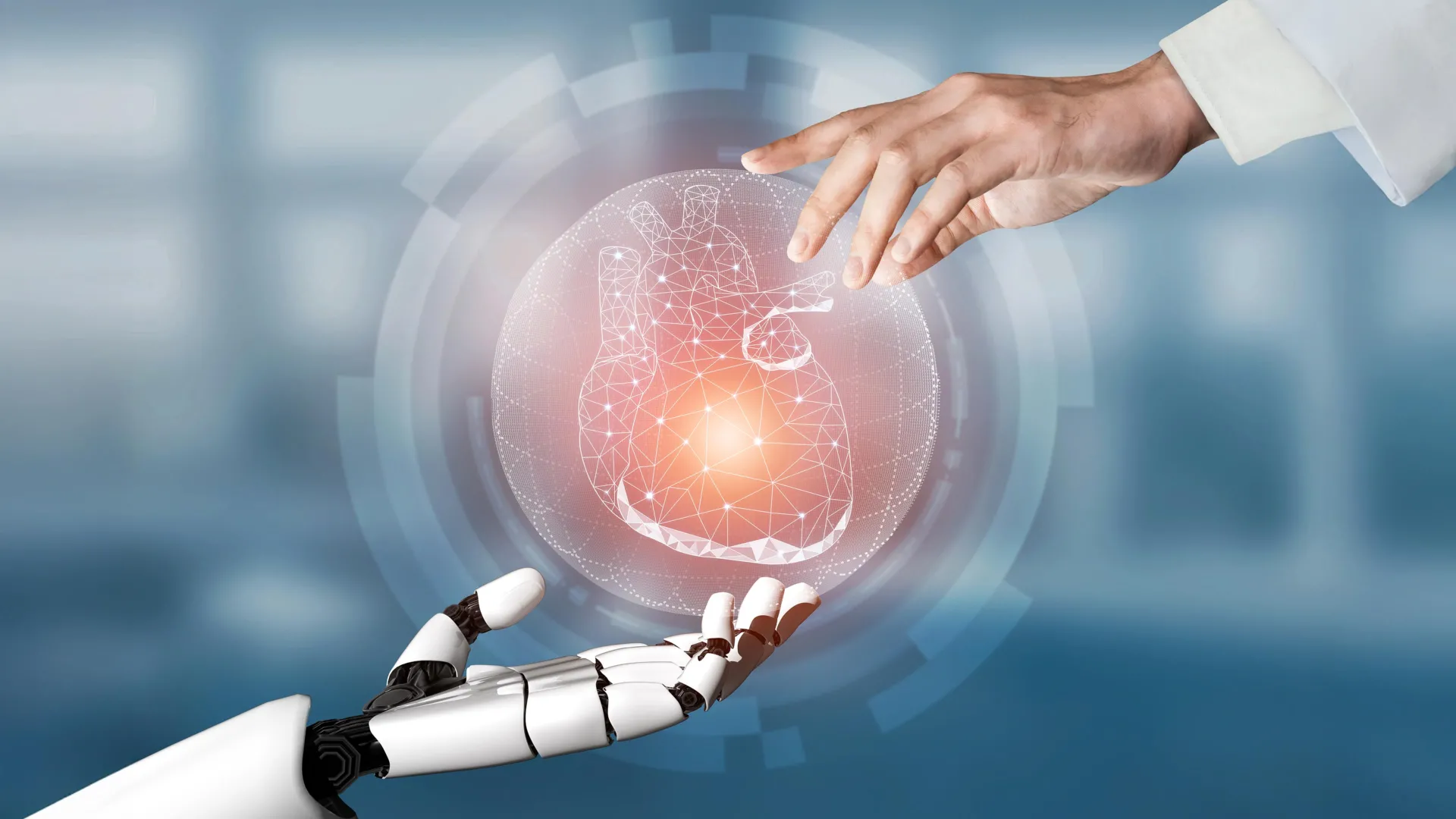
    New AI blood test predicts heart disease 15 years early

    healthadminBy healthadminJuly 19, 2026No Comments4 Mins Read
    New AI blood test predicts heart disease 15 years early
    Share
    Facebook Twitter Reddit Telegram Pinterest Email


    Researchers at the University of Hong Kong’s LKS School of Medicine (HKUMed) have developed an artificial intelligence tool that could help predict serious cardiovascular problems years before symptoms appear.

    The system, known as CardiOmicScore, uses information from a single blood test to estimate a person’s future risk for six major cardiovascular diseases (CVD): coronary artery disease, stroke, heart failure, atrial fibrillation, peripheral artery disease, and venous thromboembolism. The model was able to detect warning signals 15 years before clinical symptoms develop in high-risk people.

    The survey results are nature communications.

    Blood test to understand your current health condition

    Cardiovascular disease remains the leading cause of death worldwide, accounting for approximately 19.8 million deaths in 2022 alone.

    Doctors usually assess cardiovascular risk by testing factors such as age, blood pressure, smoking history, and other standard clinical measurements. Although these indicators are useful, they may not reveal the earliest biological changes occurring in the body before disease becomes apparent.

    As a result, some people may not be identified as being at high risk until the best opportunities for prevention have already begun to narrow.

    Genetic risk testing provides another way to estimate a person’s likelihood of developing a disease. For example, polygenic risk scores combine the effects of many genetic variations into a single measure of genetic risk. However, a person’s genetic makeup is largely fixed at birth.

    This means that genetic scores cannot fully reflect more direct changes caused by diet, exercise, aging, disease, environmental exposures, or other effects on health.

    CardiOmicScore is designed to give you a more up-to-date picture of what’s happening inside your body.

    AI combines thousands of biosignals

    To build this tool, the HKUMed team used deep learning to combine several layers of biological information. This approach is known as multi-omics because it integrates data from different fields of biology, such as genomics, metabolomics, and proteomics.

    Genomics examines genetic information. Proteomics focuses on proteins that perform many important functions in the body. Metabolomics studies small molecules called metabolites that are produced when the body processes food, produces energy, and responds to disease.

    Researchers analyzed large-scale population data from the UK Biobank. Their model examined 2,920 circulating proteins and 168 metabolites measured in blood samples.

    Together, these molecules can provide a detailed snapshot of a person’s current biological state. These may reflect subtle changes in immune activity, metabolism, and vascular health before significant symptoms develop.

    Zhang, an associate professor in the Department of Pharmacology and Pharmacy at HKUMed. Professor Qingpeng said: “Genes determine where we start and define our baseline health risks. But proteins and metabolites are designed to reflect our current physical health. Our AI tools… “It is designed to decipher these complex molecular signals, allowing doctors and patients to identify risks earlier, potentially changing the trajectory of the disease through timely lifestyle modifications and early prevention.”

    Predict 6 cardiovascular diseases

    Results showed that CardiOmicScore can turn complex molecular measurements into personalized estimates of cardiovascular risk.

    This system performed significantly better than traditional polygenic risk scores. When researchers added clinical information such as age and gender, the accuracy improved even more.

    This model was designed to assess the risk of coronary artery disease, stroke, heart failure, atrial fibrillation, peripheral artery disease, and venous thromboembolism.

    Atrial fibrillation is an irregular heartbeat that can increase your risk of stroke and other complications. Peripheral artery disease occurs when blood vessels narrow, reducing circulation to the extremities. Venous thromboembolism refers to a dangerous blood clot that forms in a vein and can travel to the lungs.

    In high-risk individuals, CardiOmicScore can warn of increased cardiovascular risk up to 15 years before symptoms appear.

    From treatment to early prevention

    This research reflects broader changes in precision medicine.

    Traditional genetic approaches yield relatively fixed estimates of genetic risk. Multi-omics tools have the potential to provide more dynamic assessments by tracking biological signals that change over time.

    In the future, it may be possible to use small blood samples to create detailed risk profiles covering multiple cardiovascular diseases at once. This information gives patients and doctors more time to make adjustments such as lifestyle changes, close monitoring, and other preventive measures.

    Professor Chan added: “We aim to leverage technology to identify and prevent diseases before they occur. By moving health management from reactive treatment to proactive prediction and intervention, we aim to create a lasting impact on both public health and individual patient care.”

    About the research team

    The research was led by Professor Zhang Qingpeng, Associate Professor in the School of Pharmacology and Pharmaceutical Sciences at the University of Hong Kong, and the Hong Kong Musketeers Foundation Institute for Data Science (IDS).

    The first author is Luo Yan from HKU IDS.


    Source link

    Visited 6 times, 1 visit(s) today
    Share. Facebook Twitter Pinterest LinkedIn Telegram Reddit Email
    Previous ArticleBipolar disorder risk linked to disruption of daily life due to cannabis
    Next Article New study identifies three types of masturbation habits in romantic relationships
    healthadmin

    Related Posts

    Scientists detect hidden skin damage before it’s visible

    July 20, 2026

    Scientists warn that Earth’s water is quietly becoming oxygen-depleted

    July 20, 2026

    Some dinosaurs can stand up like giants until they get too big

    July 20, 2026

    Advances in Alzheimer’s disease: Scientists restore 2 hours of sleep without removing brain plaques

    July 20, 2026

    Scientists discover protein that protects brain from Alzheimer’s damage

    July 20, 2026

    A problem that was thought to require a quantum computer was solved using a regular laptop.

    July 20, 2026
    Add A Comment
    Leave A Reply Cancel Reply

    Categories

    • Daily Health Tips
    • Discover
    • Environmental Health
    • Exercise & Fitness
    • Featured
    • Featured Videos
    • Financial Health & Stability
    • Fitness
    • Fitness Updates
    • Health
    • Health Technology
    • Healthy Aging
    • Healthy Living
    • Holistic Healing
    • Holistic Health & Wellness
    • Medical Research
    • Medical Research & Insights
    • Mental Health
    • Mental Wellness
    • Natural Remedies
    • New Workouts
    • Nutrition
    • Nutrition & Dietary Trends
    • Nutrition & Superfoods
    • Nutrition Science
    • Pharma
    • Preventive Healthcare
    • Professional & Personal Growth
    • Public Health
    • Public Health & Awareness
    • Selected
    • Sleep & Recovery
    • Top Programs
    • Weight Management
    • Workouts
    Popular Posts
    • 1773313737_bacteria_-_Sebastian_Kaulitzki_46826fb7971649bfaca04a9b4cef3309-620x480.jpgHow Sino Biological ProPure™ redefines ultra-low… March 12, 2026
    • pexels-david-bartus-442116The food industry needs to act now to cut greenhouse… January 2, 2022
    • 1773729862_TagImage-3347-458389964760995353448-620x480.jpgDespite safety concerns, parents underestimate the… March 17, 2026
    • 1773209206_futuristic_techno_design_on_background_of_supercomputer_data_center_-_Image_-_Timofeev_Vladimir_M1_4.jpegMulti-agent AI systems outperform single models… March 11, 2026
    • 1774403998_image_28620e4b6b0047f7ab9154b41d739db1-620x480.jpgGait pattern helps distinguish between Lewy body… March 24, 2026
    • Leukemia-620x480.jpgBiomimetic platform powers CAR T therapy for… March 9, 2026

    Demo
    Stay In Touch
    • Facebook
    • Twitter
    • Pinterest
    • Instagram
    • YouTube
    • Vimeo
    Don't Miss

    Magnetic brain stimulation slows and reduces depression in older adults

    By healthadminJuly 21, 2026

    Older adults suffering from persistent depression may find relief from symptoms with rapid magnetic brain…

    Are AI chatbots a threat to democracy? New study examines their persuasive power

    July 20, 2026

    FDA continues to search for source of Cyclospora outbreak, fast food traffic declines | Status

    July 20, 2026

    Scientists discover hidden cellular network that promotes rapid intestinal regeneration

    July 20, 2026

    Subscribe to Updates

    Get the latest creative news from SmartMag about art & design.

    HealthxMagazine
    HealthxMagazine

    At HealthX Magazine, we are dedicated to empowering entrepreneurs, doctors, chiropractors, healthcare professionals, personal trainers, executives, thought leaders, and anyone striving for optimal health.

    Our Picks

    Scientists discover hidden cellular network that promotes rapid intestinal regeneration

    July 20, 2026

    Gentle electroacupuncture effectively promotes nerve repair in facial paralysis

    July 20, 2026

    Rising antimicrobial resistance in children threatens the effectiveness of life-saving antibiotics

    July 20, 2026
    New Comments
      Facebook X (Twitter) Instagram Pinterest
      • Home
      • Privacy Policy
      • Our Mission
      © 2026 ThemeSphere. Designed by ThemeSphere.

      Type above and press Enter to search. Press Esc to cancel.