

Close Menu

    Subscribe to Updates

    Get the latest creative news from FooBar about art, design and business.

    What's Hot

    Schwartz and Kaufman face Senate vaccine issue: Key points

    July 15, 2026

    Skeletal ‘gatekeepers’ hidden inside brain cells may help fight Alzheimer’s disease

    July 15, 2026

    Diagnosis of Alzheimer’s disease could soon become more accessible and informative

    July 15, 2026
    Facebook X (Twitter) Instagram
    Facebook X (Twitter) Instagram
    Health Magazine
    • Home
    • Environmental Health
    • Health Technology
    • Medical Research
    • Mental Health
    • Nutrition Science
    • Pharma
    • Public Health
    • Discover
      • Daily Health Tips
      • Financial Health & Stability
      • Holistic Health & Wellness
      • Mental Health
      • Nutrition & Dietary Trends
      • Professional & Personal Growth
    • Our Mission
    Health Magazine
    Home » News » Breakthrough provides access to coding for over 40,000 visually impaired children
    Discover

    Breakthrough provides access to coding for over 40,000 visually impaired children

    healthadminBy healthadminJuly 15, 2026No Comments4 Mins Read
    Breakthrough provides access to coding for over 40,000 visually impaired children
    Share
    Facebook Twitter Reddit Telegram Pinterest Email


    For the first time, 41,506 blind and visually impaired children in the UK could benefit from a breakthrough that gives them access to block coding.
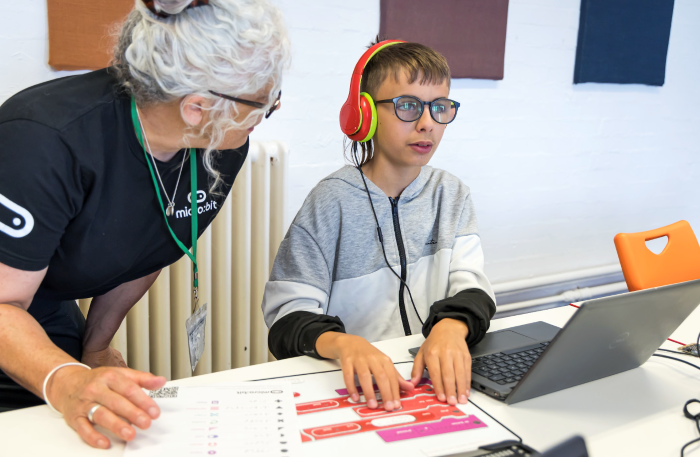

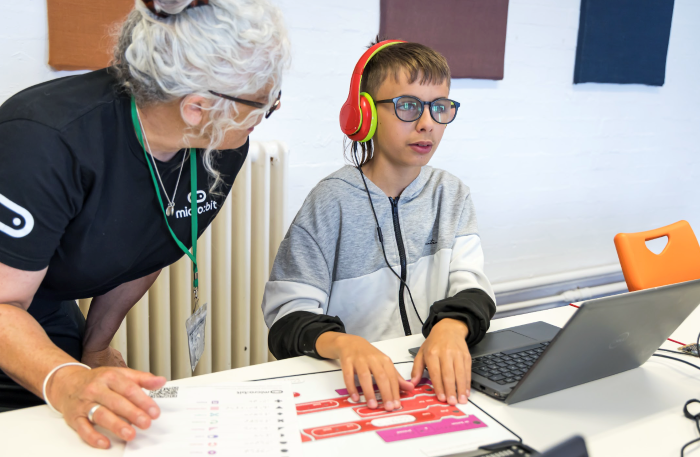
    Zach Herbert, a 14-year-old student at New Worcester College in Worcester; Image credit: Micro:bit Educational Foundation

    Today, Microsoft MakeCode launches new screen reader compatibility, removing a barrier that has long prevented many students who are blind or have low vision from participating in block-based coding with their classmates. Developed in partnership with the Micro:bit Educational Foundation and the Raspberry Pi Foundation’s Blockly team, this new feature is supported by classroom resources to help teachers bring coding to more kids.

    The technology was co-designed with children and young people aged 8 to 18 who are blind or have low vision, as well as their supporting teachers and experts in the field. Their feedback shaped every stage of development and helped create solutions that reflected the real-life barriers some young people face in the classroom. With input from people in the UK, Europe and the US, this technology will make coding more accessible to future generations of learners around the world.

    The accessibility improvements being developed within Blockly, the technology behind many of the world’s most widely used coding platforms, could have an impact far beyond Microsoft MakeCode. This is a major step toward making mainstream coding tools accessible to visually impaired learners.

    For Zach Herbert, a 14-year-old student at New Worcester College in Worcester, the impact was life-changing. he said: “I didn’t actually take any computer science classes until seventh grade.”

    Before new accessibility features were introduced, Zach was often unable to participate in the same computing science classes as his classmates because he did not have access to existing coding platforms. Instead, he was taught individually or given alternative activities. He can now code independently with his colleagues using MakeCode and the micro:bit.

    He added: “It’s amazing what you accomplished. You didn’t have to rely on anyone else’s help to do it, you didn’t have to rely on a sighted person to do it. It’s your work. It’s your masterpiece.”

    Another student at the school, Thomas Robb, 12, said technology has allowed him to move from contributing ideas to creating projects himself.

    he said: “Before, my friends and I used Scratch, but we had never coded. I was creating ideas and sounds. Without a screen reader, I wouldn’t have been able to use the micro:bit.”

    All children, regardless of ability, should have the opportunity to create with technology. For too long, many visually impaired youth have faced barriers to accessing the same coding experiences as their peers. By working directly with the most affected youth, we have created a solution that removes some of those barriers and gives more children the opportunity to learn, create, and build confidence through computing. We hope this is just the beginning of a bigger change to make coding accessible to future generations of learners around the world. ”

    Lucy Gill, Head of Product, Micro:bit Educational Foundation

    Jacqueline Russell, Product Manager at Microsoft, added: “This has truly been a highly collaborative project between the Micro:bit Educational Foundation, Blockly, and our team, with input and feedback from our users driving our progress throughout. I’m very proud of this milestone; it means we’ve transformed what was a purely visual, mouse-centric user interface into a fully accessible tool for all students to learn computing.”

    The BBC micro:bit is used by over 70 million children in 85 countries, making it one of the most widely adopted educational technologies in the world. The new screen reader developed with Blockly allows this breakthrough technology to be adopted by other coding platforms, extending its impact far beyond the micro:bit and allowing even more children to benefit from accessible coding.

    This announcement marks just one step in the Micro:bit Educational Foundation’s ambition to make technology accessible to all children. From expanding accessibility for children who are deaf and hard of hearing, with fine motor impairments and who are neurodiverse, to developing new learning resources and collaborating with local translators to increase global access, the Foundation continues to work with its funding partners to break down barriers for the next generation of learners and creators.

    sauce:

    Microbit Education Foundation


    Source link

    Visited 2 times, 2 visit(s) today
    Share. Facebook Twitter Pinterest LinkedIn Telegram Reddit Email
    Previous ArticleStudy reveals prognostic value of blood test to predict risk of cognitive impairment
    Next Article Improve your UV-Vis testing experience
    healthadmin

    Related Posts

    Immunology Leadership: AbbVie’s $10.9 Billion Apogy Acquisition

    July 15, 2026

    Transforming the life sciences workforce for AI integration

    July 15, 2026

    European Early Access Program Management Strategy

    July 15, 2026

    Improve your UV-Vis testing experience

    July 15, 2026

    Study reveals prognostic value of blood test to predict risk of cognitive impairment

    July 15, 2026

    More than 50 million Americans lack access to local radiation cancer treatment

    July 15, 2026
    Add A Comment
    Leave A Reply Cancel Reply

    Categories

    • Daily Health Tips
    • Discover
    • Environmental Health
    • Exercise & Fitness
    • Featured
    • Featured Videos
    • Financial Health & Stability
    • Fitness
    • Fitness Updates
    • Health
    • Health Technology
    • Healthy Aging
    • Healthy Living
    • Holistic Healing
    • Holistic Health & Wellness
    • Medical Research
    • Medical Research & Insights
    • Mental Health
    • Mental Wellness
    • Natural Remedies
    • New Workouts
    • Nutrition
    • Nutrition & Dietary Trends
    • Nutrition & Superfoods
    • Nutrition Science
    • Pharma
    • Preventive Healthcare
    • Professional & Personal Growth
    • Public Health
    • Public Health & Awareness
    • Selected
    • Sleep & Recovery
    • Top Programs
    • Weight Management
    • Workouts
    Popular Posts
    • 1773313737_bacteria_-_Sebastian_Kaulitzki_46826fb7971649bfaca04a9b4cef3309-620x480.jpgHow Sino Biological ProPure™ redefines ultra-low… March 12, 2026
    • pexels-david-bartus-442116The food industry needs to act now to cut greenhouse… January 2, 2022
    • 1773729862_TagImage-3347-458389964760995353448-620x480.jpgDespite safety concerns, parents underestimate the… March 17, 2026
    • 1773209206_futuristic_techno_design_on_background_of_supercomputer_data_center_-_Image_-_Timofeev_Vladimir_M1_4.jpegMulti-agent AI systems outperform single models… March 11, 2026
    • 1774403998_image_28620e4b6b0047f7ab9154b41d739db1-620x480.jpgGait pattern helps distinguish between Lewy body… March 24, 2026
    • Leukemia-620x480.jpgBiomimetic platform powers CAR T therapy for… March 9, 2026

    Demo
    Stay In Touch
    • Facebook
    • Twitter
    • Pinterest
    • Instagram
    • YouTube
    • Vimeo
    Don't Miss

    Schwartz and Kaufman face Senate vaccine issue: Key points

    By healthadminJuly 15, 2026

    The fate of two top health officials hung in the balance during Wednesday’s Senate hearing,…

    Skeletal ‘gatekeepers’ hidden inside brain cells may help fight Alzheimer’s disease

    July 15, 2026

    Diagnosis of Alzheimer’s disease could soon become more accessible and informative

    July 15, 2026

    High exposure to fluoride destroys brain cell structure in laboratory mice

    July 15, 2026

    Subscribe to Updates

    Get the latest creative news from SmartMag about art & design.

    HealthxMagazine
    HealthxMagazine

    At HealthX Magazine, we are dedicated to empowering entrepreneurs, doctors, chiropractors, healthcare professionals, personal trainers, executives, thought leaders, and anyone striving for optimal health.

    Our Picks

    High exposure to fluoride destroys brain cell structure in laboratory mice

    July 15, 2026

    Cassidy presses presidential candidate Trump over vaccine contradictions

    July 15, 2026

    The Black Sea turns a vibrant turquoise color, photographed from space by NASA

    July 15, 2026
    New Comments
      Facebook X (Twitter) Instagram Pinterest
      • Home
      • Privacy Policy
      • Our Mission
      © 2026 ThemeSphere. Designed by ThemeSphere.

      Type above and press Enter to search. Press Esc to cancel.