

Close Menu

    Subscribe to Updates

    Get the latest creative news from FooBar about art, design and business.

    What's Hot

    Exercise doesn’t just strengthen your heart. rewire it

    July 14, 2026

    Yale scientists discover hidden networks in our eyes

    July 14, 2026

    How LSD rewires brain circuits and blurs the line between perception and thought

    July 13, 2026
    Facebook X (Twitter) Instagram
    Facebook X (Twitter) Instagram
    Health Magazine
    • Home
    • Environmental Health
    • Health Technology
    • Medical Research
    • Mental Health
    • Nutrition Science
    • Pharma
    • Public Health
    • Discover
      • Daily Health Tips
      • Financial Health & Stability
      • Holistic Health & Wellness
      • Mental Health
      • Nutrition & Dietary Trends
      • Professional & Personal Growth
    • Our Mission
    Health Magazine
    Home » News » Imaging technology reveals how copper imbalance contributes to neurodegenerative diseases
    Discover

    Imaging technology reveals how copper imbalance contributes to neurodegenerative diseases

    healthadminBy healthadminJuly 13, 2026No Comments3 Mins Read
    Imaging technology reveals how copper imbalance contributes to neurodegenerative diseases
    Share
    Facebook Twitter Reddit Telegram Pinterest Email


    Chemists at the University of Houston are using breakthrough imaging techniques to reveal how copper imbalances in the body contribute to neurodegenerative diseases such as Alzheimer’s disease, Parkinson’s disease, and ALS.

    Although the root causes of these incurable diseases remain largely unknown and existing drugs only manage symptoms, researchers have long linked copper imbalances within neurons to severe neurological disorders. Tai Yen Chen, an associate professor of chemistry at the University of California, hopes to pinpoint malfunctioning cellular pathways, providing the foundational knowledge needed to develop future treatments and guide therapeutic strategies.

    Over the past decade, Chen’s lab has secured more than $4 million to investigate how copper regulation supports healthy brain development. His latest funding came in the form of a $2.16 million grant from the National Institute of General Medicine, part of the National Institutes of Health.

    This five-year grant renewal follows an approximately $1.9 million National Institute of General Medical Sciences grant awarded in 2019 that supported Chen’s initial findings on cellular copper homeostasis. The recently published nature communications, This discovery challenges long-held views about how the critical transport protein CTR1 functions and raises new questions about how copper regulation affects cell function and development.

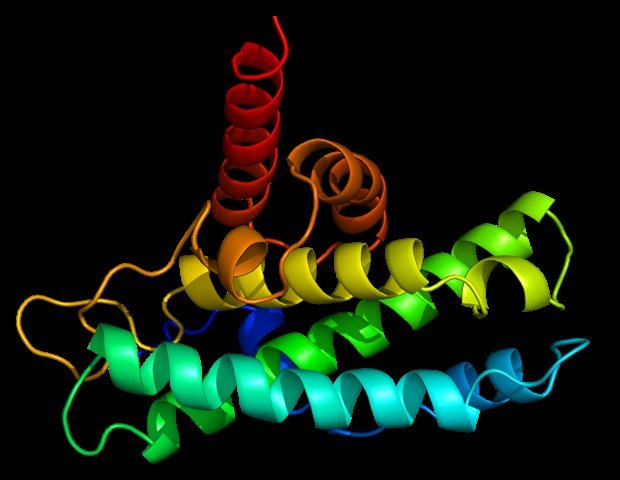
    We discovered that a protein called CTR1, which takes copper into cells, is much more dynamic than scientists previously thought. We found that when copper levels get too high, CTR1 changes its structure to reduce copper uptake. This appears to be an important mechanism cells use to maintain healthy copper levels. ”

    Tai-Yen Chen, Associate Professor of Chemistry, University of Houston

    The new grant will allow Chen’s team to investigate how this regulatory behavior of copper is related to signaling in human neurons and how disruption of this process contributes to neurodegenerative diseases.

    Using advanced imaging tools developed in Chen’s lab, the team is able to observe and measure individual CTR1 protein complexes within individual cells. This allows researchers to see cell-by-cell differences and detect rare protein behaviors that might be hidden if only large groups of cells are measured at a time.

    Traditional biochemical methods are powerful at measuring global trends, but typically report average signals from many cells and many proteins. This averaging can make it difficult to see small differences between individual cells, abnormal protein behavior, or short-term events that may be important in disease.

    Chen’s single-molecule approach allows for a detailed look at how individual proteins behave in living cells, giving researchers a more detailed perspective on the regulation of copper. This approach could ultimately help scientists study other diseases and biological processes in which rare molecular events and differences between individual cells play important roles.

    “Some neurological diseases have remained largely unanswered until now because there have been no effective approaches to answering these complex questions,” Chen said. “Our unique imaging approach allows us to ask new questions quantitatively, providing insights and advancing the field.”

    sauce:

    Reference magazines:

    Wen, M.-H. others. (2025). Elevated intracellular copper induces CTR1 monomerization and prevents copper uptake. nature communications. DOI: 10.1038/s41467-025-66283-w. https://www.nature.com/articles/s41467-025-66283-w


    Source link

    Visited 2 times, 2 visit(s) today
    Share. Facebook Twitter Pinterest LinkedIn Telegram Reddit Email
    Previous ArticleNew consensus provides updated guidance for management of prolactinoma tumors
    Next Article Study links chronic xanthan gum intake to colon inflammation
    healthadmin

    Related Posts

    Bariatric surgery is safe and effective for obese youth and young adults

    July 13, 2026

    New study reveals why teens with autism struggle with unfamiliar voices

    July 13, 2026

    Study links chronic xanthan gum intake to colon inflammation

    July 13, 2026

    New consensus provides updated guidance for management of prolactinoma tumors

    July 13, 2026

    Visual protocols fail to detect serious water quality problems

    July 13, 2026

    Novogene Europe launches untargeted metabolomics services at Cambridge Omics Center

    July 13, 2026
    Add A Comment
    Leave A Reply Cancel Reply

    Categories

    • Daily Health Tips
    • Discover
    • Environmental Health
    • Exercise & Fitness
    • Featured
    • Featured Videos
    • Financial Health & Stability
    • Fitness
    • Fitness Updates
    • Health
    • Health Technology
    • Healthy Aging
    • Healthy Living
    • Holistic Healing
    • Holistic Health & Wellness
    • Medical Research
    • Medical Research & Insights
    • Mental Health
    • Mental Wellness
    • Natural Remedies
    • New Workouts
    • Nutrition
    • Nutrition & Dietary Trends
    • Nutrition & Superfoods
    • Nutrition Science
    • Pharma
    • Preventive Healthcare
    • Professional & Personal Growth
    • Public Health
    • Public Health & Awareness
    • Selected
    • Sleep & Recovery
    • Top Programs
    • Weight Management
    • Workouts
    Popular Posts
    • 1773313737_bacteria_-_Sebastian_Kaulitzki_46826fb7971649bfaca04a9b4cef3309-620x480.jpgHow Sino Biological ProPure™ redefines ultra-low… March 12, 2026
    • pexels-david-bartus-442116The food industry needs to act now to cut greenhouse… January 2, 2022
    • 1773729862_TagImage-3347-458389964760995353448-620x480.jpgDespite safety concerns, parents underestimate the… March 17, 2026
    • 1773209206_futuristic_techno_design_on_background_of_supercomputer_data_center_-_Image_-_Timofeev_Vladimir_M1_4.jpegMulti-agent AI systems outperform single models… March 11, 2026
    • 1774403998_image_28620e4b6b0047f7ab9154b41d739db1-620x480.jpgGait pattern helps distinguish between Lewy body… March 24, 2026
    • Leukemia-620x480.jpgBiomimetic platform powers CAR T therapy for… March 9, 2026

    Demo
    Stay In Touch
    • Facebook
    • Twitter
    • Pinterest
    • Instagram
    • YouTube
    • Vimeo
    Don't Miss

    Exercise doesn’t just strengthen your heart. rewire it

    By healthadminJuly 14, 2026

    Regular exercise may benefit your heart in ways that scientists are only beginning to understand.…

    Yale scientists discover hidden networks in our eyes

    July 14, 2026

    How LSD rewires brain circuits and blurs the line between perception and thought

    July 13, 2026

    Bariatric surgery is safe and effective for obese youth and young adults

    July 13, 2026

    Subscribe to Updates

    Get the latest creative news from SmartMag about art & design.

    HealthxMagazine
    HealthxMagazine

    At HealthX Magazine, we are dedicated to empowering entrepreneurs, doctors, chiropractors, healthcare professionals, personal trainers, executives, thought leaders, and anyone striving for optimal health.

    Our Picks

    Bariatric surgery is safe and effective for obese youth and young adults

    July 13, 2026

    New study reveals why teens with autism struggle with unfamiliar voices

    July 13, 2026

    How controlling an AI’s personality changes the way it interacts with other AIs

    July 13, 2026
    New Comments
      Facebook X (Twitter) Instagram Pinterest
      • Home
      • Privacy Policy
      • Our Mission
      © 2026 ThemeSphere. Designed by ThemeSphere.

      Type above and press Enter to search. Press Esc to cancel.