


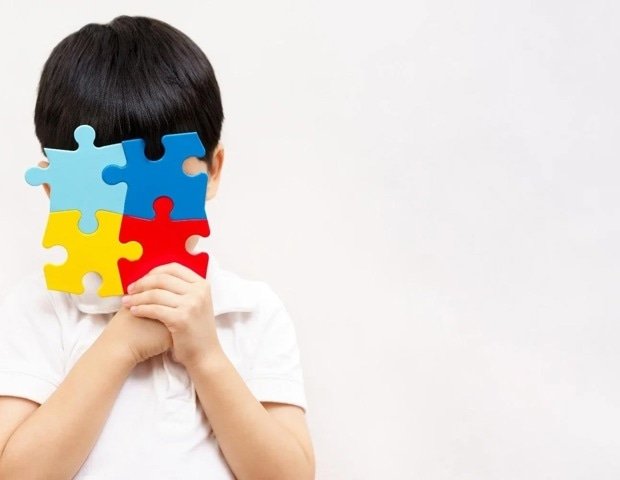
Like other teens, many teens on the autism spectrum are looking to improve their social skills. They want new friends, fun with people with similar interests, and even romantic relationships.
Adolescence is a moment of opportunity for these children. They want to build friendships. ”
Dr. Daniel Abrams, Clinical Associate Professor of Psychiatry and Behavioral Sciences, Stanford University
However, it is difficult for autistic teens to spread their social wings. A new study led by Stanford Medicine was published on July 13th. Proceedings of the National Academy of Sciencessheds light on key factors in how the brains of teenagers with autism process the sounds of unfamiliar voices. Unlike neurotypical teens, the reward centers in the brains of teens with autism become increasingly unresponsive to stranger voices as they grow older, the study found.
“Nervous teens are much more aware of their social world, and attuning to new voices is important for forging new social connections,” said Abrams, who led the new study and a 2022 study on neurotypical teens’ responses to voices.
“Our findings indicate that for some children with autism, adolescence is a time when the brain is less responsive to unfamiliar audio stimuli,” Abrams said. “Their brains did not show an increased ability to respond to new voices like neurotypical children.”
The study’s senior authors are Rachel L. Nichols, PhD, and Vinod Menon, PhD, Walter F. Nichols Professor of Psychiatry and Behavioral Sciences.
“We tend to think of autism in terms of differences in how the brain works, but we don’t know enough about how those differences develop with age,” Menon says. “The way the brain attends to socially relevant information is reshaped throughout adolescence, but the developmental process appears to follow a different course in autism.”
Previous research has shown that young children with autism are less accustomed to voices than their peers. Once they reach adolescence, some teens with autism show no change in vocal involvement, but those with the most severe autism symptoms are even less involved than younger children.
The researchers also looked at how the teens’ brains responded to their mothers’ voices. For neurotypical teens, the mother’s voice is still very rewarding, but as the adolescent matures, the unfamiliar voice becomes increasingly appealing. In contrast, teens with autism become increasingly attuned to their mothers’ voices, and this pattern is most pronounced in teens with the most severe autism symptoms.
important social sounds
The voices of those around us, such as friends, family, and even strangers, are important signals in human emotional bonding. (Think of the happiness you feel when hearing the voice of a loved one for the first time in a long time, or the comfort of hearing the sympathetic voice of a friend when you are grieving.)
“Voices provide a very important set of cues that help us feel connected to the people we know and love,” Abrams said. “But from the earliest stages of development, children with autism have trouble tuning into the vocal world.”
Autism is a developmental disorder that affects 1 in 31 children and is characterized by social difficulties such as limited interests, repetitive behaviors, and sensory abnormalities, as well as skills such as understanding speech, interpreting facial expressions, and maintaining eye contact. This condition is widespread and affects some people much more than others.
A young child’s failure to respond to the sounds of his or her name may be an early clue that he or she has autism. Previous research by Abrams’ team has also shown that children with autism, ages 7 to 12, have difficulty picking up emotional cues in people’s voices.
But no one had studied how the brain’s response to sounds changes in adolescents with autism.
“Autism changes throughout the lifespan. It’s not one thing,” Abrams said. “Autism is expressed differently in younger children than in older children and teens.”
He added that understanding how autism manifests in teenagers could open up new opportunities for treatments tailored to this stage of life.
Familiar and unfamiliar voices
Researchers studied 79 children and teens between the ages of 7 and 17. This group included 39 participants with autism spectrum disorder and 40 neurotypical participants matched in age, gender, and IQ to those with autism.
Study participants listened to three short recordings while their brain activity was recorded by a functional magnetic resonance imaging scanner. One is the nonsense words spoken by his mother, such as “Kibdishorto.” The same nonsense words said by two unknown women. It also includes non-audio environmental sounds, such as the sound of a dishwasher running. (In the audio recordings, nonsense words were used to avoid stimulating the parts of the brain that respond to word meanings.) The researchers analyzed how the brains of young people with and without autism responded to each type of sound, and how that response changed with age.
The study provides some insight into how the adolescent brains of people with autism process sounds, Abrams said.
Researchers found that the involvement of “social” brain centers differed depending on whether an individual had autism. In neurotypical teens, the brain’s reward centers and areas of the brain that focus on salience (which directs attention) respond more strongly to voices as teens get older. In teens with autism, reward and salience centers were not more responsive to sounds, and in some older adults, these brain regions were even less responsive to sounds than in younger children with autism.
The study also found that autistic teens were more likely to tune in to their mothers’ voices than to unfamiliar voices, the opposite of neurotypical teens.
The more their social skills were impaired, the more their brains preferred their mother’s voice.
“We found a strong pattern in which neurotypical children were more attuned to unfamiliar voices during adolescence than to their mothers’ voices,” Abrams said. “They are looking at new social partners.”
However, children with autism “were less attuned to unfamiliar voices during adolescence and more attuned to their mother’s voice than they were when they were younger. We believe this pattern reflects the social communication challenges faced by many young people with autism,” he said.
New possibilities for treatment
The findings suggest new possibilities for autism treatments tailored to the characteristics of teenage brains, Abrams said.
“Treatments for autism often focus on much younger children, and there are far fewer options for adolescents,” he said, adding that early intervention focused on preschoolers remains very important, but teenagers should not be ignored.
“We know that everyone’s brain remains plastic and develops throughout adolescence,” he says. “There’s no question that adolescence is a golden opportunity, especially for teens with autism who are keen to build social connections. We hope that the field can translate our expanding knowledge of the brain into more effective interventions.”
Researchers from the University of Zurich and ETH Zurich contributed to the study. This research was funded by the National Institutes of Health (grant K01MH102428), the Brain and Behavioral Research Foundation, the Swiss National Science Foundation, and anonymous philanthropic donations.
sauce:
Reference magazines:
Abrams, D.A. others. (2026) Differences in the development of vocal reward circuitry distinguish autistic from neurotypical children and adolescents. Proceedings of the National Academy of Sciences. DOI: 10.1073/pnas.2601227123. https://www.pnas.org/doi/10.1073/pnas.2601227123
