


Recent research published in journals neuropsychology Our results suggest that greater physical organization in six specific areas of the brain predicts better working memory in middle-aged and older adults. These findings provide evidence that preserving brain structure as we age supports our ability to temporarily retain and manipulate information. This knowledge may ultimately lead to new strategies to slow cognitive decline in aging populations.
Working memory is a mental workspace that allows people to temporarily store and process information. People rely on this cognitive skill for everyday tasks such as decision-making, learning new things, reading comprehension, and mental arithmetic. However, this mental ability tends to decline in later life.
“Working memory is a fundamental cognitive function that we rely on every day, from following conversations to planning tasks and making decisions,” said study author Sarah Ellen Carnemola, a graduate student in psychology at Charles Sturt University.
During healthy aging, physical changes in the brain often occur before you notice any apparent memory loss. Finding a link between the physical size of certain brain regions and memory ability could help experts identify who is most at risk for cognitive decline. This could also be a target for treatments designed to protect the aging brain.
“Given that it naturally declines with age, we wanted to explore the theme of working memory in aging to better understand the brain regions that support this important cognitive function,” Carnemola said. “Understanding the neurological underpinnings of working memory is becoming increasingly important as the global population ages and neurological and psychiatric conditions that affect working memory, such as ADHD and dementia, become increasingly common.” By identifying the brain structures involved, the authors hope to contribute to future research aimed at improving the quality of life for people with memory impairment.
To measure working memory, experts often use digit span tasks. In this traditional test, a person is given a series of numbers and must repeat them. The reverse version of this test requires you to mentally reverse the order of the numbers. This requires extra mental effort and active manipulation skills.
Psychologists generally believe that working memory is made up of several separate parts. One part processes visual and spatial information and acts like a sketchpad for the mind. Another part processes verbal and auditory information and functions like a mental recording loop. A global executive system controls attention and coordinates these two memory areas to manage goal-directed behavior.
Previous studies that have looked at the brain anatomy behind these skills have often relied on very small numbers of people or individuals with severe brain injuries. Many previous projects also failed to account for external factors that influence brain size, such as a person’s age, biological sex, years of education, and overall head size. To address these gaps, the authors wanted to test these relationships in a large, healthy population using advanced brain scans.
To conduct the study, scientists analyzed data from the UK Biobank, a large health database in the United Kingdom. The final sample included 30,640 healthy adults aged 51 to 80 years. Each participant completed a computerized memory assessment called the Numerical Memory Test.
In this visual test, a series of numbers appeared on the screen and disappeared after 3 seconds. Participants then had to enter the numbers in reverse order using a digital keypad. As the test progressed, the sequences became longer and more difficult, up to 12 digits. The test was terminated if there were too many consecutive mistakes.
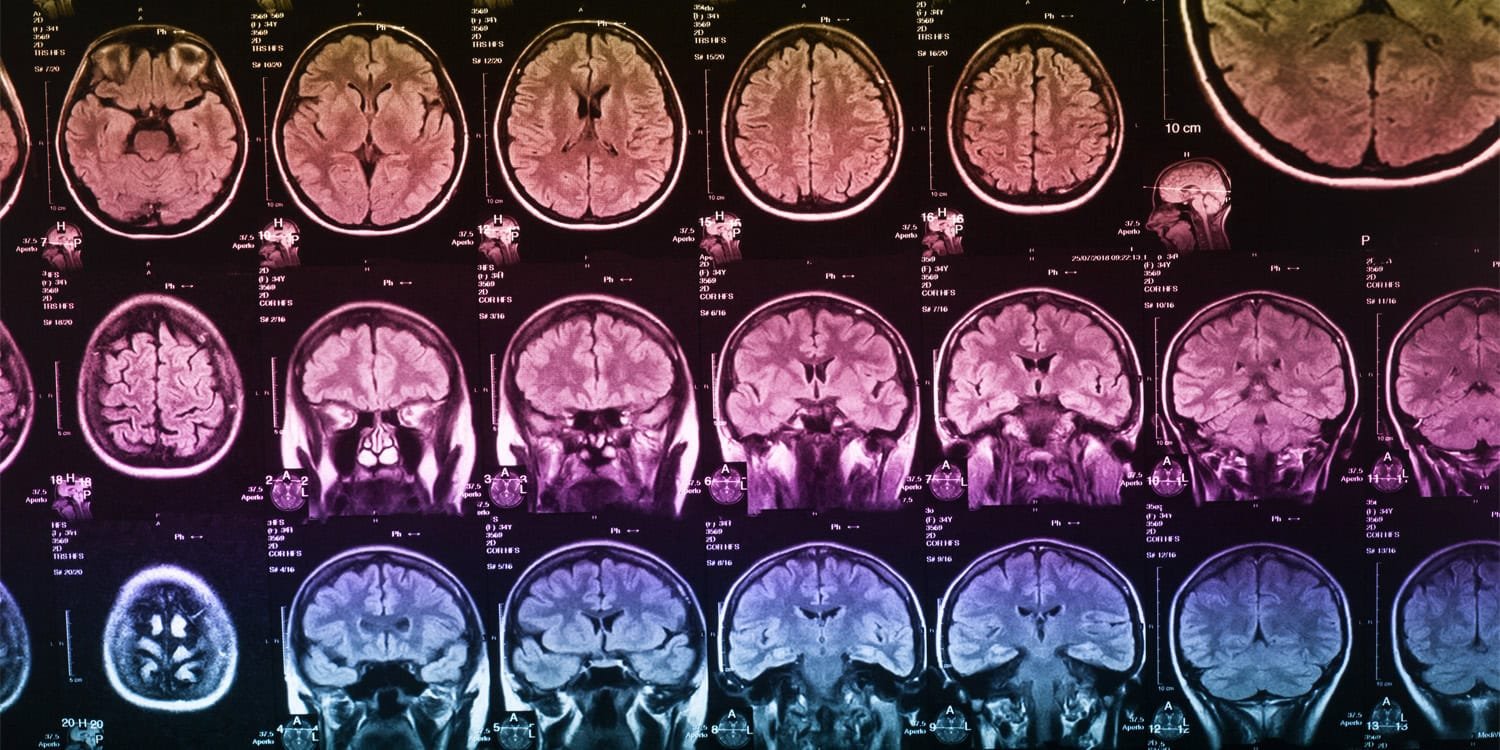
Alongside the memory tests, all participants underwent magnetic resonance imaging (MRI) scans of their brains. This imaging technology uses powerful magnets and radio waves to take detailed pictures of the body’s internal structures. The scientists used these images to measure the physical volume of 25 specific brain regions that have been associated with memory tasks in previous literature.
Before running the statistical model, the scientists used special software to create a map of different tissues in the brain. They separated the images into gray matter, white matter, and cerebrospinal fluid. This made it possible to isolate and measure the exact volume of the target area with high precision.
The researchers used mathematics to see if the size of these brain regions could predict performance on memory tests. They adjusted the equation to account for each person’s age, biological sex, years of education, and total intracranial volume. Intracranial volume simply refers to the total size of a person’s head and brain cavity.
The authors found that people with larger volumes in six specific brain regions tended to have higher scores on memory tests. One of these regions was the cerebellum, a region in the back of the brain traditionally known for coordinating movement. In this context, this could help people silently repeat numbers to themselves, a strategy known as inner speech.
Another predicted region was the hippocampus, a seahorse-shaped structure deep in the brain. The hippocampus is famously associated with the formation of long-term memories, but this study suggests that the hippocampus also helps encode short-term visual information.
Other predicted regions included the superior temporal cortex and insula, which are located on the side of the brain. These areas typically help process sound and manage attention. Islands, in particular, can help you switch focus and ignore distractions when you’re trying to memorize number sequences.
The left inferior parietal cortex and left lateral occipital cortex also showed strong associations with better test scores. These outer layers of the brain help people process visual and spatial information. Having a lot of tissue in these areas can help you visualize and rearrange the numbers like items on a blackboard in your head. “Our findings suggest that networks of brain regions play an important role in supporting working memory throughout middle age and later adulthood, and that the integrity of these brain structures is important for cognitive performance,” Carnemola said.
However, the results also included some unexpected findings. When the statistical model considered all variables at once, three specific brain regions appeared to show a negative relationship with memory performance.
“Some brain regions showed associations with working memory performance in the opposite direction from what we expected (i.e., for some regions, smaller size leads to better performance),” Carnemola told PsyPost. “This may reflect the highly interconnected nature of the brain, where the influence of one region can be influenced by its relationships with neighboring regions, making these patterns more complex than they first appear.”
This study provides evidence that, beyond brain anatomy, demographic factors significantly influence numerical memory. Older participants tended to remember fewer numbers than younger participants. At the same time, those with more years of formal education generally performed much better on the task than those with fewer years of schooling. “Our study also highlights that higher education may play a protective role in the maintenance of working memory as we age,” Carnemola said.
Interestingly, the researchers found no significant difference in performance between men and women. Even the size of a person’s head could not predict how many numbers they could memorize.
As a second goal, the researchers used this large dataset to create a benchmark scorecard for numerical memory tests. These tables group people by age, gender, and education level. Doctors can use these graphs to compare new patient scores with those of healthy patients, making it easier to spot unusual memory problems.
Although the results of this study provide a detailed look at brain aging, the study has several limitations. Because the data was collected at a single point in time, the researchers cannot prove that shrinking the brain area actually causes memory loss. All I can say is that there is a relationship between brain volume and memory ability.
Additionally, participants were not completely representative of the general population. “Our study used data from the UK Biobank, whose participants tended to be more educated and of higher socio-economic status than the general population, and from a predominantly white ethnic background,” Carnemora said. “This means that the findings may not be fully generalizable to more diverse populations, highlighting the need for future research in broader and more representative groups.”
The visual format of computerized tests allows people to simply read the numbers in their heads from right to left. This visual strategy can change the way your brain approaches a problem compared to hearing the numbers out loud.
Future studies will need to follow the same participants over many years to see how gradual brain shrinkage affects memory over time. The authors also suggest combining different brain imaging techniques to get a more complete picture of how these regions communicate.
“My involvement in this research has ended because this was an honors research project,” Carnemola said. “However, this study provides a foundation for future research into the brain networks that support working memory, including the possibility of investigating how these findings influence strategies to maintain or improve cognitive function across the lifespan.”
These future studies may guide efforts to develop interventions to support or improve working memory. These strategies would take advantage of the brain’s natural ability to change, a concept known as neuroplasticity. “Overall, this study reminds us that our brain health underpins many everyday abilities that we take for granted, and that understanding these relationships is an important step in supporting cognitive health across the lifespan,” Carnemola said.
Finally, she expressed her gratitude to those who made the large-scale analysis possible. “I would like to express my sincere gratitude to the thousands of volunteers who have generously donated their time and data to UK Biobank to advance our understanding of brain health and cognitive aging,” said Carnemora.
The study, “Integrity of six major brain regions predicts numerical working memory performance in 30,000 middle-aged and older adults: a UK Biobank magnetic resonance imaging study,” was authored by Sarah Ellen Carnemolla, Tanmoy Debnath, Md Geaur Rahman, and Minh Chau.
