


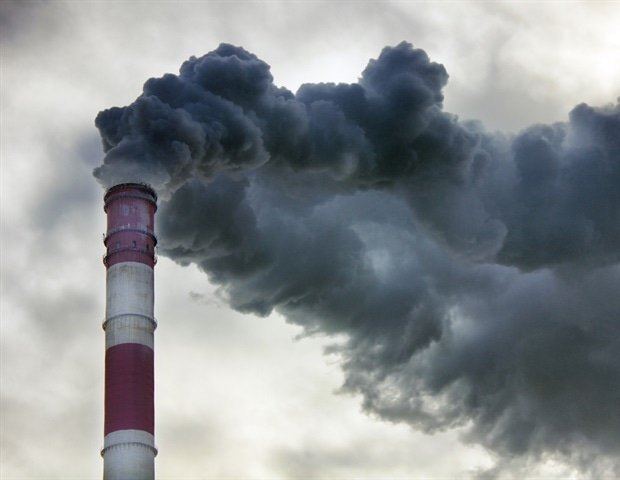
Air pollution from cruise ships can harm the health of people living in port cities by increasing inflammation and increasing susceptibility to viruses such as the common cold and COVID-19.
New research from the University of Southampton reveals environment international We studied the atmosphere in Southampton’s harbour.
The air contained ultrafine particulate matter (PM), dust particles less than one-thousandth the width of a human hair, and was rich in trace elements from the combustion of transportation fuels.
Clinical tests have shown that these particles increase inflammatory signals and weaken cells’ defenses against viral infections such as COVID-19 and the common cold.
“In this study, we identified tell-tale ‘signs’ of air pollution coming from cruise ships burning fuel in port,” says Matthew Roxham, professor of respiratory biology and toxicology and lead author of the study.
Ultrafine particles in the exhaust gases of these ships can penetrate deeper into the lungs and into the bloodstream than larger-sized particulate matter, but particles of this size are essentially unregulated and generally unmonitored. We found that exposing cells to these particles, and to vanadium, the most abundant element within them, promoted inflammation and promoted viral replication. ”
Matthew Roxham, Professor of Respiratory Biology and Toxicology, University of Southampton
Identifying the source of information
For the first time, researchers conducted a detailed study of PM composition and toxicity inside a busy port.
The research team selected five sampling locations around Southampton’s port area, including dock gates used for the movement of heavy goods vehicles, a container ship terminal, and a busy cruise terminal. We also sampled a comparison site located 5 km from the port to provide benchmark measurements.
PM samples were collected at cruise terminals in late spring and early summer, and during the “off-season” winter months when cruise ship visits are much lower.
Researchers found higher concentrations of vanadium, nickel, and cobalt in fine and ultrafine PM at cruise terminals during the busy summer season than during the quieter winter months.
Concentrations of these trace elements were also generally higher across ports than at comparison sites.
Dr Nat Easton, lead author of the study and also from the University of Southampton, said: “If the wind was blowing from the direction of the cruise ship and there was a high presence of the cruise ship, we saw an increase in concentration.”
“The higher concentrations at cruise terminals than in other parts of the port are probably due to increased emissions from ‘accommodation’ cruise ships compared to cargo ships, but differences in fuel origin and berth occupancy time may also play a role.”
Health effects
In clinical tests using lung lining cells, researchers found that exposure to ultrafine PM from cruise terminals during the summer increases the expression of genes associated with inflammatory responses and decreases the expression of antiviral response genes.
Additional testing revealed that vanadium may be involved in this. “To study this further, we infected bronchial epithelial cells taken from the lungs of healthy donors with human rhinovirus (the virus that causes the common cold and is a major cause of hospitalization following an asthma attack), and also used a model of coronavirus disease 2019 (COVID-19) infection,” Professor Roxham explains.
“Exposure to vanadium increased the copy number of both viruses, indicating a role for vanadium in reducing the cell’s ability to prevent viral replication. This has potential effects on the severity and spread of infection.”
Researchers say their findings lend weight to calls to reduce emissions from ships in populated areas, whether through the introduction of shore-based electricity from clean energy sources, carefully selected alternative fuels, or improved emissions-reducing technologies.
They also say that monitoring of ultrafine PM and its health effects needs to be strengthened to inform regulation and better protect the health of people living near ports around the world.
paper Unregulated particulate matter emissions from cruise ships promote inflammation and susceptibility to viral infections Published in environment international Available online.
The research was funded by the Biotechnology and Biological Sciences Research Council (BBSRC), the Leverhulme Trust, the Medical Research Council (MRC), the National Institute for Health and Care Research (NIHR) Southampton Biomedical Research Centre, the Southampton Marine and Maritime Institute and the Southampton Life Sciences Institute.
sauce:
University of Southampton
Reference magazines:
Easton, NHC; others. (2026) Ultrafine particulate matter emitted from ships causes inflammation and increases susceptibility to viral infections. environment international. DOI: 10.1016/j.envint.2026.110381. https://www.sciencedirect.com/science/article/pii/S0160412026003399.
