


Listen to the audio version of this article (generated by AI).
Large-scale intensive pig farms that pump manure pollution into local waterways are not only impacting human health, but also threatening the existence of more than a dozen endangered species, according to a new study.
Researchers examined the overlap between endangered species and intensive hog feeding operations (CAFOs) in the top three hog producing states (Iowa, Minnesota, and North Carolina) and found that 17 aquatic species that are threatened, endangered, or under review for listing share watersheds with hog CAFOs. For 10 of these species, shared watersheds are listed as “critical habitat,” or areas essential to the survival of the species.
Researchers say CAFO fertilizers leaching into waterways further threatens these species, given the increased nutrients such as phosphorus and nitrogen that CAFOs can release into the water, potentially killing them by slowing their development and growth, impairing feeding and spawning habitat, and reducing oxygen and promoting algae blooms.
They argue that lax federal oversight prevents regulators charged with protecting these species from fully accounting for CAFO pollution, which can also harm human health. excess nitrate Waterways and air pollution.
“Increasing transparency and reporting on CAFO locations, fertilizer management practices, and pollutant emissions is critical to improving the protection of sensitive species,” the authors write.
“Ad hoc and limited” regulation
Researchers combined state and federal data to estimate the overlap between CAFOs and endangered or endangered species. The 17 aquatic species included nine freshwater molluscs, six fish, snails, and amphibians. Eleven species are federally endangered, four are threatened with extinction, one is proposed for endangered status, and one is under consideration. They found that six of the species have more than 100 pig CAFOs within their range.
“Of course, the long-term increase in bacteria, nutrients and other pollutants from CAFOs that continue to discharge into the watershed will impact all species, and certainly endangered species,” said Kemp Burdett, executive director and river steward for Cape Fear River Watch.
Burdett added that the study likely underestimates pollution from CAFOs in North Carolina because it only looked at pig waste. “North Carolina is now the largest poultry producer in the United States. In addition to hog farms, there are more nutrients, more bacteria, more heavy metals, more antibiotics, everything that can affect endangered species.”
Mustafa Saifuddin, lead author of the new study and a staff scientist in Earthjustice’s Sustainable Food and Agriculture Program, said it’s important to investigate CAFOs near endangered species because not all facilities are regulated.
According to the latest information, US Environmental Protection Agency (EPA) data Starting in 2024, only 32% of U.S. CAFOs will have a National Pollutant Discharge Elimination System (NPDES) permit. NPDES is required by the Clean Water Act for facilities that discharge water pollution.
“Regulations for water pollution by CAFOs are haphazard and limited, and many can discharge water pollutants without federal permits,” Saifuddin said.
“Regulation of water pollution by CAFOs is ad hoc and limited.” – Mustafa Saifuddin, Earthjustice
NPDES permits are issued by state regulators. Each state has different CAFO NPDES permits. For example, Iowa, which has the most CAFOs of any state, has issued NPDES permits for about 4% of its facilities. federal estimate.
EPA acknowledged this lack of oversight. 2022 report. “While many waters are affected by pollutants from CAFOs, many CAFOs often claim they do not discharge, and EPA and state permitting agencies lack the resources to regularly inspect these facilities to evaluate these claims, especially since discharges often occur only under certain weather conditions,” the report states.
Federal CAFO Subcommittee cancels meeting
Saifuddin said the study was prompted by a petition from dozens of environmental and health groups calling on the EPA to increase oversight of CAFOs in 2022. “After decades of research and concerns raised by frontline communities, it is well established that these facilities contribute to water pollution, air pollution, and climate change, and no further analysis is needed,” Saifuddin said, adding that there is little data on CAFO pollution or endangered or endangered species.
In response to the petition, the agency established a federal advisory committee Provide recommendations for addressing CAFO water pollution.
“We’ve met a number of times, but we haven’t met since the start of the Trump administration,” said Alexis Andiman, a senior attorney at Earthjustice, who sits on the committee along with representatives from other environmental groups and industry national organizations. EPA We will post a list of committees. as “inactive”.
“EPA and state agencies do not have the resources necessary to ensure that each CAFO that discharges obtains the necessary permits, so we asked EPA to shift the burden so that instead of EPA and state agencies proving that a CAFO discharges, CAFOs must either obtain a permit or explain that a permit is not required,” Andiman said.
U.S. Fish and Wildlife Service acknowledges several threats
Despite the lack of federal oversight and regulation for the majority of CAFOs, the U.S. Fish and Wildlife Service (FWS), which oversees endangered and endangered species, has already enlisted CAFOs in a new study to identify threats to two endangered species (Neuse River water dog and Atlantic swine) and two endangered species (dwarf wedge mussel and Carolina tomato).
An FWS spokesperson said in an email that the agency does not comment on studies written outside the agency.
Saifuddin and colleagues recommended that federal agencies more closely regulate and monitor CAFOs, as well as operationally reduce the amount of animals they house and increase storage of manure.
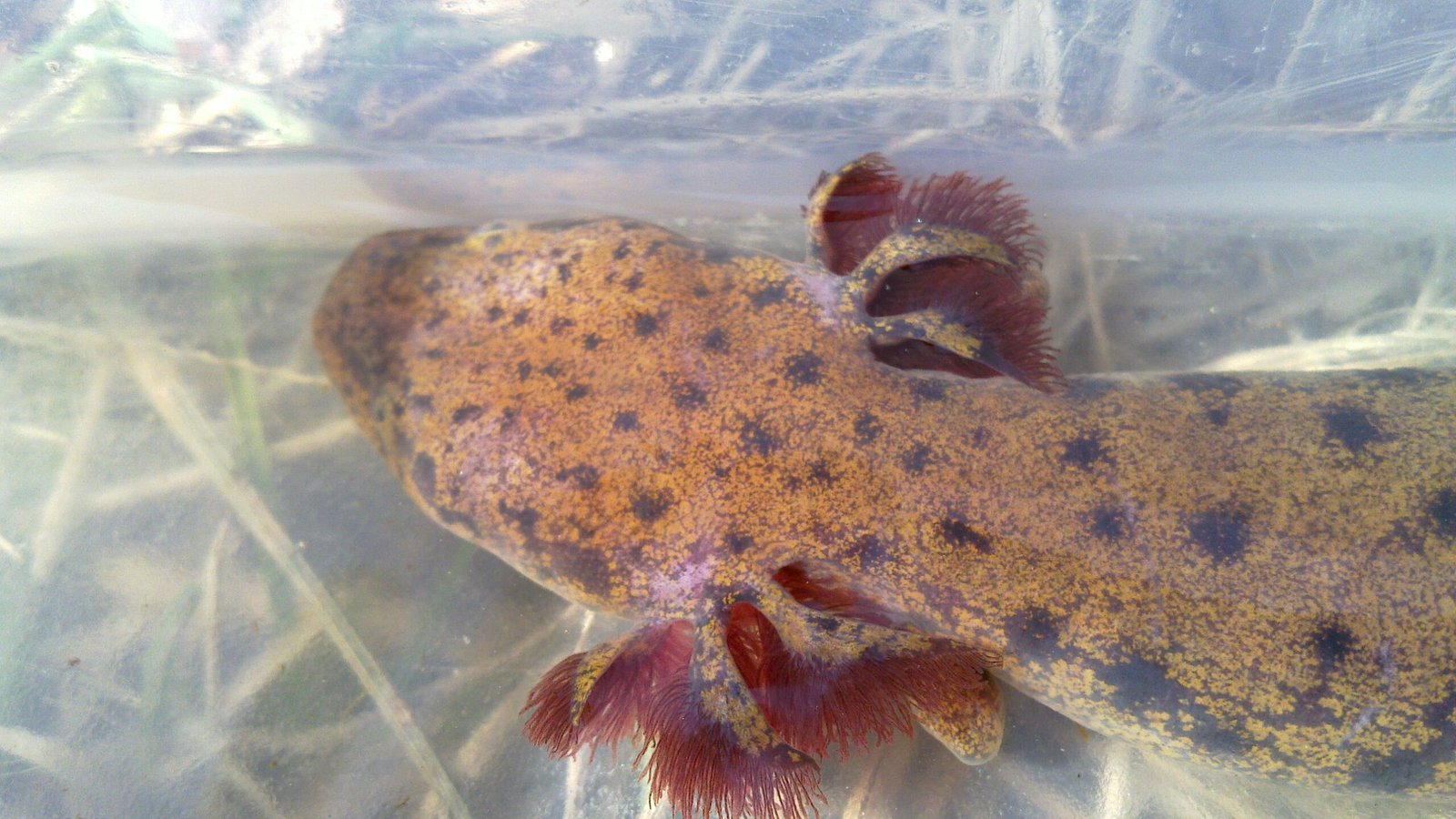
Featured image: Neuss River Waterdog, listed as an endangered species. (Credit: USFWS)
-

Brian Bienkowski is the editor-in-chief of The New Lede. He is a veteran journalist with over 15 years of experience covering the environment and human health. Prior to joining TNL, he was a senior editor at Environmental Health News for nearly a decade, overseeing the newsroom and two local bureaus. He was also the founder, producer, and host of the EJ podcast Agents of Change from 2020 to 2024.
Bienkowski has received multiple awards for her editing and reporting, including honors from the Healthcare Journalists Association, Columbia School of Journalism, Hunter College, and the Environmental Journalists Association. He has a master’s degree in environmental journalism from Michigan State University and lives in northern Michigan.
