


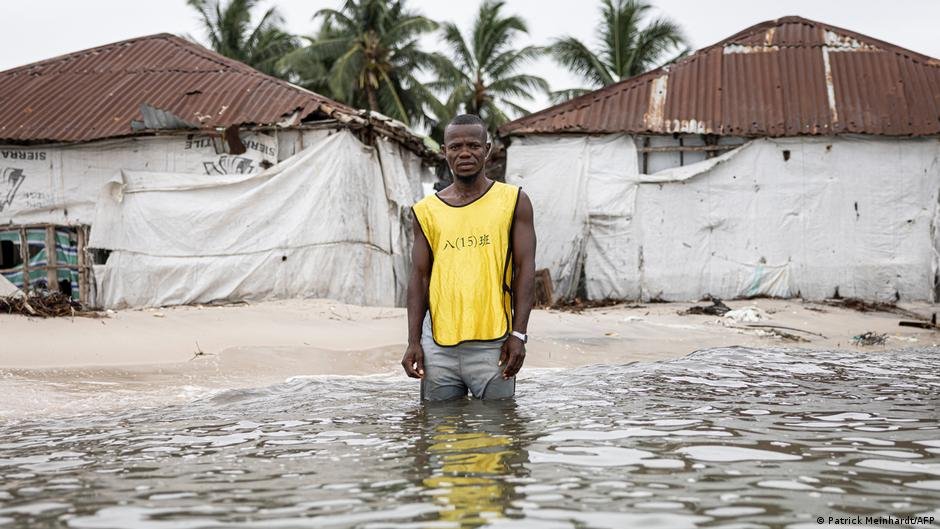
One in 10 people remains in extreme poverty, more than two billion people face moderate or severe food insecurity, and the number affected by climate-related disasters has more than doubled since 2015. This is according to United Nations data published in a report today.
Almost a decade ago, the international community agreed to end all forms of poverty, fight inequality and tackle climate change. The United Nations has set 17 goals and 169 targets to be achieved by 2030, including zero hunger, clean water and sanitation, good health and well-being, and access to affordable clean energy.
While progress has been made in some areas, such as nearly 1 billion people now having access to safely managed drinking water, new HIV infections and AIDS-related deaths declining, and electricity reaching 92% of the world’s population, many others are far from on track.
Progress on nearly half of the targets is too slow, and 15% are below 2015 benchmarks.
The global extreme poverty rate is projected to reach 10% by 2026, just 3 percentage points below 2015 levels. Approximately one in four urban residents lives in slums or informal settlements. Additionally, the risk of extinction is worsening across all species groups, with global temperatures reaching 1.43 degrees Celsius (2.57 degrees Fahrenheit) in 2025 above pre-industrial levels. CO2 concentrations in Earth’s atmosphere are at their highest in the past 2 million years.
Pashtun children in Pakistan struggle to attend school
To view this video, please enable JavaScript and consider upgrading to a web browser that supports HTML5 video.
United Nations Secretary-General António Guterres called on countries to step up measures as official development assistance is set to decline by a record 23% in 2025.
“Let us work together to make the final push to achieve the Sustainable Development Goals and build a healthy and prosperous future for all,” he said.
Not enough: Overlapping crises and widening fiscal disparities
Progress has been hampered by escalating violent conflict, undoing years of development in a matter of months.
The annual funding shortfall for the SDGs in developing countries is approximately $4 trillion (€3.5 trillion), while global military spending is at an all-time high.
Wars in the Middle East have disrupted maritime traffic and cut off energy, fertilizer and food corridors. This could have serious long-term implications for global food security, particularly in parts of Africa and Asia.
Food insecurity in war-torn Sudan worsens due to Iran war
To view this video, please enable JavaScript and consider upgrading to a web browser that supports HTML5 video.
Millions of people struggle to get enough food and water
World hunger decreased slightly in 2024, but it was still higher than in 2015. More than 8% of the world’s population experiences chronic hunger, and more than 2 billion people lack access to enough food at some point during the year.
The progress was mainly due to post-pandemic economic recovery in South Asia and Latin America. Hunger continued to increase in West Asia and Africa.
Billions of people now have access to clean drinking water, but water stress (how much fresh water is withdrawn relative to the amount available) remains acute in some regions. Ten percent of the world’s population lives in countries with high or severe water stress levels.
Almost half of the world’s countries are reporting reduced river flows, with parts of Latin America, the Caribbean, and Central and South Asia being the hardest hit.
Many rivers are drying up, with almost half of the world’s countries reporting reduced river flows Image: Omar Haj Kadour/AFP
Vulnerability continues to grow as climate risks increase
The period from 2015 to 2025 was the hottest year on record, and greenhouse gas emissions continued to increase, reaching a record high in 2024.
The ocean, which absorbs about 90% of the excess heat that accumulates in the atmosphere, reached its highest level on record for the ninth year in a row. Rising ocean temperatures mean melting ice sheets, which causes sea levels to rise. They also cause tropical storms and degrade marine ecosystems such as coral reefs.
Climate change is worsening people’s conditions, increasing food insecurity and water scarcity Image: Mstyslav Chernov/AP Photo/picture Alliance
Natural disasters, exacerbated by climate change, continue to claim lives, destroy infrastructure, reduce incomes, cement debt and continue to depend on humanitarian aid. While the number of deaths from natural disasters has fallen by 65% over the past decade, the number of deaths from disasters has more than doubled.
Access to electricity will be improved. Sub-Saharan Africa left behind
After slow growth over the past few years, 92% of people now have access to electricity, but more than 650 million people still lack access to electricity. Projections show that access will only increase by 0.5 percentage points by 2030.
Central and South Asia are the most advanced, but sub-Saharan Africa accounts for 86% of the world’s people without electricity.
Many people in South Africa still lack access to electricity Image: Emmanuel Croset/AFP
The share of renewable energy continued to increase, but did not reach the scale needed to meet international energy, climate, and development goals. Installed renewable energy generation capacity will reach a global record in 2024, with developing countries leading this growth.
Slums are increasing as the housing crisis worsens
Although the proportion of people living in slums has declined in some regions, the world’s total population has soared to more than 1 billion.
“We need to take action and accelerate,” UN-Habitat Executive Director Ana Claudia Rosbach told DW. “We are facing a global housing crisis,” she said, adding that one in four people lack access to safe drinking water, sanitation and safe housing.
“If we don’t properly address housing and informal settlements, all the SDGs are at risk,” she said, noting that housing is the necessary “roof” to achieving all the SDGs.
Where can children find a safe place to learn if they don’t have a safe and clean home? Image: Brian Inganga/AP Photo/picture Alliance
“How can we improve access to education if our children don’t have a safe place to stay at home and do their homework? How can we address health goals if we don’t have healthy homes and healthy neighborhoods?”
Africa and Southeast Asia are particularly at risk because of their large number of informal settlements, he added, and around 2 billion more people are expected to move into cities in these regions.
What now?
The United Nations is urgently calling on countries to resolve funding shortages, accelerate energy transitions, and strengthen multilateral cooperation. The report says the choices made over the next four years will be critical to achieving the 2030 goals and will have a lasting impact on generations to come.
“More than a decade of implementation has shown what is possible,” said Li Junhua, UN Under-Secretary-General for Economic and Social Affairs. “The challenge now is to scale up what works, with the urgency, investment and cooperation needed to deliver on the promises of the 2030 Agenda.”
Tim Schauenberg contributed to this report.
Editor: Tamsin Walker
