


Handspring Health provides virtual mental health clinics for youth and families built around evidence-based care and ongoing training and support for clinicians.
The four-year-old startup has secured $19 million in Series B funding to expand its clinician workforce, expand its value-based care partnerships with payers, and expand its geographic reach.
The company also plans to expand its complex care models and invest in its technology platform, Handspring CEO and co-founder Sahil Choudhry told Fierce Healthcare in an exclusive interview about the funding round.
RPS Ventures led the Series B round, with participation from new investor Angelini Ventures, and continued support from returning investors Cobalt Ventures, NextView Ventures, nvp Capital, Hyde Park Angels (HPA), Cornucopian Capital, and other investors. Handspring has raised $37 million to date, including $12 million in a Series A funding round a year ago.
Handspring clinicians treat children and adolescents ages 12 to 17 and youth ages 18 to 26 and are trained in treating anxiety, depression, OCD, ADHD, trauma, and other mental health issues. The care model also includes ongoing training and support for parents, which is considered an important part of the treatment process. This support includes parent training sessions using Behavioral Parent Training (BPT).
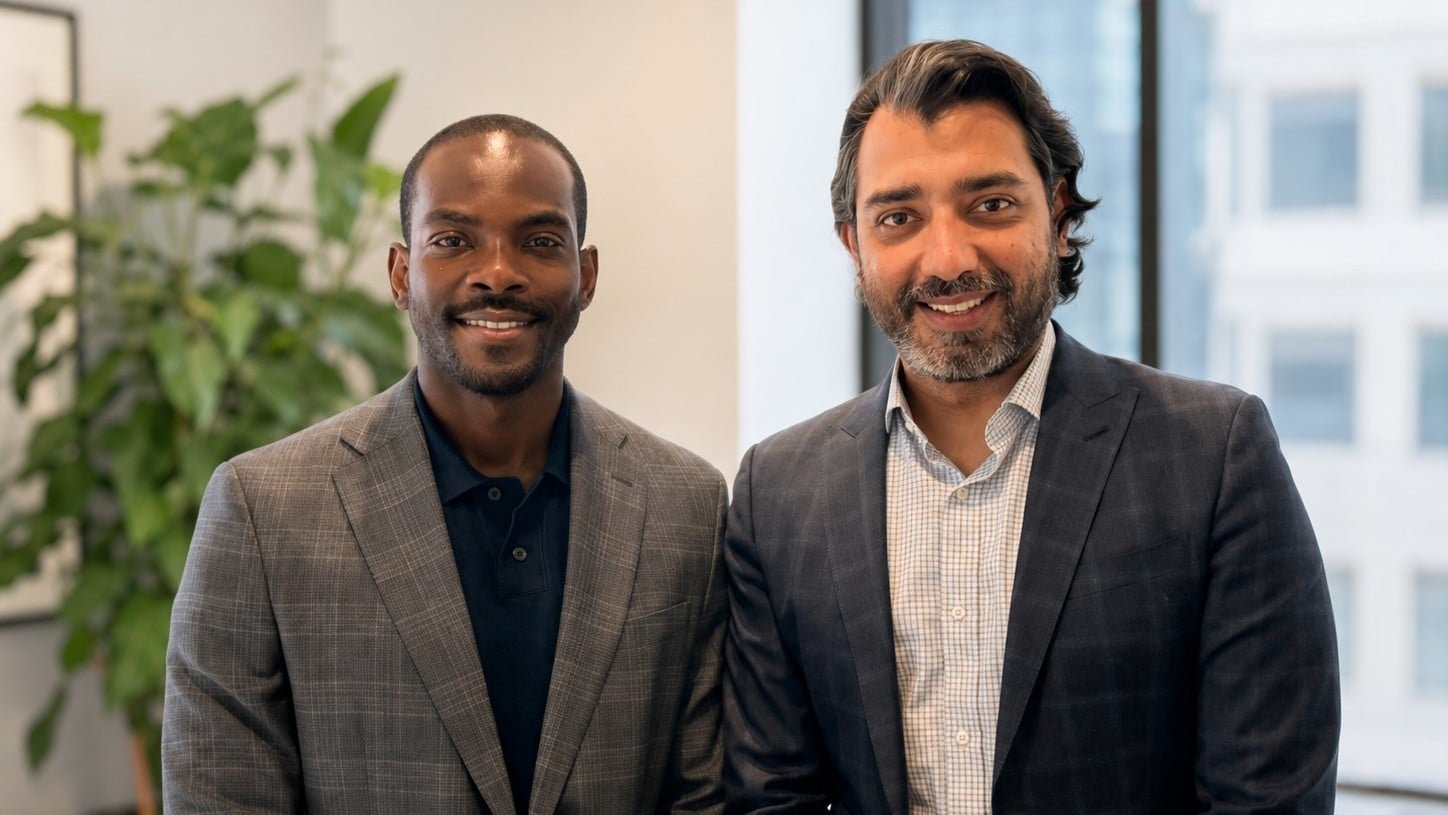
Both Choudhry and co-founder Kwasi Kyei have backgrounds in healthcare and venture capital, having worked at Cigna Ventures.
“We saw the first wave of mental health companies, and almost all of them were focused on getting people access to in-network therapists. But access is only half the story. The more difficult issue we saw sitting on the payer side was quality, and our fundamental insight that really led us to start Handspring was that well-intentioned clinicians in this country rarely have deep training in evidence-based care,” Chaudhry said.
They brought on Dr. Amy Kranzler as chief clinical officer and leveraged her clinical leadership and expertise building CBT training programs and DBT programs at Montefiore Health System.
Handspring’s model starts with the clinician and features a unique approach. The company’s therapists are employed, not contracted, and its clinicians are trained in-house in evidence-based treatments such as cognitive behavioral therapy (CBT), dialectical behavioral therapy (DBT), and exposure therapy.
Some studies have shown that most practicing therapists do not consistently use or adhere to rigorous evidence-based care during sessions, Chaudhry noted.
“There’s no standardization certification, no requirement to learn it. We know CBT works, but we just don’t use it consistently as a field. This is the gap that became our theme. If we can truly support clinicians in building an advanced command of evidence-based care, we’ll have a unique It’s a win-win-win model for families, where clinicians can not only grow and actually improve without getting burned out, but also where payers can feel good about actually paying for their outcomes,” he said.
Handspring offers ongoing training, one-on-one clinical support and weekly clinical consultation groups for clinicians, where they discuss difficult cases with their supervisors, she said. “At Handspring, these are not optional perks, but mandatory for all clinicians,” he added.
Providing high-quality, effective care with positive outcomes will also help address challenges around access to care, Chaudhry argued.
“Every time access issues come up in the industry, we talk about the therapist shortage. We rarely talk about whether therapy actually works, because if it did, we might not need as many therapists. I think addressing the shortage should focus on the care we’re actually providing, not just the number of therapists. Is it working? Are people recovering?” he said. “We believed that if we could provide the right care, the children would get better and graduate from[treatment].”
Handspring clinicians can treat a wide range of acute conditions, including more complex cases. The patient ascends and descends without being turned away. Handspring’s complex care program extends this to high-risk youth who are too often underserved, kept away from traditional outpatient services, or unnecessarily placed in higher-level care such as emergency departments or intensive outpatient programs.
Handspring matches families to the level of care a child actually needs, rather than the most intensive or most expensive program available, executives said.
To date, the company has treated more than 4,000 patients in nine states: New Jersey, New York, Pennsylvania, Connecticut, Georgia, Florida, Washington, California, and North Carolina. And the company’s revenue has grown more than 10 times over the past two years, executives said.
“Up until now, we have been adding several states a year, but this increase will accelerate the rate even further,” Chaudhry said.
As Handspring grows, executives maintain that the company maintains strong clinical results. According to the company, 93% of families reported improvement in their family’s daily life upon discharge, and 81% of patients treated for anxiety and 78% of patients treated for depression experienced clinically meaningful improvement, as measured by validated clinical scales at the end of care.
“We are at a point where things are going well for us and we have proven that our care model, upskilling and training are working. Families are reporting very high levels of satisfaction and we want to extend this to more families across the country. We want to invest more in our technology platform. We may have spent the last couple of years solving problems and figuring out models, but as we look ahead, we can expand this to more payers and more families,” Chaudhry said.
Late last year, Handspring acquired mental health startup June Care to expand its services and in-network insurance coverage in Washington state.
“What we believe at this point is that there will be real consolidation in this space. We want to be one of the companies that does that. If there is an acquisition that accelerates the model into more families, we absolutely will do that,” Chaudhry said. “While the core of this investment round is an investment in our proprietary platform and clinical model, we remain opportunistic with further integrations.”
Handspring also plans to continue investing in its AI-enabled technology platform, which features custom-built patient and provider portals, a unique telehealth experience, an in-house developed AI-enabled clinical scribe, and an AI-powered therapist matching engine that pairs families with the right therapist.
“AI hasn’t really changed our claims. Our claims are the same, which is that we are supporting clinicians to provide evidence-based care, but AI We’re very excited to extend the same idea of empowering therapists to parents, as much of a child’s development happens during home sessions, and parents often do much of that work without much support. “Providing opportunities for asynchronous parent development and coaching, providing more training tools, and making their child’s treatment less of a black box for parents and allowing them to be fully involved in their care will see us make even more investments in that area,” Chaudhry said.
Handspring is in-network with most major commercial insurance companies, including BlueCross Blue Shield, Aetna, Cigna, UnitedHealthcare, Oscar, and Optum.
The COVID-19 pandemic has caused a surge in demand for mental health and behavioral health services, sparking massive growth and funding for mental health startups. Choudhry calls this version 1.0 of virtual mental health, and the startup is focused on improving access to insurance-covered treatments.
“Today, it’s much easier for most people to find in-network therapists, and what we predicted would happen is that health insurance companies would see costs starting to increase and now start saying, ‘Okay, what are we paying for? Is this care effective or ineffective?'” he said.
“There’s a shift happening where insurers are looking for solutions that can show better outcomes, engage patients, engage higher-risk patients, more complex patients, have higher costs, and help patients get better and graduate from treatment,” he added. “This is the change that we built the company on, and I think it’s a good change that really forces the industry to prove results and prove that the investment in mental health that we’re asking for is worth it.”
“More than 95% of our sessions are covered by insurance, which is an important growth lever for us. As we expand into new states, we want to work with insurance companies to see if we can bring our model there, because affordability is one of the biggest reasons families who need care don’t get it,” Chaudhry said.
In addition to adding capital and customers, the company is also adding strategic strength. Nancy Hilliker of RPS Ventures has joined the Board of Directors and Sarah Fox of Angelini Ventures has joined the Board as an observer.
