


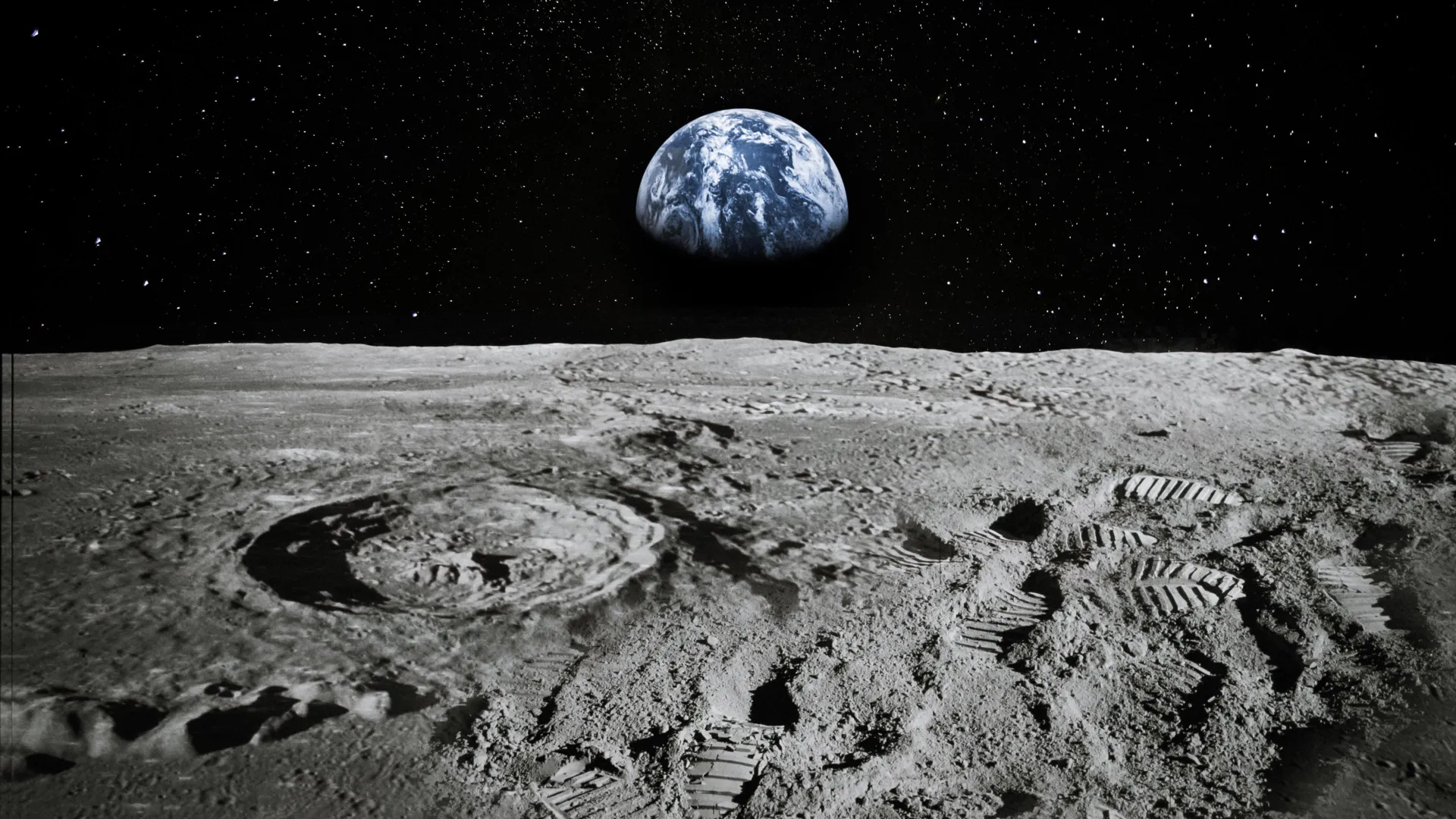
A new policy document argues that future NASA moon bases should include specialized biocontainment facilities designed to protect Earth from potentially dangerous biological materials brought back from space.
The proposal comes as scientists and space agencies prepare for more ambitious missions that could bring back samples from the Moon, Mars and other destinations across the solar system.
“Humanity is entering a new era of space exploration, but Earth protection strategies have not kept pace with the risks associated with returning extraterrestrial samples to Earth,” said study co-author Frederick I. Moxley, director of the Institute for Strategic Threat Analysis, an Idaho-based consultancy.
“The proposed facility would essentially act as a firewall between Earth and any dangerous organisms that may accompany the return of future space missions,” said Moxley, co-author Anthony Ricciardi, James McGill Professor of Biology and director of McGill University’s Beeler School of the Environment.
Moon-based quarantine of space samples
In a study published in a magazine i wanderMoxley and Ricciardi recommend that all material collected off-Earth be first sent to a secure research and isolation facility on the Moon, rather than being shipped directly to Earth.
Under their proposal, samples taken from the Moon, Mars, and other extraterrestrial locations would all be examined and processed by advanced robotic systems. The goal is to reduce the potential for human exposure and prevent the accidental release of unknown microorganisms.
Concerns about unknown biological risks
Although no extraterrestrial life forms have been identified so far, researchers argue that introducing completely unfamiliar life forms into Earth’s environment could have unpredictable consequences.
They point to the long history of invasive species on Earth as evidence that even seemingly small biological introductions can cause significant ecosystem disruption.
“Decades of research on invasive species has demonstrated how organisms introduced to the wrong place at the wrong time can spread out of control and have devastating and irreversible long-term effects on ecosystems,” said Ricciardi, an expert on biological invasions. “This study justifies a strong precautionary approach against invasions of extraterrestrial origin.”
Growth in space activity creates new challenges
The paper arrives at a time of increasing competition in space exploration. Government space agencies and private aerospace companies are increasingly launching missions beyond Earth’s orbit, creating what the authors say is a more crowded and complex operating environment.
According to the researchers, this rapid expansion makes strong biosafety measures more important than ever.
The study highlights several worst-case scenarios, including a spacecraft accident involving astronauts who may have been exposed to contaminated material or an extraterrestrial environment. The authors argue that no facility currently operating on Earth can guarantee complete containment, elimination, and control of unknown foreign microorganisms in the event of an accident.
The Moon as Earth’s first biological defense
Researchers conclude that the discovery of extraterrestrial life may rank among humanity’s most important scientific achievements. At the same time, they argue that potential biological risks need to be addressed before such discoveries are brought to Earth.
“The moon could become humanity’s first line of biological defense,” they argue.
