


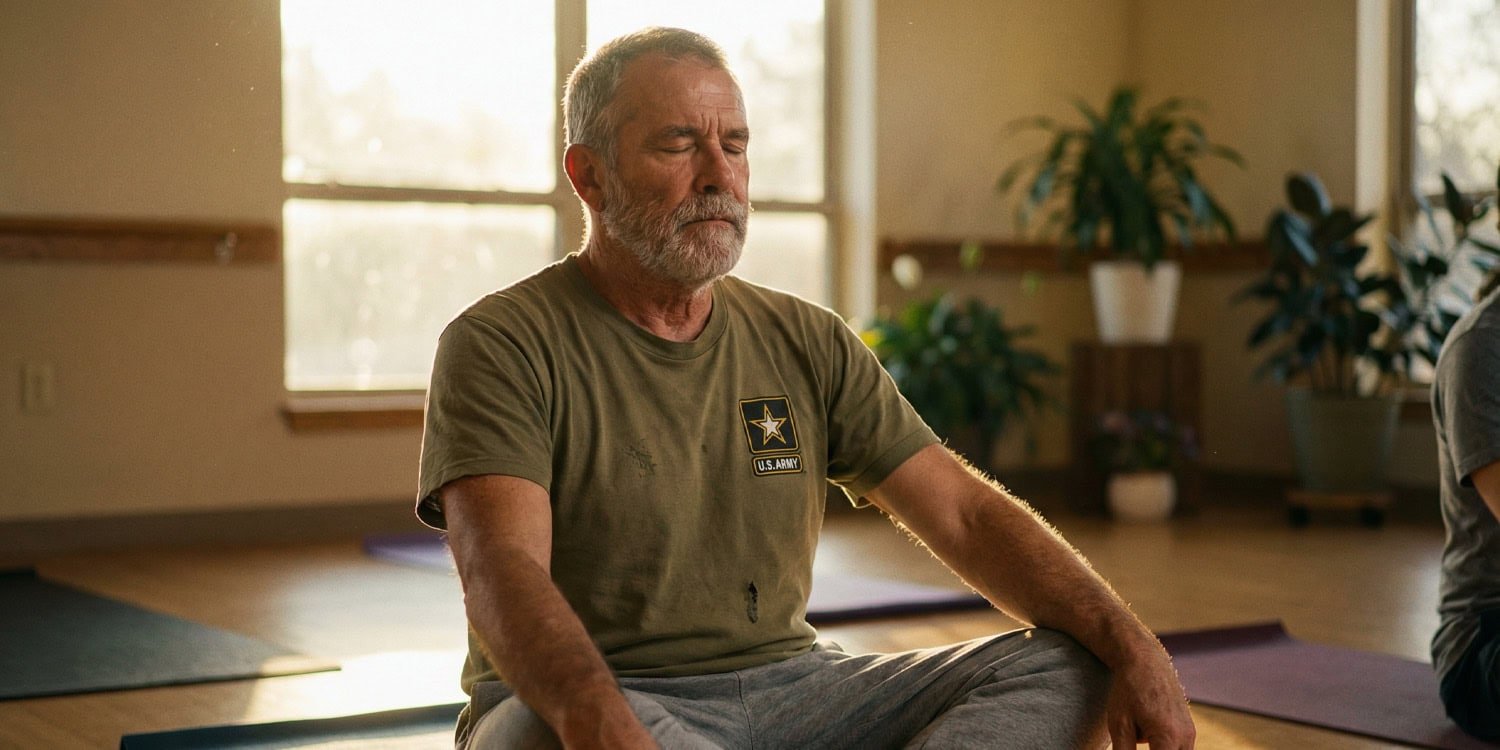
Practicing a specific type of slow, guided breathing every day for eight weeks reduces the body’s fight-or-flight response to psychological stress in veterans dealing with post-traumatic stress disorder. The findings suggest that consistent breathing exercises may help protect long-term cardiovascular health in people with trauma-related mental illness. The study was published in the American Journal of Physiology-Regulatory, Integrative and Comparative Physiology.
Post-traumatic stress disorder is a severe mental health condition that develops after experiencing a frightening event. People with this disease have a much higher risk of developing high blood pressure and heart disease later in life. This increased risk is related to how the condition alters the autonomic nervous system, which controls involuntary bodily functions.
The autonomic nervous system is broadly divided into two parts. The sympathetic branch acts like a gas pedal that triggers the fight-or-flight response, while the parasympathetic branch acts as a brake that calms the body down. People with traumatic disorders often have an overactive sympathetic nervous system, causing their feet to constantly hover above the physiological gas pedal.
When exposed to mental stress, these patients often exhibit exaggerated physical reactions. They experience a sudden increase in blood pressure and an onslaught of electrical impulses traveling through the sympathetic nerves. Over time, these intense physical reactions cause physical wear and tear on the heart and blood vessels.
Medications exist that reduce this nerve activity, but they often cause unwanted side effects. Some of these drugs are poorly tolerated, affect metabolism, and may actually worsen cardiovascular risk. Medical professionals are exploring non-drug alternatives to calm the nervous systems of this vulnerable population.
One possible intervention is device-guided slow breathing. This technique involves using electronic biofeedback tools to help gradually slow a person’s breathing rate. Previous studies have shown that a single session of this guided breathing temporarily lowers blood pressure and neural activity during active exercise in trauma patients.
Ida T. Fonkow, a researcher at Emory University School of Medicine and the Atlanta Veterans Affairs Medical Center, led a team investigating whether these benefits are sustainable. The researchers wanted to see if two months of daily practice would permanently reduce resting heart rate, blood pressure, and resting neural activity. They also wanted to test whether breathing habits dampen the body’s response to sudden mental stress.
The research team recruited 25 veterans with post-traumatic stress disorder and mildly elevated blood pressure. Participants were randomly assigned to one of two groups for the 8-week trial. Neither the researchers nor the participants knew who would fall into which group.
One group used an active induction breathing device at home for 15 minutes every day. The machine used a sensor placed on the abdomen and musical sounds from headphones to help lower the user’s breathing rate to about 5 to 6 breaths per minute. The second group used identical machines that played similar music.
Instead of inducing the second group to breathe slowly, the placebo device maintained a normal resting rate of about 14 breaths per minute. Before the trial began, researchers invited all participants to the lab for extensive baseline testing. They measured their resting blood pressure, heart rate, and overall respiratory rate in a quiet room.
To directly measure the fight-or-flight response, the researchers used a special technique that tracks electrical signals from the sympathetic nervous system. They inserted a microscopic tungsten wire into a prominent nerve in each participant’s leg. This made it possible to count the exact number of nerve impulses traveling toward muscle tissue in real time.
The researchers also tested the body’s natural blood pressure regulation system known as the baroreflex. They accomplished this by administering drugs through intravenous lines to artificially raise and lower blood pressure over short periods of time. They observed how the brain adjusts heart rate and neural signals to compensate for sudden changes.
Finally, we tested how participants would respond to a severe mental challenge. The veterans were asked to do quick mental arithmetic. They subtracted numbers in their heads for three minutes while lab-coated research staff encouraged them to do it faster and more accurately, a proven method of inducing mental stress.
After eight weeks of practice at home, participants returned to the lab and repeated the entire test series. The researchers found that daily breathing exercises did not change the participants’ resting heart rate or resting blood pressure. Resting neural activity also did not change at all in both groups.
In neither group, the body’s blood pressure regulation system did not improve, and post-traumatic stress symptoms did not reduce. In other words, the daily intervention did not appear to provide a durable 24-hour sedative effect on the body’s physiological baseline. However, when the researchers looked at the results of the mental arithmetic tests, they noticed a clear difference in the neural responses.
In the group using the placebo device, the mental arithmetic stressor triggered the same high rate of nerve impulses as at the start of the study. In the group that practiced slow breathing techniques, their bodies responded differently. The spike in neural activity during the mental arithmetic test was much more modest than it was eight weeks earlier.
The results show that long-term use of induced slow breathing can fundamentally change the way the sympathetic nervous system deals with sudden stress. Even when the veterans weren’t actively using ventilators, their fight-or-flight nerves remained calm under pressure. Researchers suggested this may help protect the cardiovascular system from the harmful effects of daily mental stress.
Curiously, this blunted neural response did not lead to a drop in blood pressure during the math test. Blood pressure spiked in the slow breathing group as much as in the placebo group. Researchers suspect that other biological mechanisms, such as changes in floating hormones or vasodilation, may be causing blood pressure spikes independent of nerve impulses.
This study had several limitations that may affect how broadly the conclusions can be applied. The participants were relatively small and comprised primarily of African American male veterans. The biological response to breathing exercises may look slightly different for women and civilians.
The researchers also measured only neural activity directed toward skeletal muscles. They could not determine whether the breathing techniques reduced nerve activity directed to other organs, such as the heart or kidneys. A short period of time without taking certain psychiatric drugs before the test also may not have been long enough to completely eliminate the drugs from participants’ systems.
Moving forward, researchers will need to conduct larger trials to see if these changes in the nervous system actually lead to lower rates of heart disease over time. Future research could also investigate whether breathing techniques reduce underlying inflammation in patients with traumatic illnesses. Studies investigating how exercise affects heart rate variability over long periods of time may also provide deeper insight into the body’s stress response.
The study, “Eight weeks of machine-guided slow breathing reduces sympathetic reactivity to stress in post-traumatic stress disorder,” was authored by Ida T. Fonkoue, Yingtian Hu, Toure Jones, Monica Vemulapalli, Justin D. Sprick, Barbara Rothbaum, and Jenie Park.
